Green Anole Displays at Brown Anole

Anole Annals‘ woman in Florida, Karen Cusick, has photo-documented more interesting anole behavior (Karen has observed and photographed much interesting green and brown anoles behavior. Search this site for her name or “Daffodil’s Photo Blog” and you’ll find all kinds of interesting observations). oday I saw something I don’t think I’ve seen before, and I’m sending you a few photos. A big male brown anole was sitting in the sun on the upper rail of the fence when a big male green anole approached. He stopped about 6 inches away from the brown anole, and started bobbing his head and displaying his dewlap. The brown anole watched but didn’t react. The green anole moved closer and displayed again while the brown anole watched. Just as I was wondering if there would be a fight, the green anole suddenly ran past the brown anole along the rail and then down off the fence.

Anolis evermanni in El Yunque, Puerto Rico

Believed to be an A. evermanni, spotted on a tree truck in El Yunque.  Does anyone know what the identifying characteristics of evermanni are?


El Yunque Anolis

Hello all!  I’m working on Puerto Rican anole field identification.  Here’s a specimen I photographed on the ruins atop El Yunque on March 4, 2019.  I think it’s a juvenile  A. evermanni, but I’m curious what you guys think!


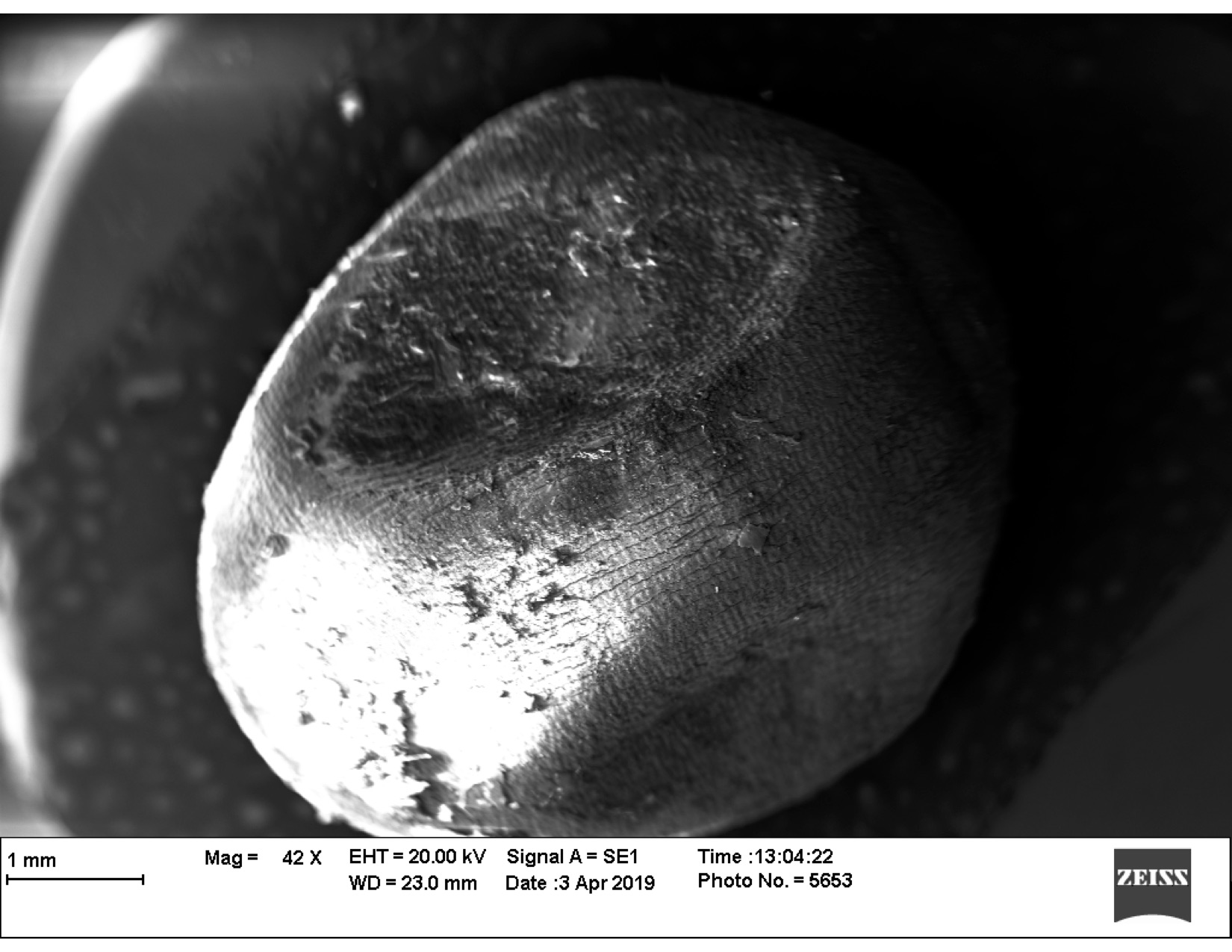
Scanning Electron Microscopy of an Anolis sagrei egg

Scanning electron microscopy (SEM) is a technique that utilizes electron beams that interact with and reflect the surface of a viewed specimen. These reflections allow the evaluation of surface topology and ultrastructure and give high-resolution detail about external structures and cellular arrangements (Goldstein et al. 2017). To create a reflection on specimen surfaces, a thin layer of gold is mechanically applied through a process known as “sputter-coating.” Recently, graduate students at Auburn University had the opportunity to view their own collected biological samples with SEM through an Applied and Environmental Microbiology course taught by Dr. Mark Liles.

As a student in this class, I had the opportunity to view a chosen sample under this process. While I highly debated bringing in an anole fecal sample (which would have been gold-coated and placed on my desk for a lifetime), I decided to view a recently dried, fertile A. sagrei egg collected from the lab of my advisor, Dr. Daniel Warner. The microbial communities on the surface of this egg were most likely highly impacted by the influence of drying (see image descriptions below); this is due to sample preparation required by conventional SEM, whereby water vaporization will distort images if the sample is not completely dry. Part of my research within the Warner lab involves investigating the microbial communities on the external surface of eggshells; thus, this class has provided an excellent opportunity to explore how varying environmental factors can influence eggshell microbiomes. The photos taken and attached were observed on 03 April 2019.

In Image 1 at 42X magnification, you can see the influence of drying from the large indentions on the egg as well as horizontal cracking within the surface itself. However, under closer inspection fungal and bacterial structures begin to appear. In Image 2 at 397X magnification, you can view a filamentous structure that we predict to be fungi. One of the limitations of SEM is that while structures can be easily viewed, they may not always be as easily identifiable. At 1,500X and 1,5700X, we can see a magnified image of a fungal root (Image 3) and potential bacterial cells above the spiral filamentous structure (Image 4).


Image 2. SEM image of A. sagrei egg at 397X magnification.


Image 3. SEM image of A. sagrei egg at 1,500X magnification. 

  Image 4. SEM image of A. sagrei egg at 1,5700X magnification.

The images above highlight the interesting use of SEM for reptilian eggs, especially those small enough to be entirely encompassed under a microscope (< 1.5 mm long). SEM observations can also be used to elucidate differences in eggshell structures, thickness, and porosity (Heulin et al. 2002). Additionally, SEM use within the classroom setting has allowed students to gain applicable skills and techniques, as well as their own photographs (Beane 2004).

References:

Beane, Rachel J. 2004. “Using the Scanning Electron Microscope for Discovery Based Learning in Undergraduate Courses.” Journal of Geoscience Education 52 (3): 250–53. https://doi.org/10.5408/1089-9995-52.3.250.

Goldstein, Joseph I., Dale E. Newbury, Joseph R. Michael, Nicholas W. M. Ritchie, John Henry J. Scott, and David C. Joy. 2017. Scanning Electron Microscopy and X-Ray Microanalysis. Springer.

Heulin, Benoit, Samuele Ghielmi, Nusa Vogrin, Yann Surget‐Groba, and Claude Pierre Guillaume. 2002. “Variation in Eggshell Characteristics and in Intrauterine Egg Retention between Two Oviparous Clades of the Lizard Lacerta Vivipara: Insight into the Oviparity–Viviparity Continuum in Squamates.” Journal of Morphology 252 (3): 255–62. https://doi.org/10.1002/jmor.1103.

Anoles and Other Bahamian Reptiles Featured in Children’s Book Series

Read more about Elaine Powers’ books, including her most recent post, “Stop and Meet the Anole Lizards,” on her author’s webpage.

Island Lizards are Expert Sunbathers, and It’s Slowing Their Evolution.

Anolis chloris soaks up the sun while displaying.

If you’ve ever spent some time in the Caribbean, you might have noticed that humans are not the only organisms soaking up the sun. Anoles – diminutive little tree lizards – spend much of their day shuttling in and out of shade. But, according to a new study in Evolution led by Dr. Martha Muñoz at Virginia Tech and Jhan Salazar at Universidad Icesi, this behavioral “thermoregulation” isn’t just affecting their body temperature. Surprisingly, it’s also slowing their evolution.

The idea that evolution can be slow on islands is actually somewhat strange. Ever since Darwin’s journey to the Galapagos, islands have been recognized as hotspots of rapid evolution, resulting in many ecologically diverse species. The reason why evolution often goes into overdrive on islands has to do with the ecological opportunity presented by simplified environments. When organisms wash up on remote islands, they find themselves freed of their usual competitors and predators, which frees them to rapidly diversify to fill new niches. This phenomenon of faster evolution is often referred to as the “island effect.”

Yet, the researchers discovered that physiological evolution in Anolis lizards is actually much slower on islands than on the mainland. What is causing evolution to stall? According to Dr. Muñoz, the same ecological opportunity that frees island organisms from predators also facilitates behavioral thermoregulation. “Whereas mainland lizards spend most of their time hiding from predators, island lizards move around more, and are able to spend much of their day precisely shuttling between sun and shade,” she says. If it gets too hot, island lizards simply go find a shady spot. If it gets too cold, they can dash onto a sunny perch. By thermoregulating, island lizards are not just buffering themselves from thermal variation. They are effectively shielding themselves from natural selection. If lizards aren’t exposed to extreme temperatures, then selection on physiology is weakened. The result? Slower rates of physiological evolution. Effectively, island lizards use behavioral thermoregulation like SPF against natural selection!

Jhan Salazar notes that, “Our results show that faster evolution on islands is not a general rule.”  This slower physiological evolution on islands stands in stark contrast to morphology, which has been shown to evolve faster in island anoles. When it comes to morphology and physiology on islands, it seems we are looking at different sides of the same coin. The same ecological release from predators and competition that allowed for the truly impressive amount of morphological diversification that has appeared quickly among island anoles, seems to additionally allow for more behavioral thermoregulation which slows physiological evolution.

“We are discovering that organisms are the architects of their own selective environments,” says Muñoz, “meaning that behavior and evolution are locked together in a delicate dance. This pas de deux tells us something important about how diversity arises in nature.”

Jhan Salazar holds an anole from Colombia.


Concrete Escape: Increased Wariness of Anoles when Escaping from Cement Walls


Fig. 1. Anoles perched on various manmade surfaces 

Lizards in the city are everywhere! Often you see them on buildings, statues, benches and other objects (Fig 1). These manmade structures are very different from natural substrates and thus might affect their locomotor ability and escape responses. This observation led me to develop questions around how lizards respond to incoming threats when using these artificial structures. I am very grateful that I got to “get my feet wet” tackling some of these questions during my master’s degree as a member of the Kolbe Lab in the University of Rhode Island.

In our recent paper, we contrasted the escape response of Anolis cristatellus in forests versus cities, and within the latter, between lizards perched on natural versus manmade surfaces. We selected this question because we believed that the heterogeneity of habitat structure in the city might influence the decision-making of flight responses. When a predator approaches, an animal should flee when the costs of staying outweigh the energetic costs of fleeing. Consequently, we hypothesized that the cost of flight varies when the animal is perched on smooth surfaces. However, we expected that city lizards should have reduced flight responses largely influenced by habituation to humans.

The bad habits of habituation

One of the major hurdles involved designing our project to separate the component of behavioral adjustments to humans versus structural habitat differences when contrasting escape responses. The literature often has used the concept of habituation as a discussion point when contrasting flight responses of habitats that differ in human activity. Only a few studies have attempted to quantify how human activity might influence escape responses. We explored this concept by sampling lizards perched on trees at edges of a forest trail or sidewalk that were frequently visited by pedestrians and cyclers. Lizards perched closest to the trail or sidewalk should be more exposed to human activity and respond with reduced flight initiation distance. We found that forest lizards perched at the edge of the trail had shorter flight initiation distances (Fig. 2). Lizards perched 4m away from the trail had longer flight responses. In contrast, city lizards sampled at trees along a sidewalk showed no difference in flight response with increasing distance from the sidewalk. With this, we were able to show how habituation influenced escape responses, possibly driven by the degree lizards were able to see human activity. At 4m from the forest trail, we had very limited visibility of the trail. In contrast, in the sidewalk at 8m away from the sidewalk, we could see the sidewalk, the road and the sidewalk at the other side of the road. However, more work specifically directed to tackle the concept of habituation is needed to understand its role in facilitating the successful colonization of urban habitats.

Fig. 2. Log flight initiation distance of lizards sampled with increasing distance away from a trail in the forest or a sidewalk in the city.

The wall

City lizards were abundantly using cement and metal structures. For this reason, we compared escape responses of forest lizards on trees to city lizards on cement, metal and trees. Most of the cement structures were large buildings, whereas metal often included fence posts and light fixtures. Both metal and cement are smoother than bark and greatly reduce stability during locomotion. When lizards run vertically on smooth surfaces, they are more likely to slip and fall. We hypothesized that such locomotor constraints should increase the cost of flight and thus lizards on manmade surfaces should have longer flight initiation distances. We found that forest lizards had the longest flight initiation distance (Fig 3). Surprisingly, we found that there was no difference in flight response between city lizards perched on trees and those on metal posts. Metal perches were often cylindrical and lizards could circle around the perch, breaking away from the line of sight. In contrast, cement walls were often long and required lizards to either slowly move up and out of reach or sprint longer distances to circle towards the next connecting wall. The ability to quickly hide with a short burst of movement decreased the cost of flight on metal posts.

Fig. 3. Flight initiation distance of forest anoles perch on trees and urban anoles perched on trees, metal posts and cement walls.

Escape in the city

We found that even though sprinting performance is lower on artificial perches, lizards often perch on these surfaces. It’s likely that behavioral modulation plays a role in increasing their success in evaluating predation risk when using these perches. If I were to continue this study, I would track individual lizards to contrast their response when perching on the various natural and man-made surfaces. Additionally, multiple tests on marked individuals would allow for a more appropriate test of habituation across these populations.

Anoles as Models for Dry Fibrillar Adhesion

This slideshow requires JavaScript.

The adhesive structures of geckos have been the subject of extensive inquiry across a variety of disciplines ever since Autumn et al. (2002) discovered that van der Waals intermolecular forces are the main driver of gecko adhesion. Geckos adhere to surfaces using expanded subdigital scales (scansors/lamellae) that are covered in thousands of beta-keratin fibrils (setae) that branch into hundreds or thousands of triangular-shaped tips (spatulae) that are about 200 nanometers in width (see slideshow for images). Spatulae make intimate contact with a surface resulting in van der Waals intermolecular forces. Gecko adhesive toe pads are multifunctional; they are a reversible dry adhesive, they can adhere to a variety of surfaces, they can adhere underwater in some conditions, they have self-cleaning and self-drying capabilities, and they can adhere in a vacuum (see Autumn et al. 2014 for a recent review of gecko adhesion). A number of gecko-inspired synthetic adhesives have been generated over the years, but have not yet managed to replicate the multifunctionality observed in the natural system (Niewiarowski et al. 2016). There are a number of potential explanations for this, but one could be that most gecko-inspired synthetic adhesives are simplified single fibers that do not fully replicate the multiply branched structure of gecko setae. Anoles, however, have independently evolved adhesive toe pads with fundamentally simpler microstructures compared to their gecko counterparts; anole setae are single fibers with a single, larger spatulate tip and more closely resemble the gecko-inspired synthetic adhesives that are currently capable of being generated (see slideshow for images). Therefore, anoles may be an excellent model fibrillar system to better understand the observed functional discrepancy between synthetic and natural fibrillar adhesives.

In an invited paper recently accepted for publication in Integrative and Comparative Biology, my co-authors and I (see full citation below) briefly reviewed the relevant literature concerning the anole adhesive system, discussed how investigation of this convergently evolved system could impact our general understanding of fibrillar adhesion, and suggested a number of hypotheses and areas of future inquiry that could be tackled in future work.

Anole adhesive toe pads have often been suggested as evolutionary key innovations (Losos 2011), yet they have not been nearly as well studied as gecko adhesive toe pads. Nevertheless, general morphometrics, clinging ability on smooth substrates, and correlations between adhesive toe pad size, clinging ability, and habitat use have been reported for anoles (Losos 2011). Studies, however, reporting Anolis clinging ability on ecologically-relevant surfaces, detailed morphometric data of anoline setae, and the multifunctional properties of anoline adhesive toe pads are limited or nonexistent. Anoles may be excellent models for fibrillar adhesion for four main reasons: (1) anole setae are closer in dimensions and morphology to the currently producible gecko-inspired synthetic adhesives, (2) anole setae are not multiply branched which may reduce the complexity of modeling and/or explaining adhesion especially under non-ideal circumstances, (3) anole setae also more closely resemble the theoretical models previously used to explain gecko adhesion, and (4) the extensive evolutionary and ecological data on anoles may assist in answering persisting questions regarding the adhesion ecology and evolution of adhesive pad-bearing lizards.

Although the gecko adhesive system has been particularly well-studied over the past two decades, many fundamentals of biological fibrillar adhesion still need to be worked out or are otherwise unknown. We believe that parallel investigation of the anoline fibrillar adhesive system may assist in filling these gaps in our knowledge, and thus we encourage an interdisciplinary, communal effort to investigate the adhesive ecology, evolution, morphology, performance, and behavior of anoles.

Full citation

Garner, A.M., M.C. Wilson, A.P. Russell, A. Dhinojwala, and P.H. Niewiarowski. Going Out on a Limb: How Investigation of the Anoline Adhesive System can Enhance our Understanding of Fibrillar Adhesion. Integrative and Comparative Biology. In pressLink to article.

References

Autumn K, Niewiarowski PH, Puthoff JB. 2014. Gecko Adhesion as a Model System for Integrative Biology, Interdisciplinary Science, and Bioinspired Engineering. Annual Review of Ecology, Evolution and Systematics 45(1):445-470.

Autumn K, Sitti M, Liang YA, Peattie AM, Hansen WR, Sponberg S, Kenny TW, Fearing R, Israelachvili JN, Full RJ. 2002. Evidence for van der Waals adhesion in gecko setae. Proceedings of the National Academy of Sciences, USA 99(19):12252-12256.

Losos JB. 2011. Lizards in an evolutionary tree: ecology and adaptive radiation of anoles. University of California Press.

Niewiarowski PH, Stark AY, Dhinojwala A. 2016. Sticking to the story: outstanding challenges in gecko-inspired adhesives. Journal of Experimental Biology 219(7):912-919.

Adaptation by Invasive Maynard’s Anole on the Island of Cayman Brac

A remote island in the Caribbean could offer clues as to how invasive species are able to colonise new territories and then thrive in them, a new study suggests.
Scientists from the University of Plymouth have recently completed extensive research into a lizard population on the Cayman Islands.

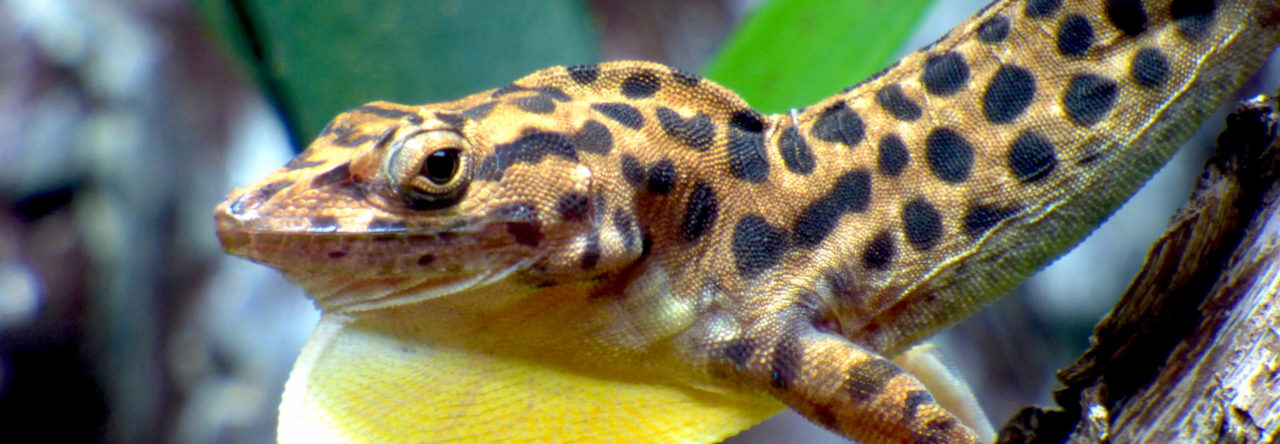
Up until the mid-1980s, there had never been a recorded sighting of the Maynard’s Anole (Anolis maynardi) on Cayman Brac island despite it being less than 10km from its native territory, Little Cayman.

However, since the species was first discovered on Cayman Brac in 1987 – in what is thought to have been a human-assisted colonisation – its population has spread right across the 39km² island.

For this study, recent graduate Vaughn Bodden and Lecturer in Conservation Biology Dr Robert Puschendorf conducted a detailed analysis of the invasive species.

They wanted to assess whether individuals at the forefront of the invasion have developed distinct biological traits that are advantageous for dispersal, and compared their findings to animals in the area of first introduction and the native population on Little Cayman.

They discovered the Cayman Brac population has diverged morphologically from the native population, and within the invasive range there was trend of increasing forelimb length from the core to range edge areas. This ran contrary to the expected findings that longer hindlimbs would be the trait selected as a dispersal-related phenotype.

They also showed that the introduced population had lower levels of parasite prevalence, and that both males and females were of significantly higher body condition than the native population.

Writing in the Journal of Zoology, they say the results are a perfect example of how a species can colonise a new territory, and the biological adaptations it can make in order to do so.

Vaughn, who graduated with a First from the BSc (Hons) Conservation Biologyprogramme in 2018, said:

“There has been a history of lizard studies indicating that longer hindlimbs are an important factor affecting movement ability, so to not find longer hind limbed animals on the range edge was a surprise. For parasites, we found a clear decreasing trend in prevalence within the invasive population from the area of first introduction to the range edge, indicating that the parasites lag behind the host during periods of range expansion.

“We think our findings add to the growing body of literature that demonstrates the complex dynamics of species’ invasions. The results highlight that the animals on the range edge of an invasion are likely to be experiencing different ecological selection pressures that can result in changes in behaviour, morphology, and health for the animals.”

Dr Puschendorf has spent several years researching the consequences of emerging infectious diseases and climate change on biodiversity, with a particular focus on Central America. He added:

“Biological invasions are an important conservation threat across the world. However, every invasion needs to be carefully investigated to identify impacts to native eco-systems and identify potential mitigation strategies.

“In this instance there is likely to be limited overlap with, and therefore a limited threat to, the endemic anole population – the Cayman Brac Anole (Anolis luteosignifer) – because one inhabit the crowns of trees while the other is found closer to the ground. This in some ways highlights the challenges biodiversity managers face when managing species invasions with limited resources, and emphasises the need for greater collaboration among scientific and policy communities.”

Effects of Introduced Brown Anoles on the Native Anole of Grand Cayman

Inbar Maayan tells all about her ongoing work in the cover story of this month’s issue of Flicker, the bimonthly bulletin of the Cayman Islands Department of Environment’s Terrestrial Resources Unit. Check it out, and also read about Caymanian fossils and the massive effort to eradicate invasive green iguanas (half a million and counting!).

Page 54 of 304

Powered by WordPress & Theme by Anders Norén