
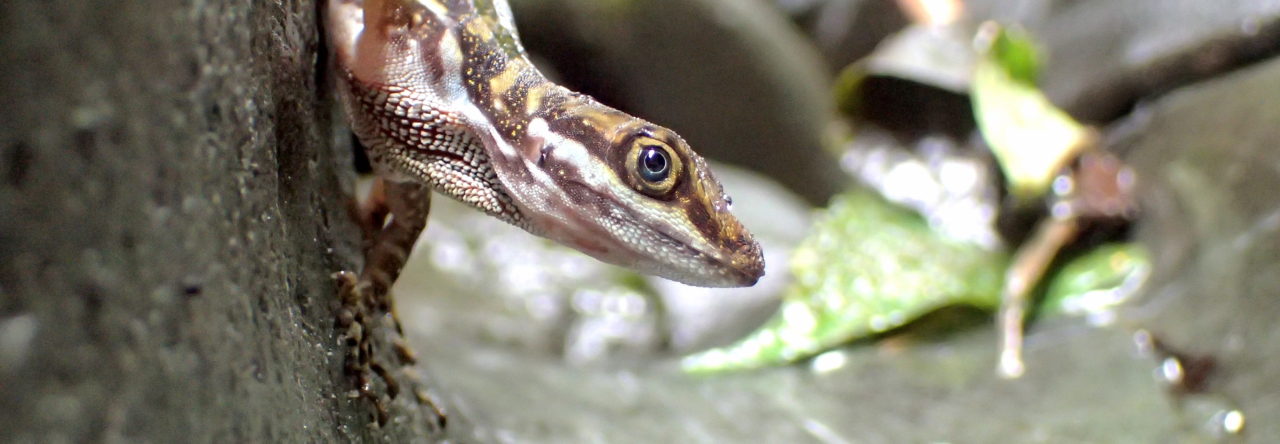
 This young Anolis equestris was enjoying the recent bloom of a royal palm here in south Florida. After the freeze in 2010 there was a sharp decline in Anolis equestris (kill rate perhaps as high as 80%). The Iguana iguana population declined by 95% or more (so much for the “invasive invasion”). What has resulted from this die-off is that now I see many more of these young A. equestris. This particular specimen most likely hatched out last spring, there is also a smaller sized batch that must have hatched out in the fall. This staggered series of young animals is something I had not observed previously. Adult Anolis equestris (particularly the males) are notorious cannibals and young equestris are much slower and less agile than A. sagrei, A. porcatus, and A. distichus which often elude the sprinting attacks of equestris.
 There have been a number of citations of equestris eating birds and small rodents. Anolis equestris are opportunistic predators and will undoubtedly take fledglings if possible. I have seen mocking birds chase equestris from trees because they see them as threats, however, their fabled predatory exploits have been largely exaggerated. For nearly forty years I have made numerous field observations of A. equestris in south Florida. What I have found is that they spend their time much like their smaller anolis counterparts snapping up small arthropods. In fact, a fair proportion of their food intake isn’t even animal matter;


