
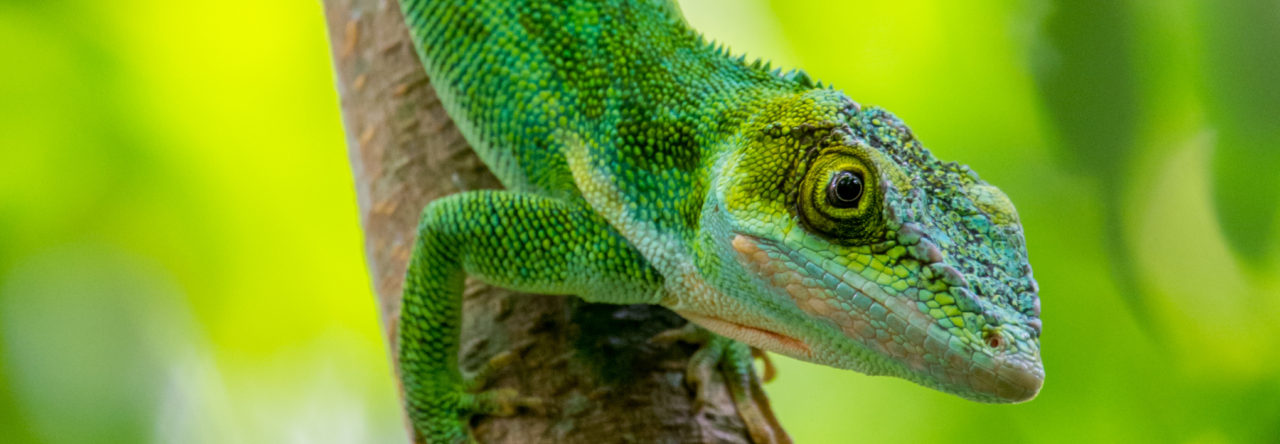
Photo by Avery Locklear at http://travel.nationalgeographic.com/travel/traveler-magazine/photo-contest/2012/entries/141546/view/. From the National Geographic Traveler 2012 photo contest.
Like they always say, it’s important to take time to smell the bananas.
Avery Locklear provides the back-story: “I saw the banana flower from a distance and approached it. Then I found the anole resting on it, sitting content. I stood there for a few minutes as it continued to explore the banana flower.
I have so many memories of anoles from when I was younger. I always called them chameleons until several years ago, I looked them up and found more information about them. My grandmother, who lives in Florida, would sometimes find them in the house and would catch them so she could set them free. I always liked to have a look at them before she let them go.
I have lots of photos of them as they are everywhere in Florida.”


 . Anyone got a pattern?
