
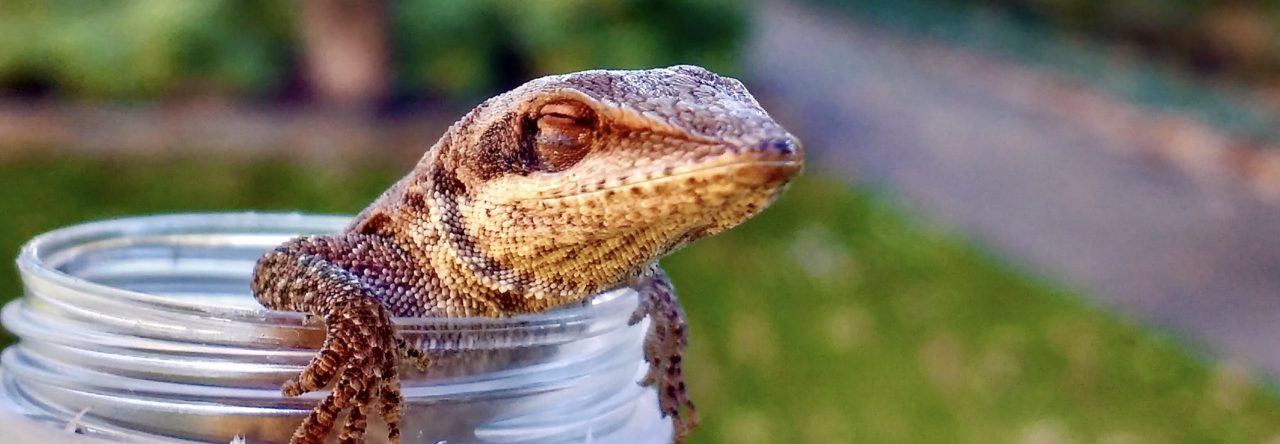
The Highest Kingdom of Anolis: Thermal Biology of the Andean lizard Anolis heterodermus Over an Elevational Gradient in the Eastern Cordillera of Colombia

New literature alert!

In Journal of Thermal Biology
Méndez-Galeano, Paternina-Cruz, and Calderón-Espinosa

Abstract

Vertebrate ectotherms may deal with changes of environmental temperatures by behavioral and/or physiological mechanisms. Reptiles inhabiting tropical highlands face extreme fluctuating daily temperatures, and extreme values and intervals of fluctuations vary with altitude. Anolis heterodermus occurs between 1800 m to 3750 m elevation in the tropical Andes, and is the Anolis species found at the highest altitude known. We evaluated which strategies populations from elevations of 2200 m, 2650 m and 3400 m use to cope with environmental temperatures. We measured body, preferred, critical maximum and minimum temperatures, and sprint speed at different body temperatures of individuals, as well as operative temperatures. Anolis heterodermus exhibits behavioral adjustments in response to changes in environmental temperatures across altitudes. Likewise, physiological traits exhibit intrapopulation variations, but they are similar among populations, tended to the “static” side of the evolution of thermal traits spectrum. The thermoregulatory behavioral strategy in this species is extremely plastic, and lizards adjust even to fluctuating environmental conditions from day to day. Unlike other Anolis species, at low thermal quality of the habitat, lizards are thermoconformers, particularly at the highest altitudes, where cloudy days can intensify this strategy even more. Our study reveals that the pattern of strategies for dealing with thermal ambient variations and their relation to extinction risks in the tropics that are caused by global warming is perhaps more complex for lizards than previously thought.


Méndez-Galeano, M. A., Paternina-Cruz, R. F., & Calderón-Espinosa, M. L. (2020). The highest kingdom of Anolis: Thermal biology of the Andean lizard Anolis heterodermus (Squamata: Dactyloidae) over an elevational gradient in the Eastern Cordillera of Colombia. Journal of Thermal Biology, 89, 102498.

Anole Annals Has a New Look!

You spoke, we listened. We’ve been working hard behind the scenes to renovate Anole Annals. Yesterday we unveiled a new look, but not just that — comments are working again!

Please bear with us over the next few days as we work out the minor issues with this transition. And if you have any ideas of ways to improve the site, let us know by email or comment below, or better yet, consider joining our board of editors to get in on the behind the scenes action!

Anole Humor

Hot Eggs Don’t Lead to Adults Tolerant of Higher Temperatures

Writing in Biology Letters recently, Alex Gunderson (Tulane University) leads a study revealing that incubation temperature does not underlie the thermal tolerance limits of resulting lizards; individuals which hatch from eggs incubated in hot conditions are not able to withstand hotter air temperatures as adults, relative to lizards hatched from cooler incubation temperatures. A preliminary discussion of the relationship between incubation conditions and adult thermal physiology was put forward as a potential explanation for observed divergence in thermal physiology between crested anoles (A. cristatellus) in Puerto Rico and an introduced population in Miami, Florida USA (Leal & Gunderson 2012), “Additional studies are needed to explore the possibility that incubation temperature can influence the [thermal tolerance limits] CTmin of A. cristatellus.” Below is the abstract and the main figure from the paper, enjoy!

Abstract
Extreme heat events are becoming more common as a result of anthropogenic global change. Developmental plasticity in physiological thermal limits could help mitigate the consequences of thermal extremes, but data on the effects of early temperature exposure on thermal limits later in life are rare, especially for vertebrate ectotherms. We conducted an experiment that to our knowledge is the first to isolate the effect of egg (i.e. embryonic) thermal conditions on adult heat tolerance in a reptile. Eggs of the lizard Anolis sagrei were incubated under one of three fluctuating thermal regimes that mimicked natural nest environments and differed in mean and maximum temperatures. After emergence, all hatchlings were raised under common garden conditions until reproductive maturity, at which point heat tolerance was measured. Egg mortality was highest in the warmest treatment, and hatchlings from the warmest treatment tended to have greater mortality than those from the cooler treatments. Despite evidence that incubation temperatures were stressful, we found no evidence that incubation treatment influenced adult heat tolerance. Our results are consistent with a low capacity for organisms to increase their physiological heat tolerance via plasticity, and emphasize the importance of behavioural and evolutionary processes as mechanisms of resilience to extreme heat.


Figure 2.

Eggs at different temperatures did not produce adults capable of tolerating different temperatures. Here, Fig 1. shows the upper limits of heat tolerance of adult brown anoles (A. sagrei) hatched from eggs incubated under different thermal treatments.

Leal, M. and Gunderson, A.R., 2012. Rapid change in the thermal tolerance of a tropical lizard. The American Naturalist180(6), pp.815-822.
Gunderson, A.R., Fargevieille, A. and Warner, D.A., 2020. Egg incubation temperature does not influence adult heat tolerance in the lizard Anolis sagreiBiology Letters16(1), p.20190716.

Hurricane Effects on Neotropical Lizards Span Geographic and Phylogenetic Scales

New literature alert!

In PNAS
DonihueKowaleski, Losos, Algar, Baeckens, Buchkowski, Fabre, Frank, GenevaReynolds, Stroud, Velasco, Kolbe, Mahler, and Herrel

Abstract

Extreme climate events such as droughts, cold snaps, and hurricanes can be powerful agents of natural selection, producing acute selective pressures very different from the everyday pressures acting on organisms. However, it remains unknown whether these infrequent but severe disruptions are quickly erased by quotidian selective forces, or whether they have the potential to durably shape biodiversity patterns across regions and clades. Here, we show that hurricanes have enduring evolutionary impacts on the morphology of anoles, a diverse Neotropical lizard clade. We first demonstrate a transgenerational effect of extreme selection on toepad area for two populations struck by hurricanes in 2017. Given this short-term effect of hurricanes, we then asked whether populations and species that more frequently experienced hurricanes have larger toepads. Using 70 y of historical hurricane data, we demonstrate that, indeed, toepad area positively correlates with hurricane activity for both 12 island populations of Anolis sagreiand 188 Anolis species throughout the Neotropics. Extreme climate events are intensifying due to climate change and may represent overlooked drivers of biogeographic and large-scale biodiversity patterns.


Are Anoles with Re-grown Tails Easier to Catch?

In reporting a case of tail bifurcation in a Bahamian brown anole (A. sagrei) from south Eluethera, Sebastian Hoefer and Nathan Robinson (The Cape Eleuthera Island School), write in Herpetology Notes proposing so!

“Another interesting observation was that this individual was particularly easy to capture and did not attempt to escape. The lack of avoidance could be explained by the anole being stunned due to stress at the time of capture. Alternatively, it could be that multiple tails infer higher energetic costs than a single tail. In turn, this could negatively affect the individual’s activity patterns or ability to avoid predators.”


Hoefer, S. and Robinson, N.J., 2020. Tail bifurcation in a Brown Anole, Anolis sagrei (Duméril & Bibron, 1837). Herpetology Notes13, pp.333-335.

Dominance and Anoles: It’s Risky at the Top, But Worth It

Two anoles duking it out. Photo from sciencesource.com

Give the elaborate and charistmatic behaviours of our favourite lizards — anoles — many researchers have attempted to piece apart the intricacies of anole social dynamics. In a recent study in Zoology, Glenn Borgmans (University of Antwerp) tests whether dominant adult male American green anoles (A. carolinensis) – dominant in relation to other males – are actually at an advantage, for example by establishing priority access to food or other resources, or if risks associated with being the big boss in town outweigh any perceived benefits, like an increased likelihood of injury due to aggressive male-male interactions. You can read all about it here!


Abstract
Male Anolis carolinensis lizards will fight and form social dominance hierarchies when placed in habitats with limited resources. Dominance may procure benefits such as priority access to food, shelter or partners, but may also come with costs, such as a higher risk of injuries due to aggressive interaction, a higher risk of predation or a higher energetic cost, all of which may lead to an increase in stress. While most research looks at dominance by using dyadic interactions, in our study we investigated the effect of dominance in a multiple male group of A. carolinensis lizards. Our results showed that dominant males in a multiple male group had priority access to prey and potential sexual partners but may run a higher risk of predation. We could not confirm that dominant males in a multiple male group had a higher risk of injuries from aggressive interactions or a higher energetic cost by being dominant. Overall our results seem to indicate that dominant male A. carolinensis lizards in a multiple male group obtain clear benefits and that they outweigh the disadvantages.

Dominant lizards ate more food items (left; A) and hid less (right; B) than more submissive individuals.

Borgmans, G., Van den Panhuyzen, S. and Van Damme, R., 2020. The (dis) advantages of dominance in a multiple male group of Anolis carolinensis lizards. Zoology139, p.125747.

Salmonella in Japan’s Green Anoles

When I hear or read Salmonella, I think of my mom explaining to my 7-year-old self why I shouldn’t eat raw chicken (to be clear, I never expressed interest in doing this, but lesson learned nonetheless). According to the U.S. Centers for Disease Control and Prevention, most instances of Salmonella bacteria making people sick do in fact result from transmission by food. But Salmonella infection can come from other sources, including direct contact with living animals, particularly reptiles (including birds which, in case you haven’t heard, are reptiles). So I was only a little surprised when I came across a recent paper in the Journal of Veterinary Medical Science, based in Japan, documenting the prevalence of Salmonella in the green anole, Anolis carolinensis, on Okinawa Island, Japan.

Of the 706 green anoles from Okinawa Island whose intestinal contents were analyzed for Salmonella presence between 2009 and 2014, only 2.1% tested positive. That number is low compared with published results for green anole populations in Florida (7.5%), Chichi Island in Japan (34.2% – this study was highlighted here on Anole Annals when it came out in 2013), and Guam (76.2%). I’m struck by how much these percentages vary. Green anoles have been in Florida for millions of years, whereas populations in the other locations have only been established for tens of years. The authors hypothesize that infection rate in recently introduced populations should correlate with how long the population has been established. Testing this hypothesis will require data from more populations.  It also appears that we know little about whether anoles are affected by carrying Salmonella, although a quick search did reveal this study involving the brown anole, Anolis sagrei.

All told, we have a lot to learn about anoles and Salmonella. In the meantime, please protect yourself from Salmonella infection by following basic food safety precautions: refrigerate foods adequately, wash fruits and vegetables and cook meat and eggs thoroughly, and clean potentially contaminated cookware and utensils with soap and water. Most importantly, WASH YOUR HANDS, although I assume that like me, you are already doing this approximately a hundred times per day (for those of you reading this in the future, I’m not a weirdo. We’re in the middle of a pandemic).

For those who may be interested, green anoles became established in and around Japan several decades ago and are considered an ecologically disruptive pest. If you want to read more, here are links to some old Anole Annals posts on various topics related to the region’s green anoles: trapping efforts, population age structure, range expansion. Enjoy!

Does Breeding Season Variation Affect Evolution of a Sexual Signaling Trait in a Tropical Lizard Clade?

New literature alert!

In Ecology and Evolution
Gray, Barley, Hillis, Pavón‐Vázquez, Poe, White

Abstract

Sexually selected traits can be expected to increase in importance when the period of sexual behavior is constrained, such as in seasonally restricted breeders. Anolis lizard male dewlaps are classic examples of multifaceted signaling traits, with demonstrated intraspecific reproductive function reflected in courtship behavior. Fitch and Hillis found a correlation between dewlap size and seasonality in mainland Anolis using traditional statistical methods and suggested that seasonally restricted breeding seasons enhanced the differentiation of this signaling trait. Here, we present two tests of the Fitch–Hillis Hypothesis using new phylogenetic and morphological data sets for 44 species of Mexican Anolis. A significant relationship between dewlap size and seasonality is evident in phylogenetically uncorrected analyses but erodes once phylogeny is accounted for. This loss of strong statistical support for a relationship between a key aspect of dewlap morphology and seasonality also occurs within a species complex (A. sericeus group) that inhabits seasonal and aseasonal environments. Our results fail to support seasonality as a strong driver of evolution of Anolis dewlap size. We discuss the implications of our results and the difficulty of disentangling the strength of single mechanisms on trait evolution when multiple selection pressures are likely at play.


Thermal Sensitivity of Lizard Embryos Indicates a Mismatch Between Oxygen Supply and Demand at Near-lethal Temperatures

New literature alert!

In Journal of Experimental Zoology
Hall and Warner

Abstract

Aspects of global change create stressful thermal environments that threaten biodiversity. Oviparous, non‐avian reptiles have received considerable attention because eggs are left to develop under prevailing conditions, leaving developing embryos vulnerable to increases in temperature. Though many studies assess embryo responses to long‐term (i.e., chronic), constant incubation temperatures, few assess responses to acute exposures which are more relevant for many species. We subjected brown anole (Anolis sagrei) eggs to heat shocks, thermal ramps, and extreme diurnal fluctuations to determine the lethal temperature of embryos, measure the thermal sensitivity of embryo heart rate and metabolism, and quantify the effects of sublethal but stressful temperatures on development and hatchling phenotypes and survival. Most embryos died at heat shocks of 45°C or 46°C, which is ~12°C warmer than the highest constant temperatures suitable for successful development. Heart rate and O2 consumption increased with temperature; however, as embryos approached the lethal temperature, heart rate and CO2 production continued rising while O2 consumption plateaued. These data indicate a mismatch between oxygen supply and demand at high temperatures. Exposure to extreme, diurnal fluctuations depressed embryo developmental rates and heart rates, and resulted in hatchlings with smaller body size, reduced growth rates, and lower survival in the laboratory. Thus, even brief exposure to extreme temperatures can have important effects on embryo development, and our study highlights the role of both immediate and cumulative effects of high temperatures on egg survival. Such effects must be considered to predict how populations will respond to global change.


Hall, JM, Warner, DA. Thermal sensitivity of lizard embryos indicates a mismatch between oxygen supply and demand at near‐lethal temperatures. J Exp Zool. 2020; 114.


Page 40 of 304

Powered by WordPress & Theme by Anders Norén