
Category: New Research Page 40 of 67

Research Projects Of Anolis lizards In Cuba

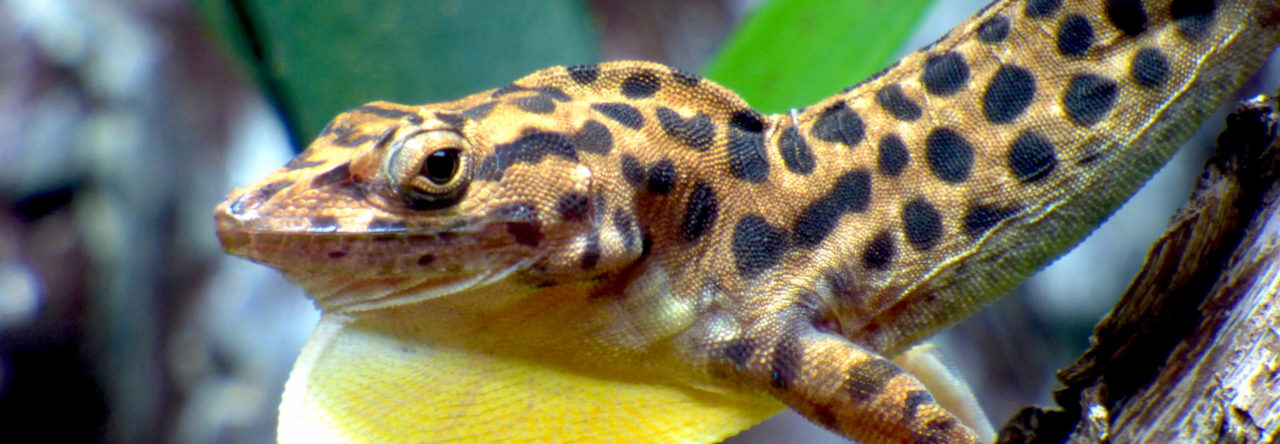
Anolis homolechis

From 2009, we have investigated the evolution and ecology of Anolis lizards in Cuba, collaborating with Habana University and The National Museum and Natural History of Cuba. Prof. Losos asked us to describe our research projects in Cuba for communication among anole biologists. Thus, we would like to inform our ongoing projects on Anolis lizards in Cuba, and we are very grateful if you have any suggestions and comments on our projects. Also, your suggestion of collaborating research projects will be welcome.

1. Searching for the genetic basis determining differences in hindlimb length between the trunk-ground anole A. sagrei and the twig anole A. angusticeps. Similar to Sanger et al. (2012), we have tried to determine the developmental timing for divergence of hindlimb length between twig and trunk-ground anoles. The manuscript on this subject was submitted and is now under review.

2.  The effects of microhabitat use, range expansion and the number of speciation events on local species richness of trunk-ground Anolis lizards in Cuba. We examined the species richness and thermal microhabitat partitioning (considered to be a measure of ecological interaction) of 12 trunk-ground anole species in 11 local assemblages in Cuba, covering nearly the entire geographic range of all these species. Our results suggest that the species composition and richness in local assemblages could be explained by both evolutionary history (the number of speciation events and limits to range expansion) and ecological processes (habitat partitioning). This research is a part of Ph.D. thesis of Antonio Cadiz (Tohoku University and Havana University). The manuscript on this subject was accepted by Ecosphere and will be available soon.

3. We reconstructed a phylogeny using almost all Cuban Anolis lizards and also analyzed the genetic distances between populations within Cuban islands for these species. This project aims not only to construct the comprehensive phylogeny, but to understand ecomorph evolution within Cuban island.

4. Genetic basis for adaptation to different thermal environments. Multiple trunk-ground species can coexist since they inhabit different thermal environments. Anolis sagrei was found in open locations with high levels of light intensity and temperature. In contrast, A. allogus was found in shaded locations within forests with low levels of both light and temperature. Anolis homolechis was typically found at the edges of forests or in open locations in forests with intermediate environmental conditions. We try to examine genetic basis for these different thermal adaptation by using both  a candidate gene approach and whole transcriptome analysis.

5. Other research projects will be started this year, although we do not specify the detailed plan.

In addition to Cuban Anoles, we are investigating the evolution of Anolis carolinensis introduced into the Bonin islands (Ogasawara islands) about 50 years ago (from either Guam, Hawaii or Florida).

Masakado Kawata, Graduate School of Life Sciences, Tohoku University, Sendai, Japan (kawata ‘at’ m.tohoku.ac.jp)

Evolutionary Diversification Of Caribbean Snakes

The Puerto Rican Racer, Alsophis portoricensis. Photo by Donald Gudehus

Sometimes it’s easy to forget that anoles aren’t the only animals in the Caribbean. But, in fact, there are other types, even of reptiles, and some of them have diversified a fair bit (though none, of course, to the extent of anoles). One such group are the alsophiine snakes, formerly all in the genus Alsophis. This Caribbean radiation of racer-like snakes includes at least 43 species ranging in size from 200-2000 mm in length and occupying a variety of habitats.

burbrink et alRecently, Frank Burbrink and colleagues, in a paper in  the Journal of Biogeography, have re-analyzed DNA data originally presented by Hedges et al. and have investigated rates of species, morphological and ecological diversification. The phylogenetic tree they recover is very similar to the Hedges et al. phylogeny and indicates fairly extensive within-island diversification. Sounds very anole-like, but it turns out that rate of diversification is quite different. Unlike anoles, species diversification and the evolution of morphological variety putter along a fairly constant rate (with a few statistical twists and turns).

Why the difference? Burbrink et al. postulate that the opportunity for diversification has been just as great for alsophiines as for anoles, so why are the evolutionary patterns different? The authors put forward a number of possible explanations, but none is compelling. Of course, although adaptive radiations often exhibit explosive bursts of diversification, there is no necessity for this to occur, and some very diverse groups have radiated at a more sedate pace. Moreover, one might question why alsophiines haven’t diversified even more–sure, they differ in body size and climatic niche, but how different are they otherwise? And how many species can co-occur at a given locality? Is it just lack of time–one of Burbrink et al.’s hypotheses–or is something constraining alsophiine diversification?

More generally, it would be interesting to conduct similar analyses on other Caribbean taxa–not just reptiles, but also amphibians, birds, even insects and plants–to see what generalities, if any, characterize Caribbean evolutionary diversification.

Nothing Worse Than Being Stuck In The Rain When A Predator’s Around

Anole perch height depending on whether it was raining and whether curly-tailed lizards (Leiocephalus carinatus) were observed on the plot.

Do you like standing out in the rain, especially when it’s cold? Me, neither. But that’s what the dastardly curly-tailed lizard forces brown anoles to do. Any sensible, semi-arboreal lizard would come down from the heights and seek shelter when it starts to rain, and that’s exactly what brown anoles do. Except when they’re in areas of high curly-tailed lizard activity, in which case they suck up and stay up high, shivering and being pelted by rain drops. That’s what research by Marta Lopez-Darias and colleagues (among which, yours truly) reported in a recent paper in Ecology. As the figure below illustrates, pretty much the only time the brown anoles drop down is when the weather goes to pot and curlies aren’t around: cool, windy, and very humid–in other words, when it’s raining. But if big boys have been cruising around on the ground, the anoles maintain their high perches.

Brown anole perch height as a function of a variety of weather variables and of curly-tailed lizard activity (in this figure, instead of presence/absence as in the figure above, predator activity was measured as the time-standardized number of active curly-tailed lizards observed on the plot).

All kidding aside, it’s not clear why they come down when it’s raining, but presumably there’s a benefit to it. One can only speculate what that is; my first guess: when it’s wet and cold, anoles are less able to notice approaching predators and less able to get away quickly because of their lower body temperature, hence they seek safer environs. Or perhaps there’s simply no potential prey afoot, and thus no reason to hang out in a high vantage point looking for them. Whatever the reason for doing so, it appears to be overruled by the threat of marauding curly tails.

As for details of the study: ten study plots were set up in various parts of Great Abaco. Plots were regularly censused, tabulating the number of curly-tailed lizards observed, the perch position of each anole observed, and a battery of meteorological variables.

Help Us With Extra Eggs

_DSC0404

A portion of our current collection. Each cup contains a single incubating egg.

Our group has posted frequently about our anole breeding work. Now many years of fine-tuning our methods has resulted in a very efficient and high yield colony, but has generated an unforeseen, but welcome problem… too many eggs. We currently have 260 eggs incubating and are getting 50-70 new eggs laid a week (in addition to the ~2700 eggs and ~1500 hatchlings that this experiment has already produced). All of these eggs are the results of a cross involving members of the A. distichus species complex from Hispaniola. This quantity of eggs is more than we need for our current experiments and more than we can house, so we are wondering if folks in the AA community can help us figure out how to put them to good use. These eggs are from a research colony and can only be used for research purposes at an accredited research institution; we cannot provide eggs or hatchlings to be kept as pets*.

Do you have a need for, or ideas for the use of, a large number of eggs, embryos or recent hatchlings? We are looking for suggestions that might help us use these eggs to learn something about anole biology that we may not have thought of, or don’t have the expertise to do. For example, if there is anybody out there who wants to create a developmental series for A. distichus, we can provide you with the required samples. Perhaps someone could make use of a large sample of egg yolk or other egg components for their work on anole reproduction? We are also hoping for some creative suggestions; see, for example, a recent study on explosive hatching in response to predator presence.

Drop us a line in the comments or contact me directly if you are interested or have ideas.

* To be clear, we are not against keeping anoles as pets but our university committee on animal resources stipulates that animals from our colony must be used for addressing specific projects or questions. Indeed, any potential uses would need to be approved by the approproate institutional review committee(s).

Sexual Dimorphism And Geographic Variation In A Mainland Anole

Morphological differences between the sexes and among populations have been studied extensively in Caribbean anoles, but—like so many other aspects of biology—not so much in mainland species. Studies in the islands suggest that differences, both sexual and geographic, often represent adaptation to different conditions, either the sexes partitioning niches or populations adapting to different circumstances.

Martha Calderon and colleagues have just published a paper in Revista de Biología Tropical on variation in the Colombian anole A. ventrimaculatus. Examing museum specimens from seven populations, they find consistent size dimorphism (males larger) and substantial dimorphism in body proportions. The extent of these dimorphisms, however, varies among sites.

Unfortunately, at this time little is known about the habitat use and general ecology of this species, much less about differences among populations, so evaluation of the potential adaptive significance of this variation awaits further fieldwork.

The paper’s abstract:

Variation in body characteristics related to lizard locomotion has been poorly studied at the intraspecific level in Anolis species. Local adaptation due to habitat heterogeneity has been reported in some island species. However, studies of mainland species are particularly scarce and suggest different patterns: high variability among highland lizards and poorly differentiated populations in one Amazonian species. We characterized interpopulation variation of body size and shape in the highland Andean Anolis ventrimaculatus, an endemic species from Western Colombia. A total of 15 morphometric variables were measured in specimens from the reptile collection of the Instituto de Ciencias Naturales, Universidad Nacional, Colombia. The study included individuals from seven different highland localities. We found size and shape sexual dimorphism, both of which varied among localities. Patterns of variation in body proportions among populations were different in both males and females, suggesting that either sexual or natural selective factors are different in each locality and between sexes. Since this species exhibits a fragmented distribution in highlands, genetic divergence may also be a causal factor of the observed variation. Ecological, behavioral, additional morphological as well as phylogenetic data, may help to understand the evolutionary processes behind the geographic patterns found in this species. Rev. Biol. Trop. 61 (1): 255-262. Epub 2013 March 01.

Anoles Modulate Headbob Amplitude To Maximize Detectability Based On Receiver Lizard Distance

Not effective at a great distance

Think about when you want to communicate with someone, but first you have to get their attention. Let’s start with verbal communication. If Fred is across the room, you probably holler out “Hey Fred” a lot louder than if he’s sitting next to you. Now, suppose you’re the non-verbal sort. If Fred’s a long distance away, you’re going to have to wave your hand wildly, maybe even jump up and down, to get his attention. But if he’s nearby, a little wave, even a discreet hand gesture, will suffice. Why we don’t whisper or make slight movements to attract the attention of those far away is pretty obvious–the target won’t hear or see you. But why not yell loudly or gesture emphatically even when the target is nearby (ok, we all know some annoying people who do this, but mostly people don’t)?

Steinberg and LealSignal modulation is an area of great interest in the field of animal communication, and Steinberg and Leal have just published a fascinating study on the Puerto Rican A. gundlachi in Animal Behaviour (pdf). The key to understanding signal modulation is to investigate how signal detectability changes as a function of distance. Building on prior work by Fleishman on A. sagrei, Steinberg and Leal conducted lab studies in which they move a black disk against white paper to determine how much movement is needed to attract the lizard’s attention. Fortunately, this can be easily done with lizards because they have something called the  visual grasp reflex–when something gets their attention, they shift their eye to gaze right at it. Easy to determine in the lab. So, by moving the disk up-and-down different amounts and varying the distance of the lizard, the authors were able to determine the degree of amplitude of movement in the visual field most detectable by the lizards (see figure on right). Notably, there is not only a minimum visual angle, but also a maximal one, above which response declines (and then increases again; for reasons discussed in the paper, Steinberg and Leal focus on the maximal peak in the 0.25-0.75 degree range).

Of course, because the movement is expressed as an angle relative to the visual field, then as the distance to the target receiver increases, larger amplitude movements would be necessary to be detected. Moreover, looked at the other way, because there may be a degree of movement too great to maximally stimulate a response, the amplitude would be expected to decrease at shorter distances.

Female Green Anoles Exhibit Limb Length Plasticity In Natural Habitats

carolinensis by michele johnsonMuch has been written about how differences in relative limb length allow anoles to successfully occupy distinct portions of the arboreal habitat. Most research has focused on large-scale patterns of diversity, which are presumably the result of natural selection. But limb length could also be more finely tuned using an alternative process, whereby an individual’s morphology responds to environmental cues experienced throughout development. This process is known as phenotypic plasticity. We already know that anole limbs exhibit plasticity in the lab (e.g., Losos et al. 2000, 2001 – A. sagrei; Kolbe and Losos 2005 – A. carolinensis), with lizards raised on narrow perches having shorter limbs than those raised on broad perches.  But what about lizards in their natural environments; could plasticity in limb length allow lizards to become more specialized to their particular microhabitat in the wild?  This was the question that Trinity University (San Antonio) undergraduate Alisa Dill asked in summer 2010, working with fellow undergraduate Andrew Battles, regular AA contributor Thom Sanger, and me.

We studied green anole lizards in three plots in Palmetto State Park, in southeastern Texas (Figure 1).

Figure 1 from Dill et al. In press. Study plots in Palmetto State Park. The star on the small map of Texas (bottom left) indicates the location of the park.

Figure 1 from Dill et al. In press. Study plots in Palmetto State Park. The star on the small
map of Texas (bottom left) indicates the location of the park.

The three plots differed dramatically in perch availability – one was in a dense dwarf palmetto stand in a closed forest, another was trees and bushes surrounding an open field, and the third was in a light forest with many small vines and twigs. We found that female lizards in the third plot (with the narrowest perches) had significantly shorter hindlimbs than females in the other two plots, although males did not differ in limb length among the plots.  Juveniles also did not differ in limb length across the three plots, consistent with the idea that the female’s developmental experience on varying perches may influence their adult limb length.

Why this difference between the sexes?  (This difference is also consistent with results from the laboratory studies mentioned above.)  We also observed where males and females were found in their habitat and how they locomoted through it to determine if differences in behavior between the sexes could affect the way the developing lizards interact with their environment. We found that females performed fewer locomotor behaviors, spending more time on particular perches; thus, perhaps the perches had a stronger influence on female limb length than on males, who used many more perches as they move through their environment.

There is much more work to be done to further test the hypothesis of plasticity in a natural environment. After all, the previous lab experiments were performed by growing lizards on either a wooden 2×4 or a small dowel, a much simpler environment than a forest with many perch options. It would be ideal to perform a “common-garden” experiment where juvenile lizards are transplanted between environments with different perch diameters. We also don’t yet understand the developmental mechanisms that cause limb plasticity in anoles, but more information about those mechanisms will help determine why the sexes respond differently to differences in their microhabitat.

You can read more about our study in our recent publication in the Journal of Zoology, available online now in Early View.

References:

Dill, A.K., T.J. Sanger, A.C. Battles and M.A. Johnson. In press. Sexually dimorphisms in habitat-specific morphology and behavior in the green anole lizard. Journal of Zoology.

Kolbe, J.J. & Losos, J.B. (2005). Hind-limb length plasticity in Anolis carolinensis. J. Herpetol. 39, 674–678.

Losos, J.B., Creer, D.A., Glossip, D., Goellner, R., Hampton, A., Roberts, G., Haskell, N., Taylor, T. & Ettling, J. (2000). Evolutionary implications of phenotypic plasticity in the hindlimb of the lizard Anolis sagrei. Evolution 54,301–305.

Losos, J.B., Schoener, T.W., Warheit, K.I. & Creer, D. (2001). Experimental studies of adaptive differentiation in Bahamian Anolis lizards. Genetica 112-113, 399–415.

Habitat Fragmentation And Population Biology Of A High Andean Lizard

Anolis heterodermus. Photo by J. Losos.

Anolis heterodermus. Photo by J. Losos.

We all know that habitat fragmentation and destruction have devastating consequences on biodiversity. Yet, one of the reasons that Caribbean anoles have been so intensively studied is that some species do extremely well in human-disturbed habitats and, because they have become so ubiquitous, they are extremely good subjects for ecological and behavioral studies.

In fact, it gives pause to realize that Caribbean islands were mostly cloaked in forest before the arrival of man, and thus many of the common anole species which are abundant in open, disturbed habitats–brown anoles, for example–were probably much less abundant in pre-historic times. In other words, it seems likely that some species are actually doing better today than in the past, but there are very few relevant data.

Anolis (Phenacosaurus) heterodermus probably occurs at higher altitudes than any other anole and has a very large altitudinal range. It’s natural history is almost unknown, and until recently, nothing had been published on its ecology and behavior since Miyata’s J. Herp. paper 30 years ago. However, that has now changed. Rafael A. Moreno-Arias has just completed his master’s degree at Universidad Nacional de Colombia on populations of this species near Bogotá, and the first paper from this work was recently published in Biotropica.

The habitat near one of the study sites in Tabio, Colombia. Photo by J. Losos.

The habitat near one of the study sites in Tabio, Colombia. Photo by J. Losos.

In that paper, Moreno looked at six habitat patches, differing in size and degree of fragmentation. By conducting a mark-recapture study,  he found that populations seemed to be increasing in all populations. Moreover, survival and growth rates were calculated to be highest in the most disturbed habitats, perhaps reflecting this species’ adaptation to edge habitats. Although too much habitat destruction is obviously detrimental–without any bushes, the species will not be able to survive–it seems that the species, perhaps like its Caribbean cousins, does just fine in fragmented landscapes. However, Moreno and Urbina-Cardona take a different, more nuanced, view on their findings, as their abstract below indicates.

Abstract:

Habitat fragmentation and loss affect population stability and demographic processes, increasing the extinction risk of species. We studied Anolis heterodermus populations inhabiting large and small Andean scrubland patches in three fragmented landscapes in the Sabana de Bogotá (Colombia) to determine the effect of habitat fragmentation and loss on population dynamics. We used the capture-mark-recapture method and multistate models to estimate vital rates for each population. We estimated growth population rate and the most important processes that affect k by elasticity analysis of vital rates. We tested the effects of habitat fragmentation and loss on vital rates of lizard populations. All six isolated populations showed a positive or an equilibrium growth rate (k = 1), and the most important demographic process affecting k was the growth to first reproduction. Populations from landscapes with less scrubland natural cover showed higher stasis of young adults. Populations in highly fragmented landscapes showed highest juvenile survival and growth population rates. Independent of the landscape’s habitat configuration and connectivity, populations from larger scrubland patches showed low adult survivorship, but high transition rates. Populations varied from a slow strategy with low growth and delayed maturation in smaller patches to a fast strategy with high growth and early maturation in large patches. This variation was congruent with the fast-slow continuum hypothesis and has serious implications for Andean lizard conservation and management strategies. We suggest that more stable lizard populations will be maintained if different management strategies are adopted according to patch area and habitat structure.

Two New Papers Criticize Proposal To Split Anolis

Last year, Nicholson et al. proposed splitting Anolis into eight genera in a paper in Zootaxa.  This idea was extensively debated in AA’s pages (e.g., 1,2,3 and links therein). Now, two papers have been published criticizing the methods and conclusions of Nicholson et al. and suggesting that the generic name Anolis be retained for the entire clade.

In a paper just published two days ago in Zootaxa, Steve Poe argues strongly against Nicholson et al.’s proposal on multiple grounds, primarily on the lack of demonstrated monophyly of most of the proposed genera. Poe concludes at the end of the introduction of the paper: “Nicholson et al. (2012) selectively adopted results of their own flawed, unstable, and conflicting analyses, selectively incorporated pertinent published data and results, and changed names for over 100 species that have never been included in a phylogenetic analysis. The proposed taxonomy is unnecessary and unwarranted according to standard taxonomic practice. It should not be adopted by the scientific or nonacademic communities.” The paper is only five pages long and is readily downloaded.

Meanwhile, within the past month, Castañeda and de Queiroz published a paper in the Bulletin of the Museum of Comparative Zoology on phylogenetic relationships within the Dactyloa clade of anoles (pdf, supplementary material). The paper is a follow-up to their 2011 paper on Dactyloa, adding morphological data to the molecular dataset analyzed previously. We’ll have more on this paper soon, but the pertinent part for today is the “Note added in Proof” appended to the beginning of the paper. The authors explain “Shortly after our paper was accepted, Nicholson and colleagues published a phylogenetic analysis of anoles and a proposal to divide Anolis into eight genera… Here, we comment briefly on their study as it pertains to the phylogeny and taxonomy of the Dactyloa clade,” and then go on to criticize Nicholson et al.’s recognition of genera (in this case, Dactyloa) and species groups that are not monophyletic in their own analyses. Moreover, like Poe, Castañeda and de Queiroz present strong critiques of the Nicholson et al. methodology and analyses, concluding “Because our results are based on larger samples of Dactyloa species (for both molecular and morphological data), as well as larger samples of molecular data (with respect to both numbers of bases and numbers of gene fragments, and including both mitochondrial and nuclear genes), and because many of their taxonomic conclusions that differ from ours are either contradicted by their own results or unsubstantiated, we do not consider any of the differences between our phylogenetic results and taxonomic conclusions compared with those in the study by Nicholson et al. (2012) to warrant changes to our proposed taxonomy. In contrast to Nicholson et al. (2012), we refrain from assigning some species to series and treat some taxonomic assignments as tentative because of contradictory results or poorly supported inferences, and we present justifications for all taxonomic decisions pertaining to species not included in our analyses.”

The Castañeda and de Queiroz critique is only two pages long. Read ’em both and decide for yourself.

Do Bats Eat Anoles?

Micronycteris microtis. Photo from http://www.chiroping.org/images/bats/microtis2.jpg

A question that comes up from time to time is whether bats are among the panoply of species that munch on anoles, particularly in the mainland neotropics. As we all know, some bats are renowned for catching and eating frogs, but will they also sup on our little friends? As far as I’m aware, there are no records in the literature of anolivory in bats, but perhaps a reader can correct me on this point. One can imagine two scenarios: first, bats active at dusk or dawn might nab anoles while still active. Alternatively, second, perhaps bats can use their sonar to locate sleeping anoles on leaves. This latter point has generally been considered unlikely because the acoustic clutter in a thick vegetational matrix has been thought to be make it difficult for bats to identify and locate non-moving objects in the vegetation.

A recent study shows that this is not so. Studying the insectivorous bat Micronycteris microtis from Panama, Geipel et al. have just shown that bats can use echolocation to find and capture non-moving prey, in this case dragonflies. More details are provided in the abstract pasted below. It would seem to follow, then, that bats may, indeed, prey on sleeping anoles, but in a critical oversight, the authors fail to comment on this pressing issue.

Abstract: “Gleaning insectivorous bats that forage by using echolocation within dense forest vegetation face the sensorial challenge of acoustic masking effects. Active perception of silent and motionless prey in acoustically cluttered environments by echolocation alone has thus been regarded impossible. The gleaning insectivorous bat Micronycteris microtis however, forages in dense understory vegetation and preys on insects, including dragonflies, which rest silent and motionless on vegetation. From behavioural experiments, we show that M. microtis uses echolocation as the sole sensorial modality for successful prey perception within a complex acoustic environment. All individuals performed a stereotypical three-dimensional hovering flight in front of prey items, while continuously emitting short, multiharmonic, broadband echolocation calls. We observed a high precision in target localization which suggests that M. microtis perceives a detailed acoustic image of the prey based on shape, surface structure and material. Our experiments provide, to our knowledge, the first evidence that a gleaning bat uses echolocation alone for successful detection, classification and precise localization of silent and motionless prey in acoustic clutter. Overall, we conclude that the three-dimensional hovering flight of M. microtisin combination with a frequent emission of short, high-frequency echolocation calls is the key for active prey perception in acoustically highly cluttered environments.”

Mentally put an anole in there, and you can see we’ve got trouble!

Page 40 of 67

Powered by WordPress & Theme by Anders Norén