Category: New Research Page 24 of 67

Climate Niche Evolution in Anoles – New Research by Adam Algar and Luke Mahler

Anolis shrevei, a species inhabiting extreme cold environments on Hispaniola.

Anolis shrevei, a species inhabiting extreme cold environments on Hispaniola.

Caribbean anoles are widely recognized as a key example of “adaptive radiation,” or the diversification of a group of organisms into different ecological niches*. Anoles in the Greater Antilles (Cuba, Hispaniola, Jamaica, and Puerto Rico) diversified into multiple types of habitat specialists, or “ecomorphs,” so-named for the portion of the structural habitat that they most often occupy. For example, “twig” anoles are found on the distal ends of branches. They have relatively short limbs (and, often, prehensile tails) for navigating their spindly habitat. The ecomorphs have evolved a myriad of morphological features suited to their microhabitat use. But diversification into different structural niches comprises only one dimension of their radiation across the Caribbean. Anoles have also diverged into distinct climatic habitats in the Greater Antilles, such as Anolis shrevei (pictured above), a montane species found at high elevation in the Cordillera Central mountain chain of the Dominican Republic. Some anoles are restricted to desert scrub habitats, others to cloud forests, and others to warm lowland environments. The list goes on!

But how does climatic evolution fit into the bigger picture of the Anolis adaptive radiation across the Caribbean? In a previous study, Mahler et al. (2010) suggested that “ecological opportunity” (roughly, the lack of competitors for ecological niche space) influences rates of morphological diversification into different portions of the structural habitat. In a study just published in Global Ecology and Biogeography, Adam Algar (University of Nottingham) and Luke Mahler (University of Toronto) sought to test the idea that ecological opportunity also influences rates of climatic niche evolution in Caribbean anoles. Although they are tropical, several of the Caribbean islands possess considerable elevational variation , which has created substantial thermal variation and the potential for climatic niche evolution in anoles (See Figure 1 below).

Portion of Figure 1 from Algar and Mahler (in press) showing temperature variation in the Greater Antilles (a) and the Lesser Antilles (b)

Portion of Figure 1 from Algar and Mahler (in press) showing temperature variation in the Greater Antilles (a) and the Lesser Antilles (b).

Algar and Mahler first quantified two temperature axes (mean temperature and temperature seasonality of species’ localities) of the climate niche for 130 Anolis species on each of the islands in the Greater Antilles, as well as from the northern and southern Lesser Antilles (i.e., the series of small, volcanic islands that dot the eastern Caribbean Sea). The first temperature axis (PC 1) correlated with thermal  minima and maxima and the second temperature axis (PC 2) correlated with temperature seasonality.

Figure 2 from Algar and Mahler showing how rates of thermal PC 1 relates to climate heterogeneity (a), and geographic area (b). (c) shows how rates of thermal PC 1 evolution correlate with climatic heterogeneity after correcting for geographic area. Relationships depicted in (b) and (c) are statistically significant.

Figure 2 from Algar and Mahler showing how rates of thermal PC 1 relates to climate heterogeneity (a), and geographic area (b). (c) shows how rates of thermal PC 1 evolution correlate with climatic heterogeneity after correcting for geographic area. Relationships depicted in (b) and (c) are statistically significant.

They showed that rates of niche evolution for thermal PC 1 was significantly higher in geographically larger regions (Fig. 2b). Thermal PC 1 was, however, unrelated to climatic heterogeneity (Fig. 2a). But, when the residuals of the relationship between thermal PC 1 and geographic area were regressed against climatic heterogeneity, they did recover a significant positive relationship (Fig. 2c), indicating that, over a given area, thermal niche evolution is faster in regions with greater climatic heterogeneity. They conducted the same analyses for thermal PC 2 (temperature seasonality) and, as with PC 1, found no relationship between evolutionary rate and climate heterogeneity and a positive relationship with area. However, in contrast to their results with PC 1, even after controlling for geographic area, they did not recover a significant relationship between evolutionary rate and climatic heterogeneity.

To determine whether the relationships between evolutionary rate and island area could be due to the higher species numbers found on larger islands, they regressed the evolutionary rate against species number. They did find a strong relationship between species number and evolutionary rate. However, given that island area and species number are highly correlated, this result was not unexpected. Thus, they were unable to fully disentangle how island area and species might interact to influence rates of the climatic niche evolution.

In short, Algar and Mahler found that island area greatly influenced the rate of climatic niche evolution. It has long been recognized that island area is a major determinant of species richness and species diversification on islands – on islands above a certain threshold size, in situ speciation can occur. In this study, Algar and Mahler add climate niche radiation to the list – on islands above a certain size, climatic niches can diverge considerably. But how, specifically, does island area contribute to rates of climatic niche evolution? The authors suggest that larger islands allow more speciation along elevational gradients, such as mountains, which can result in climatic specialization (either during the process of speciation or post-speciation). On small islands, they argue, high gene flow may swamp out the effects of climatic divergence even where climatic thermal heterogeneity exists and, when such specialization does occur, those species may be susceptible to higher extinction rates (due to their smaller geographic ranges). In short, climatic niche evolution presents an equally important (though relatively understudied) aspect of the Anolis adaptive radiation in the Caribeean.

—————————

*Scientists differ in their definition of adaptive radiation, though most can agree with the idea that it involves adaptive diversification. Here I follow the definition of Losos and Mahler (2010).

Works Cited

Algar, A. C., and D. L. Mahler. In press. Area, climate heterogeneity, and the response of climate niches to ecological opportunity in island radiations of Anolis lizards. Global Ecology and Biogeography.

Losos, J. B., and D. L. Mahler. 2010. Adaptive radiation: the interaction of ecological opportunity, adaptation, and speciation. Pp. 381-420 in M. A. Bell, D. J. Futuyma, W. F. Eanes, and J. S. Levinton, Eds. Evolution Since Darwin: The First 150 Years. Sinauer Associates, Sunderland, MA.

Mahler, D. L., L. J. Revell, R. E. Glor, and J. B. Losos. 2010. Ecological opportunity and the rate of morphological evolution in the diversification of Greater Antillean anoles. Evolution 64:2731-2745.

Exposure Determines Costs of Immunity in Brown Anoles

Parasite exposure, which is practically inevitable in the wild, typically results in activation of the innate immune system. While these responses provide rapid detection and elimination of parasites, they are also costly to hosts in many ways including increases in the use of essential amino acids to produce immune proteins. Costs experienced by hosts can sometimes be offset by abundant resources, but in most environments, resources are limited. As a result, immune costs are likely an important influence on many ecological and evolutionary phenomena, such as the diversity of immune defenses that exist among and even within populations. If immune costs are driving variation in immune responses, then it is reasonable to expect that they might also affect how parasites move through communities. If host costs of immunity increase with parasite exposure, then we would expect to see selection for hosts that tolerate infections, rather than clearing them.

Photo by Amber J. Brace

Photo by Amber J. Brace

In our study recently published in Functional Ecology, we examined whether increased exposure to Salmonella lipopolysaccharide increased costs of innate immune activation in brown anoles (Anolis sagrei) by tracking allocation of an isotope-labelled amino acid (13C-leucine) to the liver and gonads after exposure. We found that costs of immunity are indeed dose-dependent in this introduced population of from Tampa, Florida, but the sexes experienced costs differently; males increased leucine allocation to their livers while females sacrificed allocation to their gonads. Most interestingly, costs were modest even at high doses, suggesting that at high levels of Salmonella exposure, this species may tolerate infection as the costs of resisting a high level of infection may be too great.  These results are particularly interesting because they indicate that populations of brown anoles, a successful introduced species in Florida, may have been selected to have decreased costs of immune activation, and therefore increased parasite burdens. This may mean they are substantially contributing to the disease risk of native species by increasing exposure risk of Salmonella to other animals in Florida by maintaining comparatively high burdens, which they shed into the environment.

Amber J. Brace

University of South Florida, Department of Integrative Biology

20-Million-Year-Old Fossils Reveal Ecomorph Diversity in Hispaniola


Twenty exquisitely preserved anole fossils in 20 My old Dominican Amber have been reported on in a paper out in Proceedings of the National Academy of Sciences (PNAS) this week.

Previously on AA, I reported that the search was on to find anole fossils in order to piece together the anole family tree. We were extremely fortunate to find in the end 38 amber fossils with anole inclusions, sourced from museums such as the Staatliches Museum für Naturkunde Stuttgart, Germany, American Museum of Natural History, and Naturhistorisches Museum, Basel Switzerland, as well as from generous private collectors.

All of the fossils were exquisite, stunningly-preserved anoles in Dominican Amber. Sometimes just a foot or tail was preserved, sometimes a whole limb or two, or an isolated head, but occasionally a whole lizard was preserved laid out as if it has been pressed into resin just moments before.

Modified from Figure 1 of Sherratt et al. 2015 PNAS.

Modified from Figure 1 of Sherratt et al. 2015 PNAS.

Using micro-CT scanning to peer inside the fossils, we were delighted to find well-preserved skulls and skeletons. We were surprised to find that many of the amber pieces had air-filled pockets representing where the lizard body had once been (but subsequently mostly rotted away), and the scales had left their impression on the amber. This allowed us to view the scales of the limbs and toepads in the greatest of detail.

The forelimb lying atop belly scales of a trunk-ground fossil, specimen M of Sherratt et al. 2015.

The forelimb lying atop belly scales of a trunk-ground fossil, specimen M of Sherratt et al. 2015.

Twenty of these fossils were complete enough, or preserved with the right body parts (limbs with a pelvis, or toepads with countable lamellar scales) to study qualitatively. I micro-CT scanned 100 modern specimens from the Harvard MCZ collection, representing adults and juveniles of all the ecomorphs in Hispaniola. With these data, I build up a dataset of measurements of the limbs, skulls and pelvic girdles that could be used to compare with the fossils. Working fossil by fossil, I used discriminant function analysis to assess the probability that the fossil matched each of the modern ecomorphs.

The fossil twig anole, from Jose Calbeto of Puerto Rico.

The fossil twig anole, from Jose Calbeto of Puerto Rico.

The results were very exciting. We found evidence for four of the six ecomorphs in the amber. Trunk-crown were the most abundant, but there was also one that fell within the twig anoles, two that fell with trunk and two with trunk-ground anoles. Not all the fossils could be assigned to an ecomorph with high probability. Though, my gut feeling is that there is a second twig anole (specimen P) based on the distinct few lamellar scales on its widely-expanded toepads, but sadly it didn’t have enough skeleton and no hind limbs preserved to add to the analysis.

We didn’t find any fossils that resembled crown-giants or grass-bush anoles. Why?

Condition Dependence of Sperm Morphology in the Brown Anole

When I was first designing projects for my dissertation, a result from one of my advisor’s papers caught my attention – brown anole males in better body condition (relatively more massive for their body size) sired more offspring and more sons. We didn’t have an explanation for how or why this trend existed but as a wannabe sperm biologist, I was immediately suspicious that it had something to do with sperm quality. I had some preliminary data showing that brown anole males varied in their sperm morphology and sperm count, but I wanted to know if some of this intraspecific variation was due to condition dependence and if there were fitness consequences associated with this variation.

OLYMPUS DIGITAL CAMERA

Male brown anole in St. Augustine, FL.

In our recent experiment, we tested whether body condition was correlated with sperm quantity and quality, and whether the variation in sperm traits resulted in differences in a male’s competitive ability. To do this, we placed two groups of males on high-intake and low-intake diet treatments, where males were fed either five crickets three times a week or one cricket three times a week to experimentally alter their body condition. They were fed this diet until the two groups diverged in condition, and then kept on the diet treatments long enough for them to develop a fresh batch of sperm while in this altered body condition. We collected a sperm sample and measured sperm count and the morphology of 25 cells for each male. We focused on measuring the three largest regions of the cell, the head, the midpiece and the tail (see image below). To test for differences in the ‘competitiveness’ of each group’s sperm, we designed reciprocal mating trials so that a pair of males (one male from each group) would compete for fertilization of a female’s brood. Each male pair was mated to two females, and the order in which the males mated with the female was reversed for the second female to account for mate order effects.

Figure 2

Figure 2 from Kahrl and Cox 2015, (A). Anolis sagrei sperm cell B. Individual means (±SD) for head length, midpiece length, and tail length of 25 sperm cells per individual for each of 17 males from each treatment group (high- and low-intake). (C) Treatment means (± standard error) of individual means in head length, midpiece length, and tail length. (D) Treatment means (±SE) of individual CV in head length, midpiece length, and tail length.

To complement this lab study, we collected sperm from a wild population of brown anoles to look for condition dependence of sperm morphology in the wild. We also reanalyzed paternity data from Cox et al. 2011 to test for condition-dependent reproduction in a lab population of brown anoles. It should be noted that the lab population in this study (Cox et al. 2011) differed from our experimental population in a few ways. First, the males from that study did not have experimentally manipulated body condition. They were all fed the same diets, and the pairs of males that contained both a male in naturally high-condition and low-condition were included in this analysis. Secondly, though the mating design in that study was the same as our experimental reciprocal design, in Cox et al. 2011 males were allowed unlimited access to the females for an entire week, where in our experimental study males were limited to a single copulation.

Figure 4 of Kahrl and Cox 2015. Mean (± standard error) proportion of progeny sired by males that were (A) categorized into high- and low-condition pairs (data reanalyzed from Cox et al. 2011) and (B) assigned to high-intake and low-intake diet treatments. Condition dependence was assessed in 3 ways: 1) using each dam as a unit of observation and estimating the proportion of paternity for each of her 2 mates, 2) using each pair of potential sires as a unit of observation and estimating the proportion of paternity for each male, and 3) using each pair of potential sires as a unit of observation but restricting the comparison to the subset of pairs for which both dams produced offspring.

We found that in both the lab and field, males in low body condition or on a low-intake diet treatment had significantly larger and more variable sperm midpieces than males in high body condition. We also found that males on the low-intake diet treatment had significantly lower sperm counts. When we analyzed the paternity data to test for correlations between fertilization success and sperm traits, we found significant negative correlations between sperm head and midpiece length, sperm count and fertilization success (though it should be noted that we only found these correlations for the average proportion of paternity and not when males were analyzed by either the proportion of paternity from their first or their second mating). We tested for condition-dependent fertilization success in our experimentally manipulated population and reanalyzed the data from males who varied naturally in body condition from Cox et al. 2011. We found a significant difference in fertilization success in males who varied naturally in body condition and had unlimited access to females, but found no difference in fertilization success in males who were in the experimental diet treatment groups (though the trend was similar in our experiment). Together, these data suggest that condition-dependent fertilization success is partially mediated by sperm quantity and morphology, and may also be influenced by a male’s ability to mate multiply with the same female.

This is the first paper that is part of my dissertation on the evolution of sperm morphology. I’m using anoles and phrynosomatid lizards to assess the sources and consequences of inter- and intraspecific variation in sperm morphology. Hopefully I’ll have more to share about anole sperm biology soon!

Kahrl, A.F., and R.M. Cox. 2015. Diet affects ejaculate traits in a lizard with condition-dependent fertilization  success. Behavioral Ecology (advance access).

Evolution 2015 Recap

Logo for the Evolution 2015 conference.

Evolution 2015 is officially over and we have all sadly left beautiful Guarujá,  Brazil. There were a lot of great talks and posters and a great representation of South American students and researchers. For coverage on the conference as a whole, check out #evol2015 on twitter! The herps were few and far between (I only saw 2 in my 16 days in Brazil!) but the posters and talks on herps were numerous. Unfortunately, anoles were poorly represented at Evolution this year with only three anole talks and a couple of others that briefly highlighted anoles. If you weren’t able to make it to Brazil, I’ve got the recap for you here.

click to read more about Travis Hagey's research

A glimpse at the variation in gecko toepads

Starting off in one of the first sessions was a talk by Travis Hagey titled “Independent Origins, Tempo, and Mode of Adhesive Performance Evolution Across Padded Lizards.” Although his talk was mostly about geckos, he did shine the spotlight on anoles for a few minutes. He focused on the phylogenetic pattern of toepad adhesion in pad-bearing lizards: geckos, skinks, and anoles. Specifically he looked at how clinging ability (measured as angular detachment – check out one of his videos showing this) varied within and among clades. Unsurprisingly, he found that anoles don’t cling nearly as well as geckos. He also demonstrated that gecko toepad diversification best followed a Brownian motion model with weak OU and anole toepad diversification was best fit by a strong Ornstein–Uhlenbeck process. In other words, gecko toepads diversified slowly over a very long period while anoles were quickly drawn towards an optimum over a short time-period. Travis concluded that these patterns explain why there is a large amount of diversity in gecko toepads but not in anole toepads.

Next up was Joel McGlothlin, who also gave a non-anole talk titled “Multiple origins of tetrodotoxin‐resistant sodium channels in squamates.”

Messages Conveyed by Assorted Facets of the Dewlap in the ‘Festive Anole’

A. sagrei AAFor decades, we anole scientists have been fascinated by the marvelous throat fans, called ‘dewlaps,’ characterizing Anolis lizards. A bunch of brilliant studies have therefore focused on the origin, evolution, diversity and function of this structure, revealing important pieces of what seems to be a complex ‘dewlap puzzle.’ And I think you all agree that the answer to what might look like a rather simple question at first, i.e., ‘what does the dewlap say,’ is not evident at all. So, with our study we aimed to add an ‘extra’ piece to the puzzle, which may help to further unravel the exact nature of information conveyed by the Anolis dewlap.

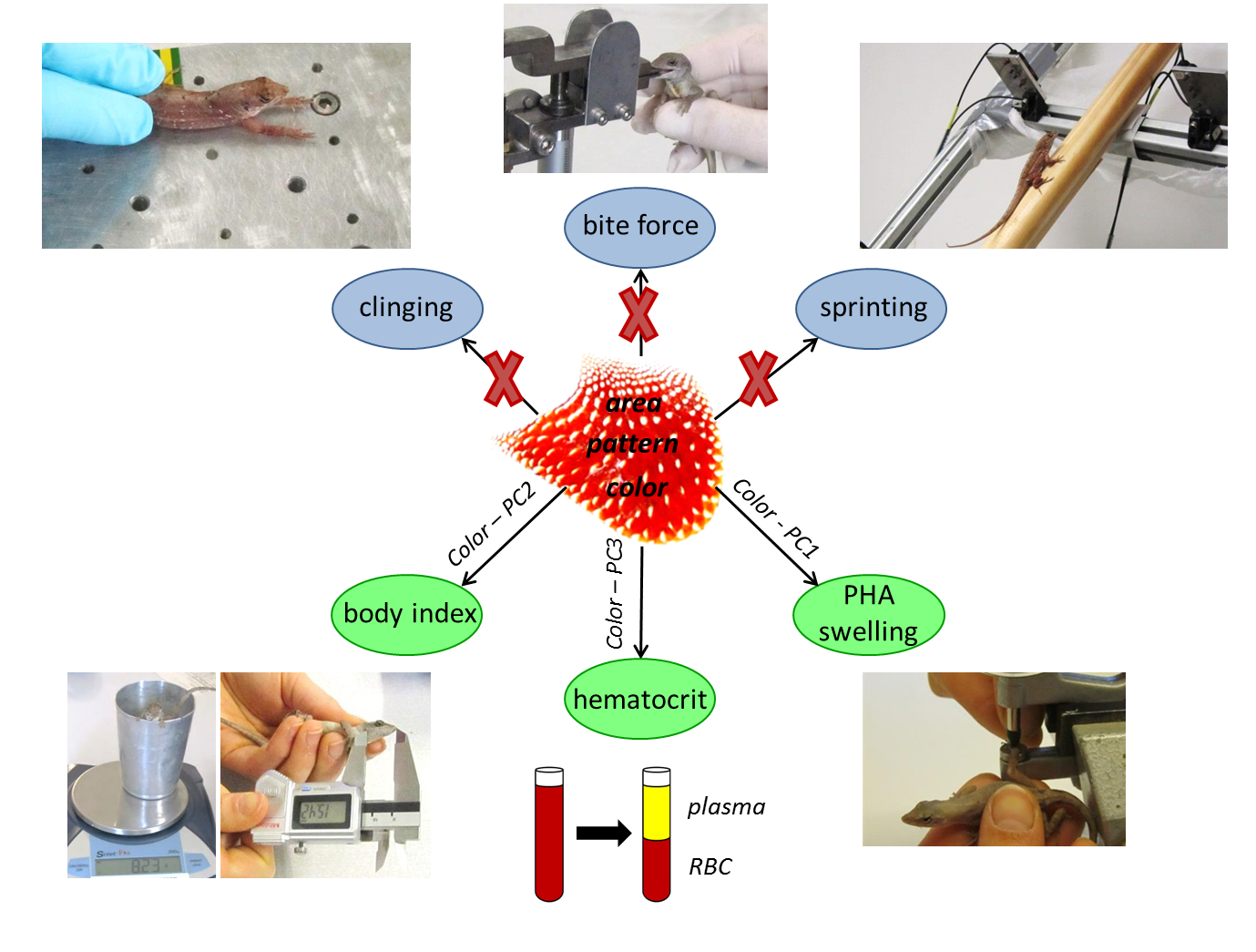
We specifically focused  on what is signaled by various  components of the dewlap in the brown anole and whether diverse aspects of dewlap signaling provide additive information or highlight different characteristics of the sender. We therefore  measured several dewlap components involving design (i.e., dewlap area, patterning, and color) and use (i.e., dewlap extension frequency during intersexual interactions), and linked these to information a sender may need to transmit in order to increase its fitness (i.e., sexual identity, individual quality, and social status). We used several performance (i.e., bite force, sprint speed, and clinging capacity) and health state parameters (i.e., immunocompetence, hematocrit, and swelling response) as a measure of individual quality, whereas mirror-motivated aggressiveness was used as a measure of social status. Due to their fundamentally divergent reproductive roles, we expected males and females to differ with respect to what is signaled by the dewlap, and  therefore performed separate analyses per sex. For the male sex, we additionally distinguished between the color of the dewlap center and edge region.

What did our results show?
First, we found that body size together with relative dewlap area and color act as redundant messages in the advertisement of sexual identity. Depending on the distance between signaler and receiver and prevailing environmental conditions, recognizing a potential mating partner based on the estimation of its body size only may be a hard task to fulfill. We therefore suggest that repeating the same message in different ways using body size together with dewlap traits is a highly appropriate strategy to get information about sexual identity accurately across.

Second, we found that dewlap coloration is primarily responsible for signaling aspects of individual quality, but only in males. Our results show that individual health state parameters are reflected  in the color components of both male dewlap center and edge and that multiple different messages are conveyed by dewlap color. Specifically, we found that males bearing dewlaps with higher amounts of yellow and  red and lower amounts of UV show higher body condition indexes, and that individuals with generally brighter dewlaps have lower immunocompetence. In addition, males with more yellow and UV chroma  in dewlap edge only exhibit higher hematocrit values.

Surprisingly, none of the tested components of dewlap design in A. sagrei males conveyed  information on performance capacities and aggressive behavior, and the same result was found for dewlap use. Also, no links were observed between components of dewlap design and use during intersexual interactions.

anoleannals_final

Third, for females, neither dewlap design nor use were related to any of  the tested  individual quality measurements and mirror-induced aggression. However, in contrast to males, correlations between components of dewlap design and use were found in A. sagrei females. Female individuals with larger dewlaps showed higher dewlap extension frequencies during intersexual interactions only and the same is true for individuals with less bright dewlap centers, suggesting an important signaling function of the female dewlap during courtship.

What can be concluded?
Our study confirms that the dewlap signaling device is a very complex integrated system consisting of different components transferring redundant (sexual identity) as well as non-redundant information (individual quality). We found that both the dewlap center and edge bear a signaling function, but this was only tested in males. As expected, male and female dewlaps differ in the messages they convey and further research is absolutely necessary to get insights in ‘what the dewlap exactly says’.

Driessens, T.,  Huyghe, K., Vanhooydonck, B. and Van Damme, R. (2015). Messages conveyed by assorted facets of the dewlap, in both sexes of Anolis sagrei. Behav. Ecol. Sociobiol. DOI 10.1007/s00265-015-1938-5

Parallel Evolution of Color Pattern in the Anoles of the Lesser Antilles

Parallel evolution and convergent evolution are big themes within anole biology, so our lab was excited to discuss a new paper by Thorpe et al looking at these concepts in Lesser Antillean anoles. The paper focused on evidence for parallel evolution across seven small islands that contained both xeric and montane habitats with at least one species of anole split between the two habitats. Xeric habitats tend to occur along island coasts and are hotter, drier, and have less canopy cover, while montane habitats occur in the interior of islands and are cooler and wetter. There are many physical differences consistently found between the anoles associated with each type of habitat, even within a species; perhaps the most obvious examples are the repeated differences in skin color and pattern between habitats, beautifully illustrated in the first figure of the paper.

Figure 1 from Thorpe et al, showing the repeated evolution of charecteristic xeric and montane color patterns in the Lesser Antilles

Figure 1 from Thorpe et al, showing the repeated evolution of characteristic xeric and montane color patterns in the Lesser Antilles

Thorpe et al. set out to conduct tests of parallel evolution among seven anole species using 18 phenotypic traits that vary between habitats, including both morphological and pattern measurements. In addition, they used mitochondrial DNA sequencing to produce a new phylogeny of these species and control for phylogenetic interference in their comparisons. The authors first used a principal components analysis to confirm that the major source of climatic variation is found within each island and between different habitats, rather than across different islands. The authors found convincing evidence for parallel morphological evolution in multiple phenotypic traits, especially those associated with skin pattern and hue: anole populations in xeric habitats consistently converge on a grey skin color and those in montane habitats converge on green. Thorpe et al. also go on to suggest that divergence in coloration may be the result of signal optimization in environments with different chromatic backgrounds (characterized by variance in background vegetation or sun exposure). The authors describe a possible evolutionary scenario in which an anole population first colonizes the coastal areas of each island after a dispersal event, and then rapidly expands into the interior montane areas of the island and adapts to new conditions there. Given the constant concern of climate change, repeated evolution in response to different climatic conditions may offer hope that anole populations can respond to rapid environmental change.

The most famous story of parallel evolution in anoles is the convergent evolution of ecomorphs across the islands of the Greater Antilles. This paper offers the tantalizing possibility of another type of convergent evolutionary pattern, this time within species but across habitat types. The smaller islands of the Lesser Antilles may be too constrained to allow for speciation driven by ecomorph specialization, but could still promote significant population divergence across habitats. More information on the adaptive differences between these xeric and montane populations, along with characterization of their genetic structure, could shed light on these possibilities. Based on these results in the Lesser Antillean populations, there is also the possibility that this type of xeric and montane divergence exists within species in the Greater Antilles, and fine-scale studies of population structure could reveal another level of convergent evolution in those species.

Thorpe, R. S., Barlow, A., Malhotra, A. and Surget-Groba, Y. (2015), Widespread parallel population adaptation to climate variation across a radiation: implications for adaptation to climate change. Molecular Ecology, 24: 1019–1030. doi: 10.1111/mec.13093

Panamanian Anole Population in Decline


Left: A. apletophallus. Right: Decline in abundance of A. apletophallus on BCI

Left: A. apletophallus. Right: Decline in abundance of A. apletophallus on BCI

Monitoring populations over long time scales is one of the most important endeavours in ecology, but maintaining funding over decades is a huge challenge when the tenure of most research grants is only 3 years. The Smithsonian Tropical Research Institute (STRI) has made a concerted effort to address this problem and established long-term monitoring of animals (including an anole), plants and environmental variables on Barro Colorado Island (BCI) and the nearby forests surrounding the Panama Canal. These data provide a rare glimpse into the long-term changes in populations and climate in the tropics.

Recently, we used these data to investigate how population abundance of the anolis lizard Anolis apletophallus has changed over time and whether climate was related to abundance and population growth rate. The study recently published in PLOS ONE identified a decline in lizard abundance over the 40-yr study period. We also observed boom and bust fluctuations in population abundance and found that cycles in population growth rate were related to global weather cycles known as el nino and la nina. Specifically, population growth rate was lower one year after el nino (warmer-drier) events. This decline in abundance and the negative relationship of population growth rate with el nino events is alarming, as el nino events are expected to increase in frequency and severity in the future. Changes in the abundance of this lizard may also have knock-on effects to many other animals in the forest because these lizards are eaten by a range of animals including birds, snakes, other lizards, spiders, ants, bats, monkeys and opossums.

The long-term decline in abundance that we identified is consistent with findings of another long-term study of amphibians and reptiles in Cost Rica by Whitfield et al in 2007. In their study they identified a decline in the leaf litter amphibians and reptiles and suggest this is due to a climate driven reduction in leaf litter. In a more recent follow-up study they provide further evidence of this. Although, we did not measure leaf litter, there is no evidence of a reduction in leaf litter on BCI. The parallel declines that were observed in Panama and Cost Rica are worrying and emphasize the importance of long-term data to help us understand how anole populations are coping with climate change.

Most of the hundreds of researchers that visit STRI’s research station on BCI scarcely notice the anoles. Some are drawn to the monkeys or bats, but most are there to study tropical forest ecology making use of the famous 50ha plot: a forest plot where every free standing tree has been measured every five years since 1980. I can understand how some might overlook the anoles in the forest, they can be extremely well camouflaged, but as readers of AA know, anoles are also highly conspicuous.

Cryptic_ConspicuousAA

Left: Spot the A. apletophallus on the forest floor. Right: Male A. apletophallus displaying

Thankfully, BCI’s anoles have not always been overlooked. The most abundant anole on BCI is Anolis apletophallus (previously limifrons), so abundant that Stan Rand, STRI’s world-renowned herpetologist, described it as the ‘most abundant vertebrate in the forest.’ Thanks in part to Stan’s interest in this little brown anole, the species was the focus of much research on BCI in 70-80s most notably by Robin Andrews. Robin’s research on the ecology, physiology and life history of A. apletophallus remains some of the most detailed knowledge of a mainland anole today. Her work also had a lasting legacy at STRI, and the population monitoring that she began still continues today, some 44 years on.

The annual census, which has been continually funded by STRI, has been able to persist largely because of the efforts of STRI scientists.

ASH 2015: Size and Coloration of Draco Dewlaps

Screen Shot 2015-01-29 at 8.16.24 PM

A slide from Danielle Klomp’s talk showing how color is used in communication by some species of lizards. Check out the quick guest appearance by an anole.

The diversity of anole dewlap shapes, colors, and patterns is one of their most distinctive features. But anoles are not the only squamates with flashy dewlaps. When it comes to such accoutrements, anoles have some stiff competition from their Agamid cousins in the Indo-Pacific region, the ‘flying’ dragons (Draco). Draco lizards don’t really fly, of course. Rather, they can laterally expand their ribs and the connecting membrane to create a ‘wing’, which they use to glide between trees in their habitats. If you haven’t seen how they do this, it’s more than worth a watch. Lest you think anoles get left behind in this respect, we do know that some anoles glide, as well, even if they don’t exhibit the impressive wing-like structures that Draco lizards have.


Slide from Danielle's talk showing Draco lizards and their geographic distribution.

Slide from Danielle’s talk showing Draco lizards and their geographic distribution.

As I learned at Danielle Klomp’s talk at ASH 2015 last week, their dewlaps are almost as impressive as their gliding ability. Danielle is a PhD student working with Devi Stuart-Fox and Terry Ord and her dissertation has focused on studying the evolutionary ecology of Draco lizards. This past week she presented her work on these lizards’ dewlaps and what role they may play in sexual selection. Danielle examined dewlap size and coloration in 13 species of flying dragons. Overall, she found a strong negative correlation between color contrast (meaning they stand out relative to background coloration) and dewlap area in male lizards. Thus, she found that male dragons either had big dewlaps or conspicuously colored dewlaps, but not both. These results suggest that sexual selection for male conspicuity is occurring, but why can’t lizards exhibited large, conspicuously-colored dewlaps? Danielle suggested that having dewlaps that were both conspicuous in color and size were either too risky (meaning that they would be considerably more vulnerable to predation) or too costly to produce or maintain, though the precise mechanism underlying this pattern remains uncertain.

ASH 2015: Fossil Anoles Provide Clues into Ecological Diversification


Emma Sherratt gives her talk on fossil anoles

Emma Sherratt gives her talk on fossil anoles

The annual meeting for the  Australian Society of Herpetology (ASH) is wrapping up here today in the lovely town of Eildon, Australia. Just because we’re a continent away from the native distribution of anoles doesn’t mean that anoles were not represented at the meeting. Yesterday afternoon Emma Sherratt, new faculty at the University of New England in Armidale, Australia, presented some of her post-doctoral work on fossil anoles preserved in amber. Emma began by saying that Caribbean anoles represent one of the oldest examples of extant adaptive radiations. Despite the age of this radiation, most of the work on the Caribbean anoles (and other adaptive radiations, for that matter), has focused primarily on living species, with historical inferences drawn from DNA analyses. She pointed out that historical insights based on analyses of extant species only should be treated with caution, unless there is corroborating information from the fossil record.

We know, she said, that islands are typically inhabited by a single lineage of ecomorphs (with subsequent diversification within ecomorphs). The fact that most ecomorph groups are represented by a single lineage on an island suggests that once an ecomorph niche is filled, it cannot be replaced, an idea known as ‘niche incumbency’. She argued that we can use fossils to assess that hypothesis – if fossil anoles pertain to same lineages of ecomorphs (e.g., the cristatellus clade of trunk-ground anoles, or the carolinensis group of trunk-crown anoles), then that would support the idea that ecomorph niches were only filled once. If extinct anoles fell into different lineages of ecomorphs, distinct from those that are extant today, then that would support the idea that ecomorphs could be replaced on islands, which would suggest that niche incumbency need not be occurring. Of course, it could also be possible for niche incumbency to have occurred if there were two lineages of the same ecomorph present on the same island, as long as the incumbent lineage drove the more recent one to extinction. But the hypotheses proposed by Emma were certainly a reasonable first pass to understand the origin of ecomorphs on the Caribbean islands.

Anoles have been fossilized in Hispaniolan amber, which we know to be about 15-20 million years old. All you folks who are anxiously awaiting the next installment of Jurassic Park be advised – this means that the famous amber used to get dinosaur DNA is far too young, as the dinosaurs (save for birds, of course) went extinct about 62 million years ago. For her study, Emma accessed an impressive 38 anole fossils preserved in amber. By far this is the largest data set of fossilized amber anoles ever examined. And, beyond their utility for understanding the process of diversification, anoles caught in amber are stunning fossils and the high resolution reconstructions that Emma makes using x-ray CT scans are equally impressive.

Emma found strong evidence that Hispaniolan fossil anoles fall into known ecomorph categories. To determine this she compared morphological details from extant species to the fossil anoles. Overall she found substantial morphological variation in the fossils, particularly in 20 of the best preserved and most complete fossils. Amazingly, Emma found that some of the fossils fell very clearly into the trunk-crown, trunk, trunk-ground, and twig ecomorph classes! She was further able to determine that the trunk-crown fossils fell into the chlorocyanus group of extant Hispaniolan lizards, and, with less confidence, evidence that the trunk-ground lizards fell into the cybotes group of extant Hispaniolan lizards. Thus, the results are suggestive that, once an ecomorph niche is filled, it prevents other lineages from evolving into it, which is consistent with niche incumbency. Obviously it is not possible to fully rule out the alternative – that species of other ecomorph lineages existed in the past – but certainly the results are a tantalizing glimpse into the processes that forged the current Caribbean fauna. In short, she found that most ecomorphs recognized today are not only present in the Miocene fauna, but also are represented by members of the same clades. Together, her results were consistent with the idea that niche incumbency occurred in the Caribbean radiation of anoles, which would indicate that interspecific interactions have regulated morphological diversity for millions of years.

Page 24 of 67

Powered by WordPress & Theme by Anders Norén