
Category: New Research Page 23 of 67

SICB 2016: Blood Physiology across Elevational Gradients

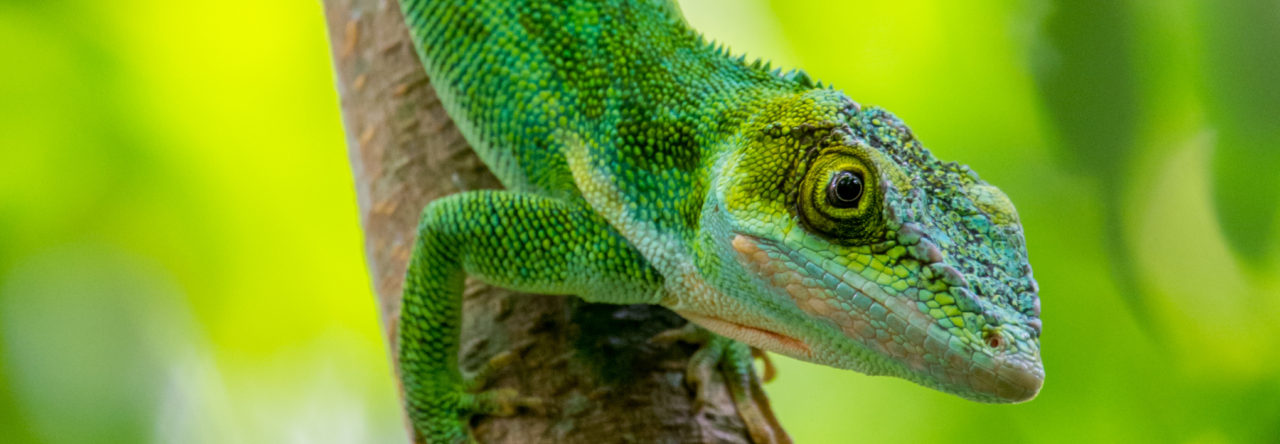
Are anoles like sherpas? Photo from Reddit

When you’re used to living at low to moderate elevations, it can be challenging to visit high-altitude places. The declining partial pressure of oxygen at high altitude makes it difficult for your body to deliver the same amount of oxygen to tissues. This is why National Football League players often struggle to play in Denver (see playoffs next week!). However, organisms that live at high elevations, including humans, have evolved a number of ways to deal with living in such oxygen-challenged environments. We know less about whether the same aspects of the cardiovascular change in different organisms, even among relatively closely related species. Well, what better group of organisms to address such questions than anoles!

Virtually nobody reading this blog will be unfamiliar with the story of the Greater Antillean ecomorphs, and they are great to use for questions related to elevation and adaptations to deal with it. They live along steep elevational gradients within an island, and such gradients exist across islands. Although, the Caribbean anoles have been the subject of numerous studies that have shown convergent evolution in body size and shape, as well as locomotor performance and endocrine function, we know much less about how they deal with elevational challenges at the cardiovascular level.

Species studied and locations in the Dominican Republic. Photo from Webber et al.'s poster.

Species studied and locations in the Dominican Republic. Photo from Webber et al.’s poster.

Miguel Webber, an undergraduate in the laboratory of Michele Johnson at Trinity University, along with Brittney Ivanov, studied several blood physiology traits in 13 species across five ecomorphs in the Dominican Republic to determine whether elevation has been an important driving force in the evolution of oxygen delivery mechanisms. Although looking at an impressive number of traits that included hematocrit (the proportion of red blood cells), hemoglobin concentration, and red blood cell size, Miguel only found hemoglobin concentration to be positively related with elevation when looking across species.

One of the more interesting findings was that none of the blood physiology variables that Miguel measured were ecomorph specific. However, this makes sense because members of an ecomorph live across wide geographic areas and across elevational gradients. Physiological studies such as Miguel’s are offering interesting insights into how anoles have adapted to their environments and emphasizes that ecomorph membership does not determine everything.

SICB 2016: Adaptive Shifts in Anolis carolinensis Following the Polar Vortex

Shane Campbell-Staton gives his talk at SICB 2016.

Shane Campbell-Staton gives his talk at SICB 2016.

Climate change isn’t just leading to greater average environmental temperatures – it’s also leading to an increase in the frequency and severity of extreme weather events, such as heat waves and hurricanes. Of interest to Shane Campbell-Staton, a post-doctoral researcher in the Cheviron Lab and a recent graduate from the Losos Lab at Harvard, is understanding how the recent polar vortex in North America impacted the native green anole, Anolis carolinensis. The polar vortex of winter 2013/2014 set several records in snow fall and in all-time low temperatures in the south, and also led to severe weather in the midwest and east.

Shane found that, immediately following the polar vortex event, cold tolerance (CTmin) was significantly lower in lizards from southern Texas, as low as in lizards from much higher latitudes. He suggested that this result stems from differential survivorship during the event – lizards in south Texas that were more cold tolerant (i.e., had a lower CTmin) were more likely to survive the winter vortex  than less cold tolerant individuals. He then returned to south Texas a few months later and sampled both the survivors and their offspring and found that the decrease in CTmin persisted, indicating a potential evolutionary shift in cold tolerance. He put the final nail in the coffin by running a common garden experiment, where he demonstrated that, even when reared under common laboratory conditions, offspring exhibited cold tolerance similar to their parents, indicating high heritability in this trait and that the shift observed in nature was evolved rather than due to plasticity.

Shane then examined the response to the weather event at the genetic level by sequencing liver transcriptomes. Transcriptomes quantify patterns of gene expression levels for all genes regulated in a tissue; hence, by examining what genes are differentially expressed following cold stress, we can figure out the molecular underpinnings to cold adaptation and acclimation. He found that gene expression in survivors from the south closely resembled expression patterns in northern lizards, indicating a shared molecular pathway to cold tolerance adaptation in lizards from both habitats. The gene expression modules (or groups of genes) that exhibited a strong statistical association with CTmin variation were overrepresented for genes associated with oxidative phosphorylation. Oxygen consumption, which feeds oxidative phosphorylation, is directly related to CTmin: Animals that are more cold tolerant consume less oxygen during cooling. Hence, the expression differences in oxidative phosphorylation may pinpoint a proximate mechanism for cold tolerance adaptation.

You can learn more about Shane’s work on adaptation following the polar vortex in his recent Harvard Horizons talk.

SICB 2016: Lizards Rapidly Generate More Force During Locomotion than Biting

*The following post was written by Chris Robinson, a Master’s student in Matt Gifford’s lab at the University of Central Arkansas.*

Like at every SICB conference, anoles are well represented among the talks and posters here in Portland and we here at the Anole Annals couldn’t be more thrilled to see the love for one of our favorite genera.

Christopher Anderson, a post-doctoral associate in Thomas Roberts’ lab at Brown University, gave a talk examining how muscle physiology influences whole organism performance in five species of anoles. His group examined two muscles, the M. ambiens pars ventralis (a swing phase muscle of the leg important for locomotion) and the M. abductor mandibulae externus superficialis anterior (a muscle in the jaw used in biting), to see if they differed from each other in how they perform in order to meet their functional demands. The muscle of the leg, which is used in sprinting, is cyclically activated and deactivated as an organism moves, whereas the muscle of the jaw is used more episodically.

Anderson and his colleagues found that the leg muscle builds passive tension at shorter lengths and has a twitch time that is 1.3-2.0 times faster than that of the jaw (to see how twitch time relates to sprint speed, see the post about Noel Parks’ poster). From this, Anderson concluded that these muscles are tuned to meet their physiological demands. Locomotion muscles, which are used frequently, generate a lot of force rapidly and the quickly developing passive tension in these muscles may serve as a form of protection for the muscle during active lengthening.

SICB 2016: Genetic Drift and Morphological Adaptation in Anolis sagrei from the Bahamas

Hanna Wegener giving her talk on Anolis sagrei from the Bahamas at SICB 2016

Hanna Wegener giving her talk on Anolis sagrei from the Bahamas at SICB 2016

Small islands are great systems in which to study evolution, in part because their isolation and simplified landscapes makes them amenable to experimental studies. For example, previous experimental work on Anolis sagrei in the Bahamas by Losos et al. (1997) and Kolbe et al. (2012) found evolutionary changes in hindlimb length driven by adaptation to structural habitat over only a few years.

Hanna Wegener, a Ph.D. student studying with Jason Kolbe at the University of Rhode Island, wanted to know if morphological differences associated with habitat use also manifest in natural (rather than experimentally introduced) populations of Anolis sagrei from the Bahamas. She examined genetic (microsatellite) and morphological variation from male and female A. sagrei on seventeen islands in the Bahamas. Despite the islands being separated by very small geographic distances (no more than three kilometers and typically only a few hundred meters), populations on the islands were genetically differentiated. Her genetic analysis further found high levels of inbreeding on each island.

Unlike the findings on the experimental islands, Hanna did not find any correlation between perch diameter and hindlimb length. She did find that female density was high on the islands, and that density correlated strongly with head length and injury frequency, suggesting that competition influences morphological differentiation on these islands. Overall, Hanna found that morphological patterns varied considerably among islands and among males and females. She suggests that this variation is due to stochastic effects on small islands, namely genetic drift, due to the extinction and colonization dynamics in response to hurricanes.

SICB 2016: Lizard Sprint Speed is Limited by Muscle Twitch Speed

SICB is off to a very anole-y start in Portland! There have been anole-focused talks and posters all day, and your intrepid team of AA reporters are on the scene.

At Monday’s poster session, Noel Parks (an undergraduate at Brown University working with Chris Anderson and Thomas Roberts) presented her research on muscle contraction and sprint kinematics in Anolis sagrei and A. cristatellus. The team performed laboratory sprint trials with the two species at a range of inclines, and then using muscle tissues from the same lizards used in the trials, they measured how fast the M. ambiens pars ventralis (a hindlimb muscle critical for locomotion) can contract and relax after stimulation, a measure they call muscle twitch time.

Noel Parks and her poster at SICB 2016.

Noel Parks and her poster at SICB 2016.

For both species, Noel and her colleagues found that stance time (the amount of time a foot is in contact with the ground) and swing time (the amount of time the limb is moving forward) are limited by the muscle twitch time. Thus, muscle twitch time may constrain the sprint speed of these animals. Further, at steeper inclines, stance and swing times more closely approached muscle twitch time. The two species differed in these speeds, however, as A. sagrei had faster twitch, stance, and swing times than A. cristatellus.

This work gives us another interesting piece of the puzzle in the larger story of anole locomotor performance!

New Research: Geographical Variation in Morphology and its Environmental Correlates in a Widespread North American Lizard, Anolis carolinensis

An online preview version of this paper was published Nov. 4 in the Biological Journal of the Linnean Society.

I began this project in late 2012 as a research assistant to Shane Campbell-Staton, now a Postdoctoral Fellow at the University of Illinois Urbana-Champaign. As part of his dissertation on Anolis carolinensis, Shane saw an opportunity for an interesting side project regarding its morphological variation. The lizard’s geographic range is massive – ranging from Florida to Texas in the east, and north to Tennessee – but surprisingly few studies had examined the way limb and body traits vary between populations, let alone over its broad distribution. Given evidence for Caribbean relatives adapting to variable environmental conditions even over short distances, we were curious whether the same would hold true for the green anole.

Using a set of samples Shane had collected from 14 locations around the southeast (Figure 1), I set out to answer a few questions about geographic variation in the green anole: which traits vary most in this species? How is this variation distributed, and does it correlate with environment? We were also interested in the degree to which this species conformed (or didn’t) to Bergmann’s and Allen’s rule, two eco-geographic principles well studied in reptiles.

Density and distribution of sampling in the study.

Figure 1: Density and distribution of sampling in this study.

The process started, as always, with data collection – in this case, taking X-rays of over a hundred specimens, extracting a set of 26 morphological traits, and pairing them with environmental and genetic data for each site in our study. The resulting dataset was large and multidimensional, and required several iterations of analysis to find a clear and logical approach to test our hypothesis (as an undergraduate, this process of analysis and re-analysis taught me a valuable lesson in troubleshooting, data management, and experimental design).

Looking at our results, we did end up finding a high degree of morphological variation in this species, mostly driven by head width and length. These features marked out several highly distinct populations and generated some striking visual comparisons (Figure 2). Previous studies by Herrel, Lailvaux, Corbin, and McBrayer suggest that this kind of variation may be driven by the role of bite force and head shape in prey capture and combat, and future work on A. carolinensis should follow up on this possibility. We also recovered some morphological clustering among non-proximal populations, which opened the door for examination of possible convergence as a result of environmental similarity over the species’ range.

Head shape variation between an anole from Cedar Creek, OK (left) and one from Punta Gorda, FL (right).

Figure 2: Head shape variation between an anole from Cedar Creek, OK (left) and one from Punta Gorda, FL (right).

We found that, in general, anoles in more seasonal and colder climates of the north tend to have to have relatively longer limbs and wider and shorter heads than those from less seasonal/warmer locations in the south. With regard to limbs, this pattern may be related to an observed “reversed” Allen’s rule – that appendage length would actually increase in colder climates as a way to more rapidly uptake heat. This explanation is similar to that of the “reversed” Bergmann’s rule previously proposed for some lizards, but for which our data were inconclusive.

In the end, I believe the patterns of variation and environmental correlation that we found in the study will help to establish A. carolinensis as a strong candidate for further studies of morphological variation over a large range, especially with the recent publication of the species’ genome. As an undergraduate, I felt lucky to make a contribution to the literature and to have the opportunity to see through a project from start to finish.

Are you planning to get recertified as an environmental expert? Then click on NREP Recertification Terms and Conditions to get all the information you need in one place.

Finally, please reach out to me with any questions or comments about the study! My code and data are archived on my github page.

Blanchard Cave, a Window into the Late Pleistocene and Holocene Squamates from Marie-Galante Island (Guadeloupe Archipelago, Lesser Antilles)

Over the past few years, two European research programs developed an interest in the ancient fauna and environment of the Guadeloupe islands. The prospection for cave deposits led to the discovery of numerous accumulations of fossil remains documenting the Holocene and Late Pleistocene faunas of the archipelago, especially on the island of Marie-Galante, where three major deposits were discovered.

Blanchard Cave is one of these deposits. This cave contains the oldest fossil-bearing sedimentary layers of the island dated around 40,000 years before present and is an excellent complement to the two others cave documenting the Late Pleistocene fauna of Marie-Galante (Cadet 2 and Cadet 3).

After a test excavation in 2008 that revealed the potential of the site in term of fossil fauna, Blanchard cave was investigated between 2013 and 2014 in the framework of a European research program interested in the past environment and fauna of the Guadeloupe islands, the BIVAAG project. The three excavation campaigns conducted during this period allowed the precise documentation of the sedimentary filling of the cavities and the recovering of thousands of skeletal remains mainly attributed to frogs, lizards, snakes and bats.

The excavation work in the cave (Picture: A. Lenoble)

The excavation work in the cave (Picture: A. Lenoble)


Welcome gifts from the bats… (Picture: C. Bochaton)

Welcome gifts from the bats… (Picture: C. Bochaton)

But collecting the fossils remains was not that easy and although the perspective of working in the Caribbean a few hundred meters from the sea could seem very attractive, the working conditions in the cave were far from pleasant. Mainly because the cave was inhabited from the ground to the roof by numerous cockroaches, rats, gnats and bats. Bats were extremely noisy, and proved to be extremely rude hosts. Another difficulty was the potential occurrence of histoplasmosis in the cave that led to the necessity of wearing a respirator during the work. Such masks make breathing difficult during the work and combined with the heat, humidity and other disagreements previously mentioned strongly impact your initial enthusiasm.

Once you overlook these difficulties, the sediment was extracted from the site and then washed and sieved in order to retrieve the small bones contained in it (the bones are usually smaller than 5 mm). The remains were then recovered and sorted, partly in the field (unfortunately this activity often kept the paleontologists outside of the cave and away from the bats), before being studied.

Washing and sieving of the sediments (Picture: M. E. Kemp)

Washing and sieving of the sediments (Picture: M. E. Kemp)

Recovering of the fossil bones (Picture: M. E. Kemp)

Recovering of the fossil bones (Picture: M. E. Kemp)


The results of the study of the squamates remains collected in the cave can be found in a very recently published paper. To summarize the main findings, we found evidence of the past occurrence of at least ten species of snakes and lizards: four snakes: Antillotyphlops sp., Boa sp., Alsophis cf. antillensis and an undetermined colubroid; and six lizards: Anolis ferreus, Iguana sp., Leiocephalus sp, Thecadactylus sp., cf. Capitellum mariagalantae and Ameiva sp.. The stratigraphic distribution of these taxa in the site combined with previously existing data show that only two extinctions (Boa sp. and Colubroid ind.) are dated from the Pleistocene/Holocene transition and thus predate the arrival of humans on the islands around 5000 years ago. Then during the pre-Columbian times two new taxa appear in the deposits, Iguana and Thecadactylus. On the other hand, a massive faunal turnover began after the European colonization of the island. Indeed, at least six squamate genera (Leiocephalus, Capitellum, Ameiva, Antillotyphlops, Alsophis and Erythrolamprus), including all the snake genera, were extirpated between 1492 and today. Thus, 55% of the squamate genera present during pre-Columbian times went extinct over the past few centuries.

These results are further evidence of the current sixth mass extinction crisis and of the strong impact of humans on this insular fauna. However, Marie-Galante Island remains an isolated case because the past fauna of most of the Lesser Antillean islands remains poorly known and in most cases totally unknown despite the critical importance that such data may have in many fields to test inferences built on modern data.


To Eat or Be Eaten: How an Anole Decides When to Forage

Anolis cristatellus in survey posture (photo by K. Winchell)

Anolis cristatellus in survey posture (photo by K. Winchell)

Foraging decisions are the result of a complex decision-making process involving intrinsic factors (physiology, body condition, cognitive ability, sex, ontogeny, etc.) and environmental factors (food availability, structural habitat, presence of predators and competitors). In short, it comes down to the tradeoff between the benefits of energetic gain and the potential costs of predation risk, missed opportunities for reproduction, and expended energy. However, little is known about the specifics of this process – what information are lizards considering when making this decision? By conducting manipulative field experiments on Anolis cristatellus in Puerto Rico, Drakeley et al. (2015) attempt to elucidate what environmental factors influence the decision to forage.

The authors conducted field experiments involving feeding trays in the wild. The Puerto Rican crested anole is a trunk-ground anole and a sit-and-wait forager. When receptive to feeding, it perches head down in “survey posture,” a behavior it reduces when satiated. Aside from movement associated with foraging and social interactions, this species typically remains stationary on a perch. Because of this, the authors were able to easily locate a focal individual and count the number of conspecifics present, using natural variation instead of manipulating the number of animals present.

In the first experiment, they manipulated the food quantity to determine how foraging decisions differ when food is plentiful versus scarce and how this is influenced by the presence of competitors. They found that lizards foraged faster when there were more conspecifics present and food was scarce. When no lizards were near the feeding tray and the feeding tray was full, the focal animal took longer to approach the tray to take the mealworms compared to when there were many conspecifics nearby. Interestingly, this was not related to overall local density, but rather to the number of conspecifics in the immediate vicinity. Therefore the decision to forage likely involves an instantaneous assessment of the local conditions rather than knowledge of the long-term population trends. The authors also considered several other factors and found that although body size was related to foraging latency (larger lizards were quicker to the feeding tray), no other environmental factors were relevant (temperature, humidity, perch height, perch diameter, local density of conspecifics).

Figure 1 from Drakeley et al. (2015). Latency to feed was correlated with the number of conspecifics present and abundance of food.

Figure 1 from Drakeley et al. (2015). Latency to feed was correlated with the number of conspecifics present and abundance of food.

In the second experiment, the authors chose focal animals farther from the feeding trays and considered distance as a proxy for predation risk. The farther the lizard was from the tray, presumably the greater exposure it had to predators as it moved towards the tray. They found that under this scenario, when risk was elevated, there was more latency in the approach of the food tray. This effect was driven mainly by the increased use of intermediate perches rather than a direct approach across open ground. Increased latency to feed was observed regardless of how abundant the food was or how many conspecifics approached the tray, supporting the conclusion that this effect was because of the perception of greater predation risk (i.e. movement over a longer distance). They also found that larger lizards had a lower latency to feed (approached the feeding tray more rapidly) and lizards not in the foraging position had a longer latency to feed.

In summary, it seems that anole foraging decisions are quite complex. Lizards appear to weigh the risk of predation taking cues from conspecific behavior and abundance versus the abundance of food to make instantaneous decisions to approach a novel feeding source.


Drakeley M, Lapiedra O, Kolbe JJ (2015) Predation Risk Perception, Food Density and Conspecific Cues Shape Foraging Decisions in a Tropical Lizard. PLoS ONE 10(9): e0138016. doi:10.1371/journal.pone.0138016

The Incredible Shrinking Dewlap!

DSC_0847

Photo by Bonnie Kircher

Here in north-central Florida, summer is giving way to fabulous fall weather. While this change means an infinitely more comfortable bike commute, it also means that the anoles which were abundant throughout the summer are starting to disappear. Although pedestrians can still find lizards basking in the afternoon sun, Floridians are much less likely to see anoles at every turn. The lizards that are still out and about are also far less likely to be strutting their stuff, keeping their dewlaps tucked away, as they are not needed for mating or competition until the next breeding season. When the dewlap is little used for such an extended period of time during the non-breeding season, could the morphology of this structure be altered?

Indeed, studies have demonstrated that there are marked changes in dewlap size between breeding and non-breeding seasons. Specifically, this already amazing structure seems to change in size, being larger in the summer when it gets the most use, and smaller in the non-breeding season! Simon Lailvaux and colleagues first hypothesized that changes in dewlap size might be correlated with variation in resource availability throughout the year. However, the group found that changes in dewlap size do not correlate with resource availability at all! Recently, following the results of the dietary restriction study, Simon Lailvaux et al. (including yours truly) again asked the question, “Why?” More specifically, are there instead physiological changes that cause dewlap size to expand in the summer and shrink in the non-breeding season?

Lailvaux et al. first asked whether dewlap size was changing because of inherent changes in lizard physiology between seasons or, instead, if changes were due to the extensive use of the dewlap during the breeding season. The authors captured male A. carolinensis lizards before the onset of breeding season and constrained the dewlap in half of the lizards so that the lizards could not extend their throat fan. They found that lizards with unconstrained dewlaps had larger dewlaps in the summer that shrunk again in the fall. The constrained males, on the other hand, had smaller dewlaps in each consecutive season. These data suggest that changes in dewlap size stem from the behavioral use of the dewlap – when a dewlap is extended more often, it gets bigger!

Untitled

Apparatus for measuring skin elasticity. Photo from Ecology and Evolution. Volume 5, Issue 19, pages 4400-4409, 19 SEP 2015 DOI: 10.1002/ece3.1690

Next, the authors tested the hypothesis that dewlaps change in size due to seasonal changes in skin elasticity that correlate with the increased seasonal behavioral use. One of the authors, materials engineer Jack Leifer, developed a novel technique for measuring skin elasticity that involved pulling a piece of lizard skin on a machine that measures force until the skin sample sheared (see picture).The authors compared the force it took to break pre-breeding, breeding, and post-breeding dewlap skin, using measurements taken from belly skin as a control. They found that dewlap skin is more elastic than belly skin and that both belly skin and dewlap skin are more elastic in the summer. These results support the idea that dewlap skin is inherently stretchier than other skin!

Thus, it seems that changes in dewlap usage, coupled with changes in skin elasticity across the year, make the dewlap a dynamic signal. This work does not demonstrate any mechanism for these changes and leaves the door open for many exciting follow-up studies. Why is dewlap skin more elastic than belly skin overall? How are changes in skin elasticity regulated between breeding and non-breeding season? What are the ecological implications of a dewlap that changes in size over the course of the breeding season?

Feed or Fight: Lizard Bite Force on Islands

Colin_With_LizardI’m a bit of an impostor here on Anole Annals, but I’m spending the year in the Losos lab writing up my dissertation and thinking about lizard evolution, so I wanted to share stories from some other island lizards “across the pond.

My dissertation work has focused on the Aegean Wall Lizard, Podarcis erhardii, common through much of the Greek archipelago. I’ve been surveying and experimenting with these lizards in different biogeographic and human contexts to connect trait changes to ecological surroundings. I recently published a paper looking specifically at lizard bite force. Since it comes with pretty pictures and is relevant to anoles, I want to share it here with you all.

For lizards, bite force is often important for determining what you can eat and how well you can fight off competitors. On small islands where food is often scarce, a proportionally stronger bite force might enable a lizard to access hard food items (like snails or beetles) or fight off other lizards, protecting access to mates, food, or prime nesting sites. Both explanations have been demonstrated in anoles: bite force has been closely tied to diet hardness (Herrel et al. 2006), and fighting success (Lailvaux et al. 2004).

I surveyed lizards on a dozen islands in the Cyclades. First, I found that lizards on small islands in the Greek Cyclades had significantly stronger bite forces relative to their body size. I then decided to try to untangle these two potential drivers (diet and aggression) and determine which better explained inter-island variability in bite force.

Donihue_FunEcol_Figure_1

By looking at proxies of competition including bite scars and missing toes, and lizard diets across islands ranging over five orders of magnitude in size, I found that, in general, it was the competitive environment that was driving the trend in P. erhardii bite force.

I’ve put together a short video about the findings for Functional Ecology (see above). For the full paper, please see:

Donihue, C.M., K.M. Brock, J. Foufopoulos and A. Herrel. 2015. Feed or fight: What drives bite force differences in the Aegean Wall Lizard, Podarcis erhardii, across the Greek Cyclades? Functional Ecology. doi: 10.1111/1365-2435.12550 Full text

Papers Cited:

Herrel, A., R. Joachim, B. Vanhooydonck, and D.J. Irschick. 2006. Ecological consequences of ontogenetic changes in head shape and bite performance in the Jamaican lizard Anolis lineatopus. Biological Journal of the Linnean Society 89: 443-454.

Lailvaux, S.P., A. Herrel, B. Vanhooydonck, J.J. Meyers, and D.J. Irschick. 2004. Performance capacity, fighting tactics and the evolution of life-stage male morphs in the green anole lizard (Anolis carolinensis). Proceedings of the Royal Society B: Biological Sciences 271: 2501-2508.

Page 23 of 67

Powered by WordPress & Theme by Anders Norén