
Category: All Posts Page 152 of 154

Anole Annals Wants You!

Sum, sum, summertime, and Anole Annals readers of all stripes are out there, finding and studying anoles. Why not tell us what you’re seeing and doing? Observations, anecdotes, photographs, descriptions of research projects–the anole world needs to know! Or comment on a new paper, or an old one that made an impression. Or any other aspect of anoliana that comes to mind. Anole Annals welcomes posts on all matters anoline.

In it’s brief existence, AA has already published posts by 21 authors, and many more have commented. Why don’t you join the team? Information on how to post is available here.

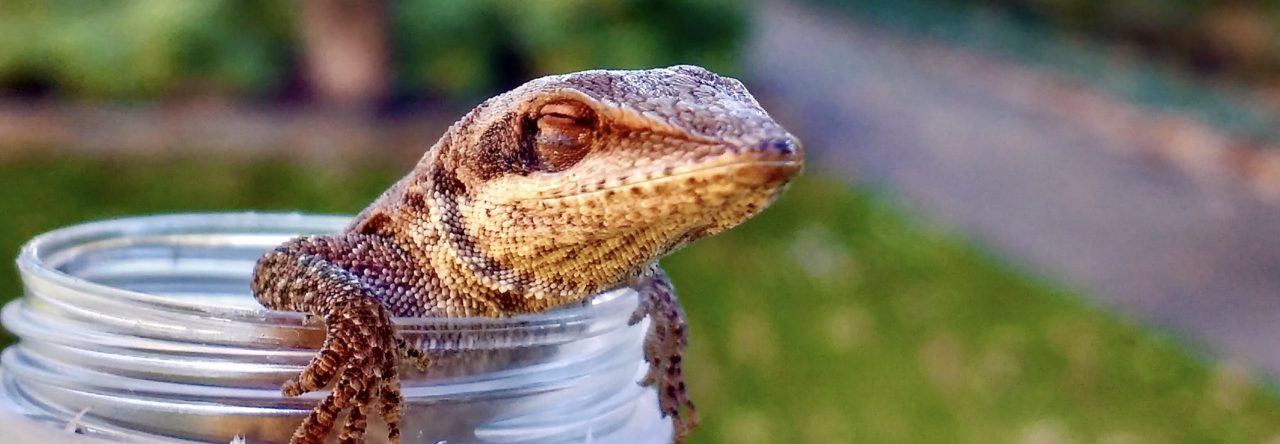
p.s. Bonus points to anyone who can name the species above.

p.p.s. Thanks to Melissa Woolley for constructing the image above.

Anolis Captive Husbandry Manual

The Brodie Lab at the University of Virginia has developed a manual for breeding and raising anoles in lab colonies, entitled “Anolis Colony Care: A manual developed for the Brodie laboratory at University of Virginia.”

To Amplify or Download?: Where Will You Get Your Anole Sequences?

With the genome of green anole available for download, anole researchers are apt to face a dilemma related to both experimental design and the taste and judgment of science consumers. My colleagues and I recently published an article in Genome Biology and Evolution in which the anole genome was downloaded for analyses. Spearheaded by bioinformatics guru Charles Chapus, our experiments were conducted in silico. Through conversations with friends and colleagues, we intuited that we might face resistance to our methods because, although our hypotheses and analyses were novel, our raw data were not. Fortunately, this concern, held by some, did not postpone publication of our work, but it did raise an interesting point for discussion. Where is genomic research going, in relation to generation and/or analysis of sequence data? From the perspective of experimental design, the decision to generate new sequence depends on the research question. For population genetics studies, for example, novel sequence generation is efficacious but for whole genome comparisons, why repeat what is freely available for download?

Have you published work based on pre-existing data? How will you decide whether to amplify or download anole sequences for analyses?

Brown Anoles Also Eat Butterflies And Moths

Here are three photographs I took of brown anoles preying on lepidopterans. In our diet studies lepidopterans were one of the main prey types, although, as can be expected, the larvae outnumbered the adults as prey. Amazingly, the lizards even ate larvae that had hair, which would cause an irritating burning sensation if it comes in contact with your skin.

Anolis Evolution Classroom Exercise

The University of California Museum of Paleontology has a wonderful website on evolution education, including a number of classroom exercises. One of these focuses on using phylogeny to understand the evolution of the Greater Antillean ecomorphs. 

Anolis Blood Work, “Normal” Levels

I was wondering if anyone has some good information, published or otherwise, on the normal values found within a blood sample for an anolis species?  We have been doing some sampling within our collection and are looking for something with which to compare our results.  We have Chamaeleolis porcus, barbatus, and chamaeleonides, as well as Anolis ricordi and smallwoodi.  The blood samples that we have taken are all from our porcus.  The only values that our vets currently have to compare to are those from a veiled chameleon, and being an old world species, I don’t know how well that translates to Anolis.  The calcium phosphorus ratio looks pretty close to normal, but the calcium level is almost three times as high as we expected.  Is this possibly normal for a lizard that is a snail specialist?  Any other information that you could give me would also be much appreciated. 

Thank you for any help,

Will

Anoles in the Blogosphere

It turns out that Anole Annals isn’t the only member of the WordPress.com stable that has a thing for our favorite lizard. While recently doing some tag surfing, we came across the following posts.

Catholic mom tells the gripping (or not) story of a green anole that went for a ride on the minivan windshield. You can probably guess the outcome, but the photos are nifty.

Anolis carolinensis Genome Paper Submitted

The long awaited paper describing the genome sequencing of Anolis carolinensis was submitted for publication on Thursday. Containing seven figures and with 50 authors, the paper is an epic step forward in our understanding of anole genetics. Stay posted for updates as the story develops.

Now There’s a Book Cover!

From the back cover: “Anolis lizards have been used in the development and testing of fundamental theories in ecology and evolution, and they have served as important models in behavioral ecology.” The cover photo is credited to Dan Warner.

Anole and Orchid Evolution–What Do They Have in Common?

Figure 1 from Pauw (2006)

Anton Pauw of Stellenbosch University in South Africa writes:

“I am reading Lizards in an Evolutionary Tree and find it fascinating to see how many parallels there are with my one of my study systems, oil-secreting orchids. While the anoles have differentiated across a series of niches provided by a plant, the orchids have differentiated across a series of niches provided by an animal. The orchids segregate the body of the shared pollinator among them so that each places its pollen on a unique segment of the oil-collecting bee. Orchid speciation generally involves shifts between bee species (with placement site conserved), but some speciation also occurs through shift in pollen placement site within the bee , so that sister species occupy for example the first and second segment of the front leg respectively.  Anyway, I thought that you too might find these parallels interesting, so I have attached two papers on the topic. I like the comparison of your Fig. 3.2 with Fig. 1 in the attached 2006 paper.”

The other paper is here. Incidentally,  apparently no one has posted a picture of an anole sitting on an orchid on the internet.

Page 152 of 154

Powered by WordPress & Theme by Anders Norén