Category: All Posts Page 130 of 154

2014 Anole Calendars 60% Off

calendar cover

Forget to get yourself a calendar over the holidays? Or embarrassed when someone gave you a present and you didn’t have one to reciprocate? Fear not, there’s still time to get an Anole Annals 2014 calendar, at bargain basement prices. Act now!!! Offer expires midnight tomorrow (Jan. 4). Go here, use code

LOOKSGOODONU

Quest for Anolis roosevelti

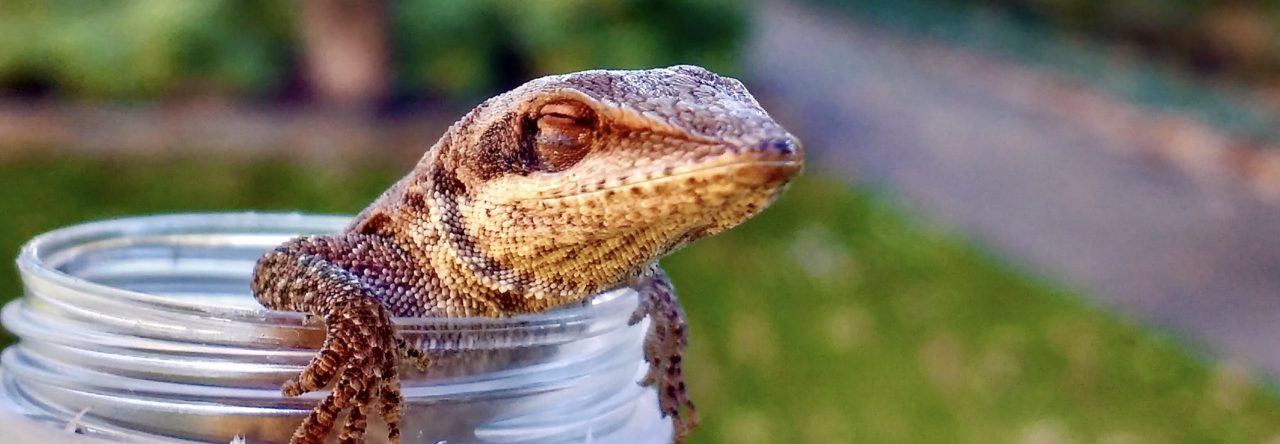
This is not Anolis roosevelti. No pictures of that species in life exist. But it probably looked pretty similar to this brown-phase Anolis cuvieri. Photo by Alejandro Sanchez.

Anolis roosevelti, the giant anole of Culebra and Vieques, is famous in anole circles. The only Caribbean species thought to possibly be extinct, the species has not been seen since 1932.

Recently I learned of a report of an expedition to Culebra to track down the wily saurian, written by noted author and mycologist Lawrence Millman. As you’ll see, the expedition was a success, but perhaps not in the way you expect.

A Hunt for the T. rex of Anole Lizards: A Trip to Puerto Rico in Search of a Giant Shrinking Reptile.

Christian Science Monitor, July 12, 2007

“Not too long ago I picked up an old travel book about Puerto Rico and read of a rare giant lizard, Anolis roosevelti, on the island of Culebra.
“Fame will visit anyone who finds this elusive creature,” the author of the book proclaimed. Since Fame had thus far given me a rather wide berth, I hopped a plane to San Juan and then a smaller plane to Culebra.
By the time I arrived on the island, the lizard had shrunk. The book had described it as four feet long, but the local Fish and Wildlife person told me that it was no more than a foot long from snout to vent – hardly competition for a T. rex. Still, A. roosevelti is a T. rex compared with other anoles, which are among the smallest of all lizards.
I also learned that this giant among anoles had not been sighted since 1932. Not officially sighted, that is. But there were anecdotal reports of it being seen in the forested areas on Monte Resaca, Culebra’s highest summit (height: 650 feet), as recently as a few years ago.
So I drove to the base of Monte Resaca and started bushwhacking.
Trusting in serendipity, I expected to see the anole in question basking on every boulder as well as ascending every gumbo-limbo tree. I was so intent on my search that I lost all sense of direction and ended up in someone’s backyard.
A Culebran tending his garden looked up at me in surprise. My usual ploy when I trespass like this is to advance confidently toward the person, shake his hand, and announce in a punctilious English accent: “Dr. Basil Withers of the British Antarctic Survey. Jolly good to meet you, old chap.”
Since this ploy would not work in the subtropics, I said, “Hello, Señor. Seen any big lagartos around here lately?”
“Sí,” the man replied. “All the time.”
“What’s their habitat?” I asked excitedly.
“In my bathroom,” he answered. He invited me in, where I saw the lagartos skittering around on the wall. They were geckos, not anoles, and they weren’t even all that big.
Serendipity had gotten me nowhere, so I got in touch with Beverly Macintyre, who knew the island’s backcountry intimately. She mentioned a particular boulder canyon on Monte Resaca, just the sort of place, she said, where a giant anole might hang out. Then she referred to recent development on Culebra; if it continued at its current breakneck pace, she said, a lot more creatures than A. roosevelti would be either endangered or extinct.
In our search for the lizard, Beverly and I entered not so much the forest primeval as the forest prickly. Ground-hugging cacti jabbed us, mesquite bushes stabbed us, saw-toothed bromeliads slashed at us, and a plant known locally as Fire Man (Tragia volubilis) delivered stings that make the stings of a stinging nettle seem positively genteel.
And to add to it, at one point I was gazing up at what turned out to be a green tree iguana and walked into a barbed wire fence.
We did not see a giant anole. We did not even see one of the small anoles that reputedly were common on the island. But near the end of our trek, we did witness this unusual sight: a man on a horse with reins in one hand and a cellphone in the other.
The next morning, as I took a respite from my search, I began noticing other curious sights. A sign in a shop window in Dewey, the island’s only town, said: “Open Some Days, Closed Others.” A road sign indicated Termina Carretera (End of Road) when, in fact, the road did not end at all.
And in the afternoon, I was sitting on Flamenco Beach when a person in an old-fashioned diving bell emerged from the sea. At the north end of the beach, there was a tank left over from the days when the US Navy used Culebra for war games; in this setting, it had a very surreal quality.
I began to think that I had fetched up on some sort of Caribbean fantasy island – an ideal habitat for, among other things, an incredible shrinking lizard.
Several days later, I still hadn’t found the anole in question. My trip was coming to an end, so I asked Teresa Tallevast, the manager of the Culebra National Wildlife Refuge, if there was any area I might have overlooked. She suggested that I check out the trail that wound down from Monte Resaca to Playa Resaca.
Soon I was hiking on this steep trail. Every once in a while I would stop and peer into the surrounding bush. At one point I thought I saw a finned reptilian tail disappear into a tangle of mesquite, but that could have been my imagination … or another iguana.
At the bottom, the trail meandered through a labyrinth of white mangroves. I looked up at the trees’ gnarled branches and then down at their arching prop roots.
Still no anole.
At last I came out on Playa Resaca, a long, yellow swath of sand where I was the only person in sight. The sun was blisteringly hot, but I didn’t go for a swim. Resaca means undertow in Spanish, and if I had gone swimming, I might have washed ashore on the west coast of Africa or, at the very least, in the Virgin Islands.
Suddenly I saw what appeared to be the tread marks of an 18-wheeler in the sand. I was outraged. But then I realized that the tread marks were actually the flipper imprints of a female leatherback turtle who’d plodded ashore the night before to lay her eggs. Weighing a thousand pounds or more, such creatures are the reptilian equivalent of giant rigs; unlike those rigs, however, leatherbacks are an endangered species. I counted myself extremely fortunate to see even the tracks of one.
And so it was that my quest for a rare reptile on Culebra ended in success.”

Happy New Year!

Photo courtesy Fernando Ayala

Photo courtesy Fernando Ayala

Jamaica: A Land of Imperiled Nature: Threats to Jamaica’s Coastal Ecosystems Due to Proposed Development of the Goat Islands

IMG_0004

Anolis grahami in the Hellshire Hills

Today, the genus Anolis represents the most common of Jamaica’s reptiles. Indeed, most Jamaican anoles are quite ubiquitous throughout the island, but the abundance of these and other small lizards  is misleading. Many of Jamaica’s reptiles, several of which are endemic to the island, are in immediate danger of extinction. Indeed the Jamaican herpetofauna is one of the most threatened in the entire Caribbean and several species have already been lost; Many more are now under threat under threat due to  development in Jamaica’s  protected habitats.

Map showing the major protected areas and nature reserves of Jamaica including the Portland Bight Protected Area, inclusive of the Goat Islands source:http://inweh.unu.edu/jamaica-mpa/

Map showing the major protected areas and  reserves of Jamaica
source: http://inweh.unu.edu/jamaica-mpa/

Over the years  numerous protected areas have been established across Jamaica  with the intent of preserving its endemic biodiversity, particularly birds, mammals and reptiles. Two of these areas, the Black River Morass and Portland Bight Protected Area,  are significant refuges for a large number of Jamaica’s threatened endemic reptiles.


Juvenile American crocodile Crocodylus acutus

Juvenile American crocodile.Crocodylus acutus. A large population of this threatened species currently inhabits the Black River Morass
Crocodylus acutus. Photo by author

By far the most important nature reserve in Jamaica is the Portland Bight Protected Area (PBPA) created by the Jamaican government in 1999. It is the largest protected area in Jamaica and spans approximately 1,880 square kilometers of wetlands, coastal mangroves and coastal dry forests, all three of which are important threatened ecosystems. Although the first priority in forming the protected area was to protect the coral reefs found within, it also serves to protect vulnerable and endemic species. The PBPA encompasses the Hellshire Hills and Portland ridge in the parishes of St. Catherine  and Clarendon respectively; these are the two largest areas of dry forests remaining on Jamaica and form one of the largest areas of relatively intact tropical limestone forests in entire Caribbean.

The coastal dry forests of the Hellshire Hills, part of the Portland Bight Protected Area source:http://www.flickr.com/photos/cyclura/3267735122/

The coastal dry forests of the Hellshire Hills, part of the Portland Bight Protected Area.
Source: Joe Burgess’s Flickr page

The PBPA  is a reserve for several threatened species of plants and animals and serves as the last refuge for several of Jamaica’s rarest reptiles including the Jamaican iguana, Cyclura collei, which with a global population of 150 lizards is one of the rarest reptiles in the world. The area is also home to the Jamaican skink,  Mabuya fulgida, and the small recently rediscovered blue-tailed galliwasp, Celestus duquesneyi,  both of which have extremely limited distributions outside of the Hellshire Hills, as well as the endangered Jamaican  boa, Chilabothrus subflavus,  which is patchily distributed throughout the Island. The PBPA also encompasses several offshore cays including Little Goat island and Great Goat Island; The  Jamaican government had plans to eradicate the mongoose as well as the feral goats from the Goat islands after which suitable organisms from the mainland dry forests would be transplanted onto the islands in an effort to preserve the endemic dry forest biodiversity. This plan however seems to have hit a a monumental roadblock.

Ameiva

Ameiva ameiva

Ameiva ameiva Photo from Fagner Delfim’s Flickr page

Here at Anole Annals we like to obsess over our  favorite lizards, anoles of course, but there are a vast array of other reptilian marvels out there,  formidable  Cyclurid iguanas, regally patterned Chilabothrus boas and of course the ever wary ground lizards of the Antilles (and elsewhere), the ameivas. Given the ample opportunity for exploration of these seemingly under appreciated animals  I have taken my best shot at writing a post concerning ameivas,  their morphology, ecology an various other bits and pieces of info I’ve picked up over the years; Enjoy!

The large neotropical genus Ameiva contains roughly thirty-two species largely distributed throughout eastern South America and the Caribbean with a few species  extending into southern Central America. Within this genus are some of the  most ubiquitous lizards of the neotropics, though due to their incredible swiftness and skittish demeanor it is rare that one ever sees one of these charismatic lizards out in the open for any extended period of time and even rarer that the casual observer  may encounter enough of them within a single area to appreciate just how numerous they can be. This rather ambitious  post focuses mainly on the  biogeography of  Ameiva, which in many ways mirrors that of Anolis. Most of the information presented herein comes from a 2012 paper  which , among other things, revises the genus Ameiva, recognizing several monophyletic clades and excluding certain species once thought to belong to the genus. More info on ameivas, as well as some amazing pictures, can be found at Father Alejandro Sanchez’s website.

Four geographically coherent clades or species groups have been identified within Ameiva,  two of which, the ameiva and bifrontata groups, occur in South and Central America as well as in Trinidad and Grenada, while the remaining two, the dorsalis and erythrocephala groups,  are distributed parapatrically throughout the Caribbean. Two additional species, A. parecis and A. concolor remain unassigned to any of these four groups.

The bifrontata group is the smallest of the four clades, consisting of one polytypic  species, A. bifrontata, as well as the closely related A. provitaae.

 This group is almost entirely South American in distribution, occurring in Colombia and Venezuela as well as on the island of Aruba. The clade is thought to share common ancestry with the West Indian  Ameiva species and both groups share several defining morphological characteristics the most obvious of which is the presence of mild to intense red coloration on the tip of the snout of most species, a feature shared by no other teiids.

The Caribbean  Ameiva form a monophyletic clade thought to be of South American origin
with the South American  A. bifrontata  species group thought to be sister  this one.

Jamaica: Caribbean Herpetofauna Island of the Day

Jamaica

If you’re anything like me, the first image you conjure in your mind when you hear the word Jamaica is a phylogenetic tree showing a monophyletic radiation of six Anolis species representing four ecomorph classes and one unique.

What, that’s not what you thought of?


Anolis grahami, a beauty!

Anolis grahami, a beauty!

The anoles of Jamaica: Read all about them!
1) Anolis garmani is a crown-giant, although it’s on the small end, if you ask me.
2) Anolis grahami is a trunk-crown and gram for gram one of the prettiest anoles out there.
3) Anolis lineatopus is a trunk-ground anole with a stunningly large cream colored dewlap.
4) Anolis opalinus is a smallish trunk-crown nicely found in a Blue Mountains coffee grove.
5) Anolis reconditus is a unique anole – very little known about it (but see).
6) Anolis valencienni is a twig anole, large and at high population densities for a twig.
7) (And yes, A. sagrei is there, but it’s invaded from Cuba over historical time.)

And as always, check out Caribherp for a full list of the herps of Jamaica and the Caribbean!

Jamaican Twig Anole Observations

Earlier this year ,while conducting crocodile (C. acutus) research in Jamaica, I observed some interesting behavior with the Jamaican Twig Anole (A. valencienni). The croc research is conducted at dusk and into the night, which leaves ample time to watch the anoles (during the day) that share our campsite. All of the Jamaican anole species are present at our camp in the Hellshire Hills except A. garmani. The camp is located just off the beach in a sea grape and buttonwood dominated coastal forest.

While lying in a hammock, I watched a female A. valencienni descend a branch toward a tree hollow. As she approached the hollow, I noticed several other females near the entrance hole. I know that it is documented that this species is a communal nester, but to see it was a real treat. During a quick survey of the immediate area (about 20 meter radius), I observed this same activity at two other tree cavities simultaneously. Up to five females were perched outside the cavities, while one or two inspected the entrance. At one of the tree cavities, the females were very wary and during several hours of observation, I noticed that the gravid females entered and exited (after deposition) freely.

At two other cavities, there seemed to be a backup. Females would enter or partially enter, then quickly exit the hole. It wasn’t hard to deduce that something else was occupying the cavity. Even more interesting was that the females at these cavities were not wary, actually completely aloof to my presence. I was curious as to what was preventing their access, so I peered and blew air into one of the holes. As I did this, the females at the entrance which were looking at my face only inches away shifted their attention into the hole. I still couldn’t see anything, so I utilized a flashlight and after doing so, saw that a Croaking Gecko (Aristelligar praesignis) was “blocking” entry and appeared to defend the cavity from intruders. Additionally, I noticed the walls of the cavity encrusted with eggs. Considering the size and shape of eggs, all appeared to be freshly laid or previously hatched Anolis eggs.

I cannot explain the female anoles’ behavior and complete disregard of my presence; even allowing me to touch them (see video).

I had several hypotheses about this behavior; one is that perhaps females worked cooperatively to intimidate the cavity occupier (gecko) at entrance… even enlisting the observer as an ally?

After egg depsition

After egg depsition

Before egg deposition

Before egg deposition

Gecko in cavity (blurry), eye and eyestripe can be seen.

Gecko in cavity (blurry); eye and eyestripe can be seen.

Reflections on the Joy of Winter Active Anoles

Photo by Janson Jones

Who wouldn’t delight in a passel of festive anoles, frolicking around in mid-December? Janson Jones, a raconteur if there ever was, certainly knows how to live for the moment. Check out his latest saurian musings on Dust Tracks on the Web.

Stephen Jay Gould On Replicated Adaptive Radiation In Anoles

image002 copy

“Dear Blair, of course you are right, but the scale is all wrong. Predictability of course within a constrained design and clade of close relatives as in your example. My contingency is at the much higher level of designs themselves.”

Blair Hedges recently sent me the image on the left with the following explanation:

“I was preparing a lecture for my evolution class and came across this reply from Steve Gould to me many years ago (Oct 1986), on a post-it note!

I can’t find my original letter to him but I recall it well.   As a grad student, I heard him give a lecture about the Cambrian Explosion where he claimed that evolution operated differently –contingency instead of adaptation or predictability– at the higher level of animal designs.  I told him I disagreed because I was seeing too much predictability in the adaptive radiations on Caribbean islands to believe that it was not happening throughout life at all levels.

Translation of his reply:  “Dear Blair, of course you are right, but the scale is all wrong. Predictability of course within a constrained design and clade of close relatives as in your example.  My contingency is at the much higher level of designs themselves.”

Not sure how you feel about it, but I still don’t agree with his explanation!  500 mya the Cambrian explosion was just an adaptive radiation like anoles.”

Interestingly, this story jibes very closely with a story of my own. In 1998, a number of colleagues and I published a paper in Science reporting a phylogenetic analysis of Caribbean anoles demonstrating convergent evolution of the anole ecomorphs. A reporter for Science contacted me and in the ensuing discussion, I suggested that an interesting person to contact to get an opinion of the paper would be Stephen Jay Gould. I was quite disappointed when her piece appeared and had no quote from Gould. When I subsequently talked to her, I was astounded to learn that she had, indeed, talked to Gould and he had given a reply pretty much exactly the same as on the post-it above. And…she had decided no one would be interested in what S.J. Gould had to say about replicated, convergent adaptive radiation, and so she didn’t include the quote in her article.

Last Chance to Help the Anole Love Song Get Produced

A message from Monty Harper, the genius behind Anole in Love:

We are down to our last day and a half.

We are 44% funded. We need $5,600 more in pledges to make this CD happen.

That sounds like a lot. But consider…

Kickstarter says the average pledge amount is $70. If each of us – there are 80 backers right now! – if each of us was to bring in just one additional backer today, that could mean $5,600 in additional pledges, which is exactly what we need!

Even if Kickstarter’s average is a bit high for this project, 80 additional backers today would put us within sight of the goal, and would make tomorrow a very exciting day!

So your mission, should you choose to accept it, is to bring in at least one additional backer today.

What tools have you with which to accomplish this Herculean task, you ask?

Facebook, Twitter, Google+, email lists – these are great, but…

A personal email, a text, a phone call, a (gasp) face-to-face conversation! – these are very effective for engaging one person. Who do you know that would really appreciate great kid-friendly science music? A parent, an educator, a librarian, a scientist?

Here are some general talking points –

  • Any pledge of $5 or more gets you an immediate download of 12 science songs
  • The new songs are all written and waiting to be recorded
  • These songs are inspired by conversations with scientists – they are unique in their focus on the scientific process
  • The funding is necessary for hiring musicians and studio time, paying for design and duplication
  • Public libraries are using science as a theme this summer – here is a chance to get some really good material into the hands of people motivated to use it with kids
  • If we don’t reach the funding goal, the CD will be put on hold, and who knows when or if it will ever get made?

Match a song to the person – who do you know that would be excited about one of these song topics?

  • “Vaccination!” – a pro-vaccination anthem!
  • Anole in Love” and “My One and Only Vole” – science themed love songs!
  • “Left Brain” and “This Is Your Brain on Music” – brain science!
  • “Quarks and Electrons” – particle physics, the nature of the universe!
  • “Citizen Scientist” – citizen science is huge right now!
  • “Photosynthesis,” “Green Footprint,” and “Rustbusters” – alternative energy!
  • “Psychology” and “Popular” – psychology!
  • “What Goes On?” – ecology!
  • “Predators, Prey, and the Games They Play” – evolution!
  • “Fizz Boom Read” – a theme song for 2014 summer reading!

Most of these songs are up on YouTube now:

One other tool I can give you is – images to share on social media. You can look for these on my facebook feed, or download and post them yourself:

Just click to get the full-sized image.

Page 130 of 154

Powered by WordPress & Theme by Anders Norén