
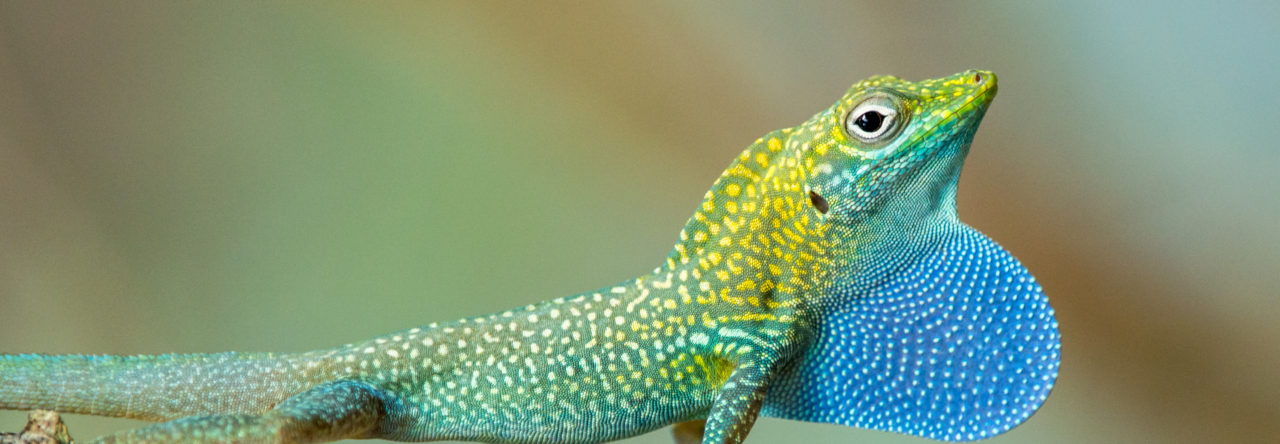
 A few months back, we had a post on the conservation situation in Jamaica with particular emphasis on the Hellshire Hills, last redoubt of the Jamaican iguana. Now in the journal Oryx, Rick Van Veen and Byron Wilson of the University of the West Indies, along with Tandora Grant and Richard Hudson, of the San Diego and Fort Worth Zoos, respectively, express further concern of the situation. Most of the article can be viewed online; add “and the environmental conventions to which it is a signatory.” to the last line and you’ve got the whole article.
Category: All Posts Page 124 of 154
Let’s face it, “squamate” doesn’t work. It’s an ugly word, and most people don’t know what it means–if anything, it conjures up “squamous cell carcinoma,” a type of skin cancer.
 More importantly, the term is not needed. Squamate comes from the scientific order Squamata, the lizards and snakes. But we know that snakes evolved from lizards–they are one type of lizard. In other words, lizards do not form a monophyletic group; they are paraphyletic with respect to snakes.
Does this remind you of any other major group of vertebrate? Say, birds and dinosaurs? We all know that birds evolved from dinosaurs, they are a type of dinosaur; dinosaurs are paraphyletic with respect to birds. And so, what is the solution to this problem? We now realize that birds are dinosaurs, members of the Dinosauria. Indeed, failing to recognize birds as a type of dinosaur commits the sin of paraphyly, obscuring the fact that some dinosaurs (in the old sense) are more closely related to birds than they are to some other dinosaurs.
And so, for the same reason, we should start referring to snakes as one type of lizards and, in turn, when we use the term “lizard,” we should understand that we are referring to snakes as well. In other words “Lizard” = Squamata. And, hence, we have no need to use the term “squamate” in common discourse.
Ahh, that warmth feels good.
We all know that many anoles species are very good at behaviorally regulating their body temperature by moving from an area that is too hot or too cold to another area that is just right. But how do they actually judge the thermal properties of a particular microsite? There’s been a lot of work on the sensation of temperature in mammals, but not so much in reptiles.
Recently, Erkin Kurganov and colleagues at the National Institutes of Natural Sciences, in Okazaki, Japan began to rectify this shortcoming, and their paper has just been published in Pflügers Archiv – European Journal of Physiology. Here’s the abstract:
Transient receptor potential ankyrin 1 (TRPA1) is a member of the large TRP super family of ion channels and functions as a Ca2+-permeable nonselective cation channel that is activated by various noxious stimuli. TRPA1 was initially identified as a potential mediator of noxious cold stimuli in mammalian nociceptive sensory neurons, while TRPA1s from nonmammalian vertebrates (snakes, green anole lizards, and frogs) were recently reported to be activated by heat, but not cold stimulus. In this study, we examined detailed properties of the green anole TRPA1 channel (gaTRPA1) related to thermal and chemical stimulation in whole-cell and single-channel recordings. Heat activates gaTRPA1 with a temperature threshold for activation of 35.8 °C, while heat together with allyl isothiocyanate (AITC), a chemical agonist, had synergistic effects on gaTRPA1 channel activation in that either the temperature threshold or activating AITC concentration was reduced in the presence of the other stimulus. Significant heat-evoked gaTRPA1 activation was observed in the presence but not absence of extracellular Ca2+. gaTRPA1 channels were also activated by heat and AITC in excised membrane patches with an inside-out configuration. By comparing the kinetics of heat- and AITC-evoked singlechannel currents, we defined similarities and differences of gaTRPA1 channel responses to heat and AITC. We observed similar current-voltage relationship and unitary amplitudes for heat- and AITC-evoked currents and found that heat-activated currents showed shorter durations of both open and closed times. Our results suggest that the gaTRPA1 channel is directly activated by heat and chemical stimuli.
 Ron Savage, who works for USAID and is currently posted in Haiti, reports “I haven’t been getting out herping in Haiti much since I sold my car but today I managed to go out and check out some relictual forest (at about 2,700 ft elev.) not too far from Port au Prince and photographed these two anoles. This is the first time that I’ve seen this species in Haiti or the DR come to think of it. They were both up a tree about 15-20 feet and I would say that they were both about 8-9” long including their tails. As you can see, one has a stump tail. He was higher in the tree keeping his eye on the greener one. I honestly don’t know what these are, do you have any idea? It could actually be two species. I’m not familiar with A. ricordii, but I suppose this could be one.”


Reports Pat Shipman in Little Cayman, adding “Notice the difference between her expression and his. Anolis maynardi on Little Cayman, just after a nice rain.”
And notice that sexual dimorphism in snout length!

Find this week’s anole!
Before leaving for Cuba, Martha and I discussed our anole wish-list. Figuring prominently were Cuba’s legendary sister-species, A. bartschi and A. vermiculatus. Also swiftly declared were the beautiful A. allisoni and anything in the erstwhile genus Chamaeleolis (alas, we found none of the snail-eating giants). However, I must admit — I had no idea A. lucius existed until I first laid eyes on it!

After encountering A. lucius in a patch of mature forest along a slow-moving stream, my first impression was that it looked and behaved like a trunk anole, if trunk anoles were 150% bigger and had zebra stripes on their heads. Indeed, at the first locality we encountered them, they seemed to favor perching head-down on trunks 1-3m high (with one individual spotted almost 5m high.)

Although I’m still fond of my initial diagnosis of “giant zebra-headed A. distichus,” we proceeded to encounter A. lucius in a variety of other habitats. For instance, we found them scrambling over limestone karst and taking refuge in sea cliff caves on Cuba’s southern coast, a habit described in Schwartz & Henderson’s Amphibians and Reptiles of the West Indies. Later I would wonder what A. bartschi, were it to occur syntopically, would have to say about that.

~5m up a tree

~2m below ground
We also found A. lucius near human habitation, on the streets of Trinidad and the home of a coffee farmer in Cuba’s Topes de Collantes nature reserve park.

So it seems clear that this anole is jack of at least a few trades. But wait, there’s more!
A. lucius has a bizarre trait, one that’s shared with a close relative already featured on Anole Annals, A. argenteolus. Can you guess what it is? If you guessed translucent scales on the lower eyelid, you win! The function of these “shades” is not entirely clear, with one obvious idea being that they block harsh sunlight. For what it’s worth, we almost never saw A. lucius close its eyes during the day.

Anolis lucius: pretty much obligated to wear its sunglasses at night
A. lucius was, dare I say, a dark-horse third-place finisher on the list of coolest species we managed to see. I’ll (probably) finish off the top three next time with A. vermiculatus!

PS
Anoles with sunglasses…just stop, evolution.

Photo by Jake Scott
Some people think so, such as this posting on the Association of South Eastern Herpetogists website. I have my doubts about the presence of porcatus in Florida. Anolis carolinensis, after all, is derived from A. porcatus. In reality, it is simply a population of A. porcatus, perhaps smaller than most of their Cuban comrades. Suppose for some reason A. carolinensis started growing larger–wouldn’t they look like the green anoles on Cuba? Anyone have thoughts on whether Cuban porcatus are really in Florida and, if so, how easy it is to identify them?

Photo by Christopher Kirby
Here’s another putative porcatus, this one photographed by Christopher Kirby. Those heads are pretty mean looking, I’ll grant that. Several other photos are also on the ASEH website.


Anolis cybotes, one of the species included in Husak and Lovern’s study, still showing its dewlap during copulation.
If I were to take survey of Anole Annals readers regarding the factors that regulate aggressive and showy behaviors, I suspect that the vast majority of you would implicate testosterone as the primary culprit. Whether we are discussing humans or nearly any other vertebrate, there is a common societal notion that testosterone fuels these behaviors like oxygen fuels fire. The widespread belief is simple: individuals with more testosterone tend to exhibit more aggressive, ostentatious, and risky behaviors.
For decades researchers have investigated the link between testosterone and behavior in a variety of biological contexts – including different behaviors, experimental manipulations, environmental conditions, and life history parameters – but rarely in wild animals or within an evolutionary context. If the supposed testosterone-behavior correlation is extended to a broader, comparative context, it would suggest that aggressive species should also have higher levels of circulating testosterone than more placid species. But, in an upcoming paper, Husak and Lovern test the testosterone-behavior supposition among Anolis lizards and, quite frankly, turn it right on its head. To give away their conclusion at the outset, three of the four “aggressive” anole lineages examined have evolved this behavior without a clear correlation with circulating levels of testosterone.
Anolis lizards are renowned for their convergent anatomical evolution (reviewed in Lizards in an Evolutionary Tree), but these species have also independently evolved similar behaviors. In a study that was one of the first of its kind, Johnson et al. showed that the Anolis ecomorphs exhibit evolutionary convergence towards similar patterns of aggressive display and territorial behaviors. Trunk-ground anoles tended to be the most “aggressive” ecomorphs, consistently exhibiting higher display rates and territoriality than the trunk-crown, grass-bush, or twig ecomorphs. Twig species tended to exhibit the least aggressive behavior in the analysis. (Also see Ord et al. 2013 for a more fine-scale dissection of display behavior.) Using this pattern of convergent behavior as a foundation, Husak and Lovern predicted that trunk-ground anoles would have higher levels of circulating testosterone than other ecomorphs from the same island, twig anoles the least. The absolute levels of testosterone might vary depending on the specific lineage in question, but they predicted that the rank-order of testosterone on each island would follow the behavioral continuum described in Johnson et al. In total the authors surveyed circulating levels of testosterone and corticosterone, an adrenal steroid hormone associated with stress, in 18 Anolis species!

Figure 1 from Husak and Lovern 2014: Circulating testosterone levels in 18 species of Caribbean Anolis lizards. Bars group by ecomorph classification (CG= crown giant, GB= grass-bush, T= trunk,
TC = trunk-crown, TG = trunk-ground, TW= twig) and color coded by island (white = Bahamas, light gray = Jamaica, dark gray = Dominican Republic, black = Puerto Rico).
As I already stated, the authors found no support for the idea that elevated levels of circulating testosterone consistently drive aggressive behavior in Anolis lizards. Instead they found that three out of the four clades of trunk-ground anoles had the lowest levels of testosterone, the opposite pattern than would be predicted based on their behavior.
Check out this green anole photographed at the Archbold Biological Station in Florida by Nick Fletcher, participating in a Cornell University field trip led by Harry Greene.

Green anole. Photo by Nick Fletcher.

Photo by Nick Fletcher.
And here’s one more by Nick, taken a day later.

Photo by Nick Fletcher.

St.Lucian Anole
I was recently in St.lucia travelling around photo-documenting the local Anolis luciae which seem to be rapidly being displaced by the invasive A. wattsi from Antigua. While exploring the southwestern town of Soufriere, I came upon a few specimens of this species in the backyard workshop of the sculptor host of mine.
I have showed the photos to a few herpetologists at UWI (St. Augustine) and they are as baffled as I am; for the closest-looking possibility, A. richardi, native to Grenada and the Grenadines, is not noted to have migrated this far north.
Any takes on what species it could possibly be?