Category: All Posts Page 107 of 153

A Few Interesting Findings from a Recent Parasitology Study, and a Plea to Other Researchers

The uninformed often view parasites with disdain, disgust, and/or condemnation. These views however ignore the various ecological roles that parasites play. My colleagues and I are some of the lucky few who look at these organisms through ecological lenses and marvel at what we find.

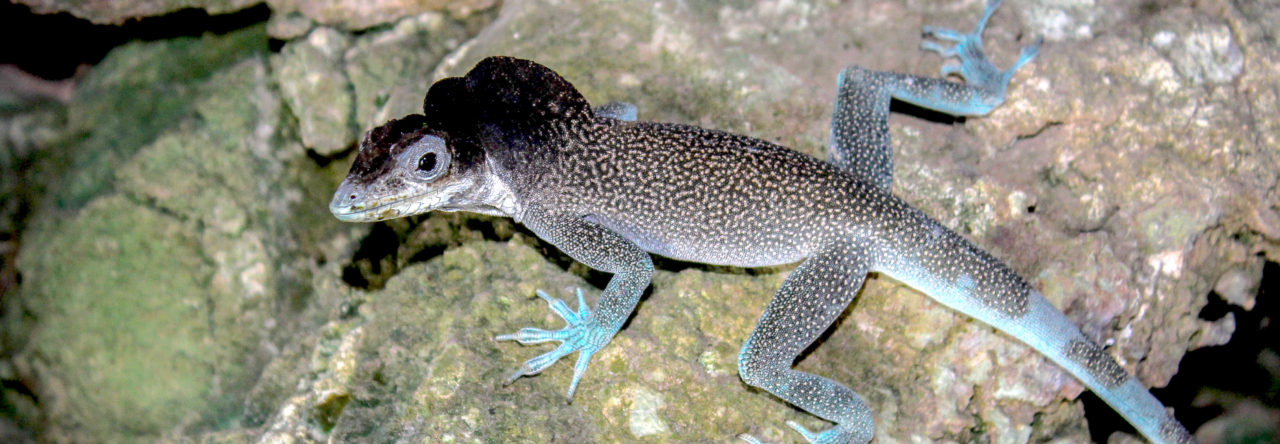
An Anolis sagrei male from Chiayi County, southwestern Taiwan.

An Anolis sagrei male from Chiayi County, southwestern Taiwan.

As part of the ongoing research on the exotic invasive brown anole (Anolis sagrei) populations in Taiwan, we collected and examined some specimens for parasites. In addition to the brown anoles, we also examined specimens of Eutropis longicaudata, Eutropis multifasciata, Japalura polygonata xanthostoma, Japalura swinhonis, Plestiodon elegans, and Sphenomorphus indicus, that were collected opportunistically from Taiwan.

We recently reported on the parasites we recorded in 52 of the 91 lizards examined, and the infected individuals harbored one to three species of parasites. We identified the parasites as Cyrtosomum penneri, Kiricephalus pattoni, Mesocoelium sociale, Meteterakis govindi, Oochoristica chinensis, Oswaldocruzia japalurae, Parapharyngodon maplestonei, Pseudabbreviata yambarensis, Pseudoacanthocephalus bufonis, or Strongyluris calotis. We also recorded an unidentifiable acanthocephalan infective juvenile (cystacanth) and an unidentifiable larva of a cestode (sparganum).

Based on the relatively few parasite species recorded from A. sagrei in Taiwan, compared to the large number of parasites reported from A. sagrei throughout its native and introduced range, it is clear that these lizards have been liberated from many of their parasites.

The nematode, Cyrtosomum penneri, which was introduced into Taiwan along with A. sagrei, was a common parasite in the A. sagrei we examined. None were recorded in any of the other lizard species examined. This is most likely because these nematodes are transmitted from one host to another during copulation and appears to have a fair degree of host specificity, so the spread of C. penneri to native lizard species in Taiwan is suggested to be very unlikely. An interesting conclusion that can be drawn from the presence of C. penneri in specimens from both the southwestern and eastern populations of A. sagrei in Taiwan is that sexually mature lizards were introduced into these localities and that they most likely have a common founder population.

Our study did also confirm that the digenean, Mesocoelium sociale, and the pentastome, Kiricephalus pattoni are acquired parasite of A. sagrei in Taiwan. Unfortunately, although their infections can be expected to be detrimental to the A. sagrei host, their infection frequencies are relatively low in the A. sagrei populations in Taiwan, and thus have no observed significant impact on the population sizes.

Another interesting finding of our study was that even though the nematodes, Pseudabbreviata yambarensis and Strongyluris calotis, are very common in Japalura swinhonis, a species that is very often sympatric with A. sagrei in Taiwan and which also has a very similar diet as A. sagrei, they have not been found in any of the A. sagrei examined to date. This could be a result of an absence of transmission routes that could be specific to J. swinhonis and thus protect introduced species from the native parasites, or the host-specific limitations of the parasites prevent them from adapting to a new hosts, i.e., A. sagrei.

I would like to encourage everyone involved with research to include parasitological studies in their herpetological works to expand our understanding of host-parasite ecology.

Rapid Hemipenis Evolution in Anoles

Photo by Julia Klaczko

This is an article wrtten by Stephanie Pappas and posted on livescience. It reports on a paper just published in the Journal of Zoology by Julia Klaczko, Travis Ingram, and me:

A lizard’s penis evolves six times faster than any of its other parts, a new study finds.

The study is the first to directly measure the evolution rate of the penis of any species, though researchers have long suspected that the male genitalia evolve faster than other body parts, said study researcher Julia Klaczko, a biologist at the University of Campinas in Brazil.

“What we see is, sometimes, very close species have very different hemipenes or genitalia,” Klaczko told Live Science. Hemipenes are the pair of organs that make up the version of a penis found in snakes and lizards. But dramatic genital differences are seen among closely related animals with penises, as well. [The 7 Weirdest Animal Penises]

Quick-changing penises

Because penises are often so different even in species that otherwise look almost identical, researchers frequently use genitals to discriminate between different species. Klaczko and her team chose to measure the genitals of 25 species of Anolis, a group of lizards that live in the Caribbean. Anolis lizards are a well-studied group, and researchers have lots of information about the relationships between the species, as well as their habitats and body shapes, Klaczko said.

The lizards’ hemipenes are tubular structures with a groove through which semen can flow. The researchers measured the length and width of the hemipenes in several specimens of each species. For comparison, they also measured the length of the lizards’ limbs, which evolve in response to the vegetation in the animals’ habitats, and the size of their dewlaps, which are the flaps of tissue near the throat that the lizards use for communication.

Next, using mathematical modeling, the researchers estimated the rates of evolution necessary to arrive at the differences in genitals, limbs and dewlaps. The result? Male genitalia change six times faster than either legs or throat flaps, making them more diverse in shape and size from one another than the other body parts.

Picky females or sexual warfare?

Klaczko and her colleagues aren’t sure what drives the rapid alterations in hemipenes. One possibility is that females pick mates with pleasing penises, whether that means their genitals are more stimulating or abetter “fit” in the female genitalia.

Another, less cooperative, possibility is that male and female lizards are locked in an evolutionary arm’s race in which both are trying to control reproduction. If this is the case, then males may be evolving genitals that give them an advantage in fertilization, while females evolve their genitals in an attempt to take that advantage back.

One known example of such a sexual arms race is the duck. Some duck species have corkscrew vaginas that spiral in the opposite direction of the males’ corkscrew penises, so the females can better resist unwanted mating attempts.

So far, the researchers haven’t studied female Anolis genitals, in part because vaginas are just harder to dissect and measure than hemipenes, Klaczko said. The next step, she said, is to try to understand the drivers in the variation in hemipenes’ shape and whether it has to do with differences in habitat, relationships between species, or some other factor.

The researchers reported their findings Jan. 5 in the Journal of Zoology.

Another news article on this research was just published on the Discovery News website.

SICB 2015: Award-Winning Talk on Gene Flow in Different Thermal Environments

Matt explains his methods.

Matt explains his methods.

The winner of this year’s Division of Ecology and Evolution Huey Award, Matt McElroy, gave an interesting presentation on gene flow and the Bogert Effect in Anolis cristatellus in Puerto Rico. Roughly, the Bogert effect says that thermoregulatory behaviors may shield a species from selection pressures on physiological processes experienced in different thermal environments. Therefore, divergent selection is expected to be weak in thermoregulating species, which can adjust their behavior to maintain a consistent body temperature in a range of thermal habitats. Alternatively, thermoconformers’ body temperatures match that of the environment, and so face strong divergent selection when exposed to new thermal habitats. Gene flow is expected to be high across thermal gradients for the thermoregulators and low for the thermoconformers.

Matt investigated the phylogeographic population structure and gene flow in A. cristatellus on the island of Puerto Rico, discovering three distinct populations. The southwestern population, in the arid rain shadow, was most divergent from the other two. He also conducted trasects up the mountain (a decreasing temperature gradient), finding that genes were moving out of the arid zones, but not the other way. If the Bogert effect held true, we would expect gene flow in both directions in this thermoregulating species; perhaps there is strong selection on cool adapted genotypes in warm habitats, but not vice versa. Matt suggested that higher population densities in lower elevations may influence the uni-directional flow, or that habitat destruction (e.g. hurricanes, agriculture) creates open, sunny patches, allowing the low-elevation populations (warm-adapted) to exploit elevations that they would not have been able to otherwise.

SICB 2015: Transcriptomic Analysis of Anole Growth Mechanisms

Photograph of a male Anolis sagrei from Christian Cox’s website.

Squamates vary widely in the magnitude and direction of body size dimorphism, which refers to the tendency for the sexes to exhibit different body sizes. Some lineages possess male-baised dimorphism while others have female-baised. The effects of testosterone on mediating sexual size dimorphism in different squamate lineages has long been the study of the Cox lab at the University of Virginia.  Christian Cox (of no relation to his advisor) has now reported some exciting steps forward in the search for the mechanisms regulating body size dimorphism in the brown anole, Anolis sagrei. Cox is in the process of carrying out a  transcriptome-wide analysis of the genes responsible for sexual dimorphism, with particular focus on examining the genes along the insulin growth factor-growth hormone axis (IGH-GH), which is the same pathway that was reported about yesterday.  In his experiment Cox implanted testosterone pellets under the skin of juvenile male and female lizards and then looked for differences in size and gene expression. Increased levels of circulating testosterone prompted increases in body size in both males and females grew to larger sizes, indicating that females have not lost the ability the respond to testosterone. But to better understand the growth axis controlling this difference Cox took a large step forward by also comparing gene expression in the liver of experimental (implant) and control (intact) animals. As the liver is a major regulator of growth via its regulation of the IGH-GH, Cox expected that this tissue would respond to testosterone treatment. This is precisely what Cox found. Specifically, he found a number of genes that are naturally regulated in different ways in males and females and additional genes that responded to the testosterone treatments. To conclude, Cox pointed out that an important next step will be to compare castrated lizards to those intact lizards with the testosterone implant to more clearly elucidate the gene network directly responding to testosterone. But perhaps the most exciting work will come with Cox and his collaborators examining the growth mechanisms of species with male-baised and female-baised patterns of dimorphism to more thoroughly understand how evolution has reshaped these gene regulatory networks during squamate evolution.


SICB 2015: How Do Anoles Get Big?

photo from;http://www.saumfinger.de/anolis_equestris.html photo by:Uwe Bartlet ?

One of the largest anoles, Anolis equestris (photo by Uwe Bartlett)

From the diminutive twig anole to the monstrous crown-griant anoles, Anolis lizards vary dramatically in their body size. Much research has focused on the patterns of body size variation among Caribbean species, how changes in body size are correlated with habitat differences among species, and rates of body size evolution upon invasion to new islands, yet an important question remains to be addressed in this body of literature, “how do anoles change body size?” S. Griffis and Dr. D. Jennings of Southern Illinois University at Edwardville are attempting to address this among Cuban anoles by searching for DNA sequence differences in known growth factories. But they are using what might be considered an unlikely model for lizard body size variation: dogs. Several years ago, Elaine Ostrander’s lab at the NIH uncovered that coding differences in the growth factors IGF were responsible for the body size variation in dogs. To a mechanist like myself, it was a surprise that this variation could be traced to coding differences in the genes, not to the levels of circulating growth factors. The authors of this poster are following Ostrander’s lead by looking for coding differences in genes involved with the IGF growth axis. But to keep their options open they are also collecting data on circulating hormone levels. When complete, if there are differences in the IGF growth axis contributing to differences in body size, Griffis and Jennings will find it.

SICB 2015: Convergence in Body Shape among Squamates

P. Bergmann

Patterns of Convergence in the Body Shape of Squamate Reptiles

SICB 2015 is off and running and what better way to kick it of than with a lizard talk? Phillip Bergmann of Clark University filled the 8:15 time slot on day one with an intriguing evaluation of broad-scale body shape convergence among squamates. This is a perennial topic on Anole Annals due to the well-studied patterns of convergence among Anolis lizards and, indeed, Dr. Bergmann highlighted anoles early in his talk. He asked whether common functional (ecological) situations lead to body shape convergence at large scales. Rather than search for global patterns of convergence, Dr. Bermann used hypotheses specific to the transformations that occur when lineages transitioned into new habitats. As he pointed out, it is not surprising to find convergence in body shape occurring throughout squamate – after all, convergence is ubiquitous across the tree of life. He concluded his talk highlighting what he feels are some of the most pressing “Big Questions” regarding convergence which included the methods we use to detect convergence, the role of constraints in shaping convergence, and elucidating the mechanisms underlying convergence. Ultimately it was a thought-provoking talk both from the perspective of squamate organismal diversity and the topic of convergence more broadly.

Videos and Photos of Honduran Anolis allisoni

Anolis allisoni displaying. Photo by Pablo Bedrossian

Sister WordPress blog pablobedrossian has a nice post with photos and videos of A. allisoni from Los Cayos Cochinos in Honduras.

Two More New Anole Species

Introducing Anolis alocomyos.

Introducing Anolis alocomyos.

Gunther Köhler and colleagues have done it again!This time, they’ve taken Anolis tropidolepis  in Costa Rica and divided it into three species in the December 2014 issue of Mesoamerican Herpetology.

The back-story: the A. pachypus complex (as the authors refer to it, except using the generic name Norops) has in recent years been split in Panama into four species, but complex member A. tropidolepis remained intact in Costa Rica. These lizards are long-limbed, narrow-padded lizards found near the ground at high elevations.

Based on eight years of collecting, Köhler and colleagues now split the group in Costa Rica into three species that are somewhat genetically differentiated at the 16s mitochondrial gene and that differ in hemipenial morphology and to some extent in scalation.  One of the OTUs (operational taxonomic units), comprised of a single individual, has the mtDNA of one species and the hemipenis morphology of another and is interpreted as evidence of hybridization.

The paper includes interesting discussion of bar-coding and how one goes from degree of genetic differentiation to decisions on species delineation.

One highlight of the paper was the icon shown below, which occurred at the bottom of one of the pages at the end of the article without explanation. A quick look at the other two papers in the issue revealed that each has its own logo–nice!

icon

Eyelash Vipers Down Anoles

Photo by Christopher E. Smith

Photo by Christopher E. Smith

Christopher E. Smith recently tweeted this photo of an eyelash viper consuming an anole. The photo was taken in Tortuguero, Costa Rica in 2008 and the incident is recorded on HerpMapper. He provided additional photos which show the anole more fully. It appears to me to be an A. limifrons, though the regenerated tail means that the usual tail banding is not present.

limifrons eaten by eyelash christopher smith II


And two more, for good measure:

limifrons eaten by eyelash christopher smith III

And Down the Hatch!

Photo by Christopher E. Smith

Photo by Christopher E. Smith

In going back through the AA archives, I’ve discovered that we previously posted a link to these photos in April, 2011! But here they are again for your renewed viewing pleasure.

Consumption of A. limifrons by eyelash vipers has been previously reported, including a lovely photo by Harry Greene in Lizards in an Evoutionary Tree. A quick Google Image search yields a number of photos, although I suspect most are in captivity.

Here’s an interesting one:

This, in turn, led me to The Many Creatures of Costa Rica blog, which has a whole series of photos of this predation event from La Selva in Costa Rica. The anole seems to be A. humilis. Here’s another from the series:


Motmot Eats Anolis laeviventris

motmotWe’ve reported on bird predation on anoles many times before [e.g., 1, 2, 3, 4], but here’s another. The paper just out in Herpetological Notes has also the gory details of what went down in Veracruz, Mexico.

Page 107 of 153

Powered by WordPress & Theme by Anders Norén