Category: All Posts Page 106 of 153

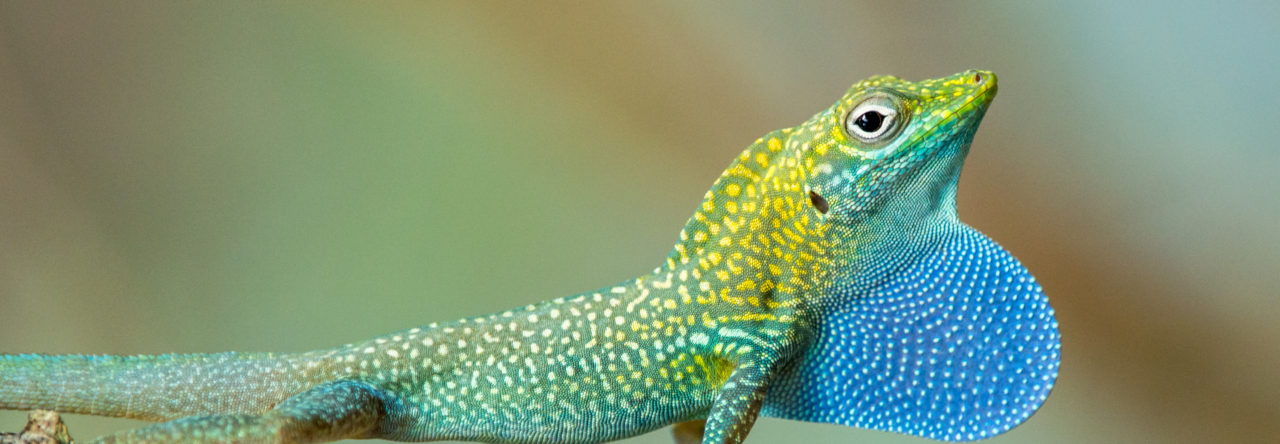
Peruvian Anole Needing Identification

Photo by Dick Bartlett.

Photo by Dick Bartlett.

Dick Bartlett found this lizard a week ago, deep in the rainforest along the Rio Mazon, Dpto Loredo, Peru. He says “The blue irises initially indicated transversalis but the more I’ve thought about it, the more unsure I have become.” Anyone able to identify it?

Rodent Sticky Trap Snags a Rat and a Lizard

IMG_1443

I have heard of the use of sticky traps for studying lizards, though a colleague told me they seem to be of uncertain safety for anoles, as his recapture records were almost nonexistent.

We finally gave up on the “bio-warfare” of feline-infantry to a recent rodent invader to the house, and had to put this trap out last night inside the house. This morning we found the intruder caught in it (juvenile Rattus sp.), but the domestic service lady put it for a minute in the backyard and not long after an Anolis distichus was also caught, probably in the seek of flies stuck to the trap (see photos). She then called me and I used an old trick, pouring (vegetable) oil in the prey in order to make it come loose from the trap’s glue surface.IMG_1444

Could the oil create a thermic or clinging capability problem to the lizard? It obviously forms a coating above scales, hence I rubbed it with napkins and then placed it back to its favorite microhabitat (trunk bark) for it to bask and recover.
IMG_1445

The lizard (38 mm SVL) was toe-clipped and marked in the belly and put back in the backyard. Hopefully we can have a recapture in some days (if cats and sparrows don’t get it first).
IMG_1446

New Study on the Habitat Use of Day Geckos

Phelsuma guimbeaui from Mauritius.

Despite the brilliant colors, the natrual history of day geckos (Phelsuma) is little known. The most recent issue of Herpetological Conservation and Biology includes a very nice study on the habitat use of two Mauritian species, showing that they are most abundant in native forest and pointing out that, thanks to their pollinating services, they are keystone species. An interesting point is that even though day geckos are essentially Old World anole doppelgängers, in their habitat use they differ in rarely leaving the trunks of trees. One of the authors is legendary ornithological conservationist Carl Jones, almost single-handedly responsible for preventing the extinction of several Mauritian bird species.

Here’s the abstract:

Many fragile ecosystems across the globe are islands with high numbers of endemic species. Most tropical islands have been subject to significant landscape alteration since human colonisation, with a consequent loss of both habitat and those specialist species unable to adapt or disperse in the face of rapid change. Day geckos (genus Phelsumaare thought to be keystone species in their habitats and are, in part, responsible for pollination of several endangered endemic plant species. However, little is known about key drivers of habitat use which may have conservation implications for the genus. We assessed the habitat use of two species of Phelsuma (Phelsuma ornata and Phelsuma guimbeaui) in Mauritius. Both species showed a strong affinity with tree trunks, specific tree architecture and are both restricted to native forest. Tree hollows or cavities are also important for both species and are a rarely documented microhabitat for arboreal reptiles. Both P. ornata and P. guimbeaui avoid areas of high disturbance. Our data suggest that active conservation of Phelsuma requires not only the protection and restoration of native forest, but also implementation of forestry practices designed to ensure the presence of suitable trees.

SICB 2015: Thermal Biology and Gene Flow in Bahamian Anolis sagrei

Anolis sagrei. Photo from Wild about Spain

An important problem in climate change biology is understanding how evolutionary dynamics will influence the ability of populations or species to persist as environmental conditions change. In general, there are three ways that such evolutionary change can occur: (1) novel beneficial mutations can arise de novo; (2) rare alleles within a population can become beneficial and sweep to fixation; or (3) gene flow between locally adapted populations can introduce beneficial alleles to populations that did not previously have them. The potential for this latter scenario was investigated by Mike Logan using A. sagrei on a system of cays off of the Bahamian island Exuma. Mike measured operative thermal environments on the cays and Exuma, as well as temperature-dependent physiology of the animals in each population. He found that the islands differed in mean temperature and variability, and that optimal temperatures for physiological performance correlated with mean island temperature. Next, Mike used genetic markers to estimate population structure and rates of migration between the keys and the mainland. He found evidence for extensive gene flow between the populations, but with an interesting twist: gene flow was highest between populations that had the most similar thermal environments. Within the context of climate change, the observation of gene flow among islands based on thermal conditions suggest that as conditions change across a species’ range, beneficial alleles may be able to move into the populations where they are needed most. Mike’s work adds an important piece to an emerging picture about the interplay between standing genetic variation, local adaptation, and responses to global change.

A Very Orange Brown Anole

We’ve had a number of previous posts on orange-colored brown anoles, but here’s a nice blog post that discusses them a bit further, with a bonus photo of a yellowish green anole. Christina Chappell, the majordomo of serenityspell.com, reports that the lizard was seen in the northern part of the Everglades. And, no, in case you’re wondering, the photo was not altered in any way.

Ernest Williams Memorial Minute

The Faculty of Arts and Sciences at Harvard University has a quaint but lovely tradition of reading a “memorial minute” to honor deceased members of the faculty. I recently came across the minute concerning Ernest Williams, which was presented in 2009 and published in the Harvard Gazette.

At a Meeting of the Faculty of Arts and Sciences on May 19, 2009, the following Minute was placed upon the records.

Ernest Williams was a man of many contrasts. Biology at Harvard in the third quarter of the last century was full of outsized personalities—titans in the field with strong opinions and no reservations about expressing them. In such company, Williams appeared a wallflower, seemingly wishing to be anywhere but in the midst of their arguments. Yet, one-on-one, Williams had an incisive wit and a dry sarcasm—discussions with him were always stimulating and provocative as he never missed a chance to challenge one’s thinking, sometimes quite pointedly.

To some, Williams’s work came across as old-fashioned. His subject, systematics — the study of the evolutionary relationships of species—is among the oldest in science, and his papers — florid and opinionated and, above all, long—recalled an approach to scholarship no longer in vogue. Yet much of his work was boldly innovative; some papers are still widely cited, and in several cases his work was well ahead of its time, presaging approaches to the study of evolutionary biology that were not to catch on for several decades.

Ernest Edward Williams was born January 7, 1914, in Easton, Pennsylvania, the only child of middle-aged parents. Like many boys, particularly of that time, he grew up loving nature and spent many hours capturing salamanders and other creatures. After attending Lafayette College, Williams joined the Army, serving in Europe during World War II. Upon his return, Williams entered graduate school at Columbia University, where he was the last graduate student of the great anatomist William King Gregory.

Williams’s doctoral thesis focused on the structure of the neck vertebrae of turtles and how variation among species reflects their evolutionary heritage. The work demonstrated the combination of careful attention to detail with the ability to interpret results in the broader context that was to characterize Williams’s career. More than fifty years later the work is still foundational in understanding the evolution of turtle diversity.

In 1950, after completing his degree, Williams moved to Harvard, where he initially served as a laboratory coordinator for the anatomy course of the legendary paleontologist Alfred Sherwood Romer, then subsequently was appointed as an assistant professor and made coordinator of a General Education course on evolution. The Museum of Comparative Zoology’s Curator of Herpetology, Arthur Loveridge, retired in 1957, and Williams was appointed to take his place.  In 1970 Williams rose to the rank of professor and in 1972 became Alexander Agassiz Professor of Zoology.

Williams initially focused on continuing his work on turtle systematics, leading to a series of publications including a still-important treatise published with Loveridge in 1957. Williams soon realized, however, that the museum’s collections were inadequate for the detailed analysis he conceived, which required large samples from many populations. This recognition that the museum’s herpetological collections were wide in scope, but lacking in depth, led Williams in two directions. First, it compelled him to work greatly to expand the Herpetology Department’s holdings, ultimately leading to a quadrupling of the department’s collections (to more than 300,000 specimens) by the time he retired as curator in 1980, making the Museum of Comparative Zoology (MCZ) one of the greatest herpetological repositories in the world. Second, it led Williams’s attention to focus on lizards in the genus Anolis, a very species-rich group from the Caribbean and Central and South America. A previous curator of herpetology and director of the MCZ, Thomas Barbour, had extensively collected anoles in the Caribbean; Williams, whose focus was much more evolutionarily-oriented than most systematists of the day, recognized that this group could be a model for studying large-scale evolutionary and biogeographical phenomena.

And, indeed, they were, and still are.

New Toad Species Discovered in the Dominican Republic

Photo by Miguel Landestoy, from the New Yorker’s website

Well, actually it first came to light during a BBC expedition to film solenodons, but more recent legwork by AA  contributor Miguel Landestoy has rediscovered the animals near Pedernales in western Dominican Republic. Miguel’s efforts are chronicled in a delightful article in the New Yorker.

Anole Annals 2014: the Year in Blogging

2014 was a good year for AA. 220,000 viewers in 195 countries (and that doesn’t count the 200 subscribers who get each post hand delivered to their email inbox–sign up now!*), 307 new posts, 1570 page views on one day. Guess which post that was? And who do you think the most frequent commenter was, with 76 comments? WordPress has kindly provided a list of information and stats, which you’re welcome to peruse.


*to do so, scroll down and look for the subscribe box on the right side of the page

Gliding Lizards Mimic Falling Leaves

A new study out in Biology Letters by myself, Devi Stuart-Fox, Terry Ord and Indraneil Das found that two populations of the same species of gliding lizard – Draco cornutus – have diverged in gliding membrane colouration to match the colours of falling leaves in their respective habitats. An Anole Annals post by Ambika Kamath earlier this year looked at the study briefly after we’d spoken at the Animal Behaviour Conference in Princeton, but I thought I’d elaborate a little on working with Draco and how we devised the falling leaf camouflage hypothesis.

Figure 1. Draco cornutus at Bako National Park (photo credit– Devi Stuart-Fox)

Figure 1. Draco cornutus at Bako National Park (photo credit– Devi Stuart-Fox)

Draco are small arboreal agamids, found throughout South-East Asia. They have extendable gliding membranes that they use for gliding between trees in their habitats. They also have dewlaps – like the Anoles – used in broadcast display to communicate with conspecifics. My work generally focuses on the diversity in dewlap colouration among species and how differences in habitat influence signal efficacy and may lead to speciation. This involves measuring the colours of lizards as well as taking behavioural footage of individuals of different species to look at how the patterns of display differ.

httpv://youtu.be/I_oeY9cIWOg

Footage by Terry Ord

Most Draco are very difficult to spot as they are well camouflaged and perch at least 3 metres high in their trees. Given this, searching for movement or displays are the best ways to locate an individual. Walking through the forest, we would often see in our periphery what we would initially dismiss as a falling leaf, only to later discover it was a gliding lizard. Indeed we quickly learnt to focus on ‘falling leaves’ when on the lookout for Draco and this was quite a fruitful approach. Indraneil Das was the first to suggest the gliding membranes were coloured to look like falling leaves – but it was a couple of years until we started to think about how we might test the idea. It became difficult to ignore how similar the fallen leaves on the ground at various study sites so closely resembled the colours and patterns of the gliding membranes of Draco species living in those immediate areas.

Then we made to trip to Niah Caves National Park in northern Borneo and came across a second population of D. cornutus.

Marshmallowivory in Anoles

The big question--were they making s'mores?

The big question–were they making s’mores?

The first anole paper of 2015 is a doozy. Everyone loves to roast marshmallows around a campfire. Turns out that “everyone” includes crested anoles, A. cristatellus! Read all about it in the paper by Norman Greenhawk in the new journal Life: the Excitement of Biology.

Page 106 of 153

Powered by WordPress & Theme by Anders Norén