Anole Classics: Albert Schwartz (1974) on Geographic Variation in Anolis ricordii

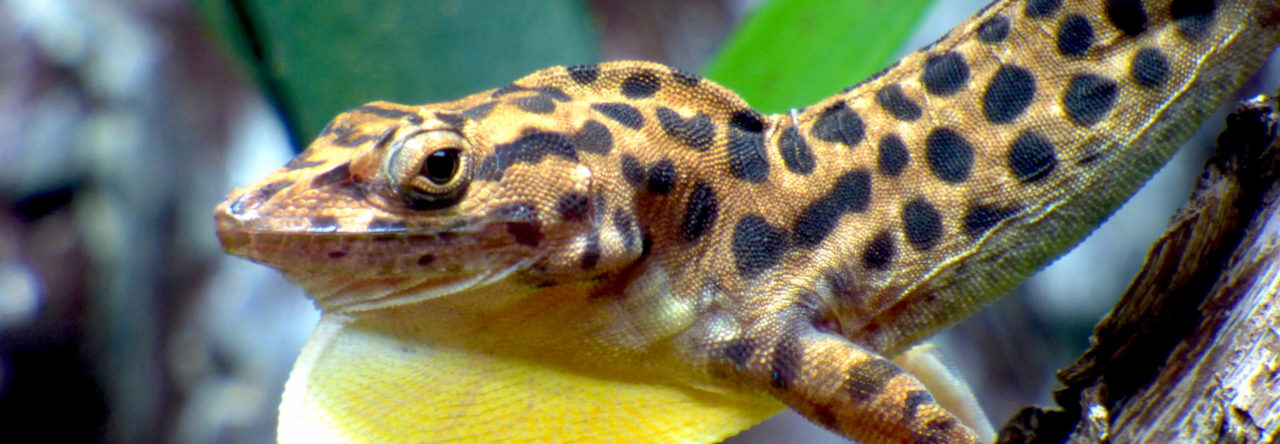
Six years after publishing his impressive monograph on geographic variation in Anolis distichus, Schwartz published a similarly impressive monograph on geographic variation in Hispaniolan crown-giant anoles (Schwartz 1974).  At the time this monograph was written, most authorities recognized a single polymorphic species of Hispaniola crown-giant anole with three subspecies: A. r. ricordii, A. r. baleatus, A. r. leberi, and A. r. barahonae (see my previous post on the spelling of ricordii if you’ve seen this name spelled with a single final “i” previously).  However, as was the case with distichus, controversy was brewing before Schwartz’s monograph about whether these forms were best recognized at the specific or subspecific level and whether additional distinct forms had yet to be recognized within existing taxa.

A Sad Day for Anolekind

It's tough when you're below plants in the food chain.

Read the article here and see the amazing photos here.

Memorial Wall for Fallen Heroes of Natural History

Over at strange behaviors, Richard Conniff has posted an interesting memorial list:

The Wall of the Dead

The list sets out to honor naturalists who have lost their lives in the field or during other natural history pursuits.  A lot of sad stories behind the names here, but a lot of epic ones too.  I would bet that a great many of these fallen naturalists died doing what they loved best.

One of the names on the list is Ken Miyata, a young anole biologist who passed away in 1983. Ken was a student of Ernest Williams at Harvard’s Museum of Comparative Zoology in the late 70s (Ph.D. 1980), and he conducted fantastic work on anoles and other reptiles and amphibians, primarily in Ecuador. Although many of us probably know him for the mark he made on tropical herpetology during his brief career, Ken was much better known as a world-class fly fisherman, and it was that passion that ultimately killed him (see a brief retrospective here; see also these recent mentions of Ken by his old friends Jerry Coyne and Greg Mayer on the blog Why Evolution is True).

A name that’s missing from this wall is Preston Webster, another seminal anole biologist who died too young in a 1975 car crash.  You can suggest additions to Conniff’s list in the comments of that blog, and he’ll add them.  Does anyone who knew Webster want to put a few words on this site?  I know very little about the man, but if there aren’t any takers, I’ll try to add him in a couple of days. I believe Webster was in the Dakotas when he died, and I don’t know if he was engaged in any ‘naturalist’s pursuits’ at the time (certainly not on anoles!).  But this probably doesn’t matter – there are other great biologists on the list who died early in unrelated accidents.

There are several other herpetologists mentioned.  Are there any other anole biologists missing from the list?

Hope for Haitian Biodiversity

Nat Geo just posted an article on the rediscovery of six species of Haitian frogs thought to be extinct.  This seemed like a good excuse to re-tell the story of the recent rediscovery of Anolis eugenegrahami from Haiti.  This remarkable “semi-aquatic” anole, known from only a single, highly degraded locality, had not been seen in quite some time until an intrepid team of herpetologists set out to look for them.  Read what they found here.  Now, if only someone could find A. darlingtoni….

Anole Annals Trivia: Find the Anoles

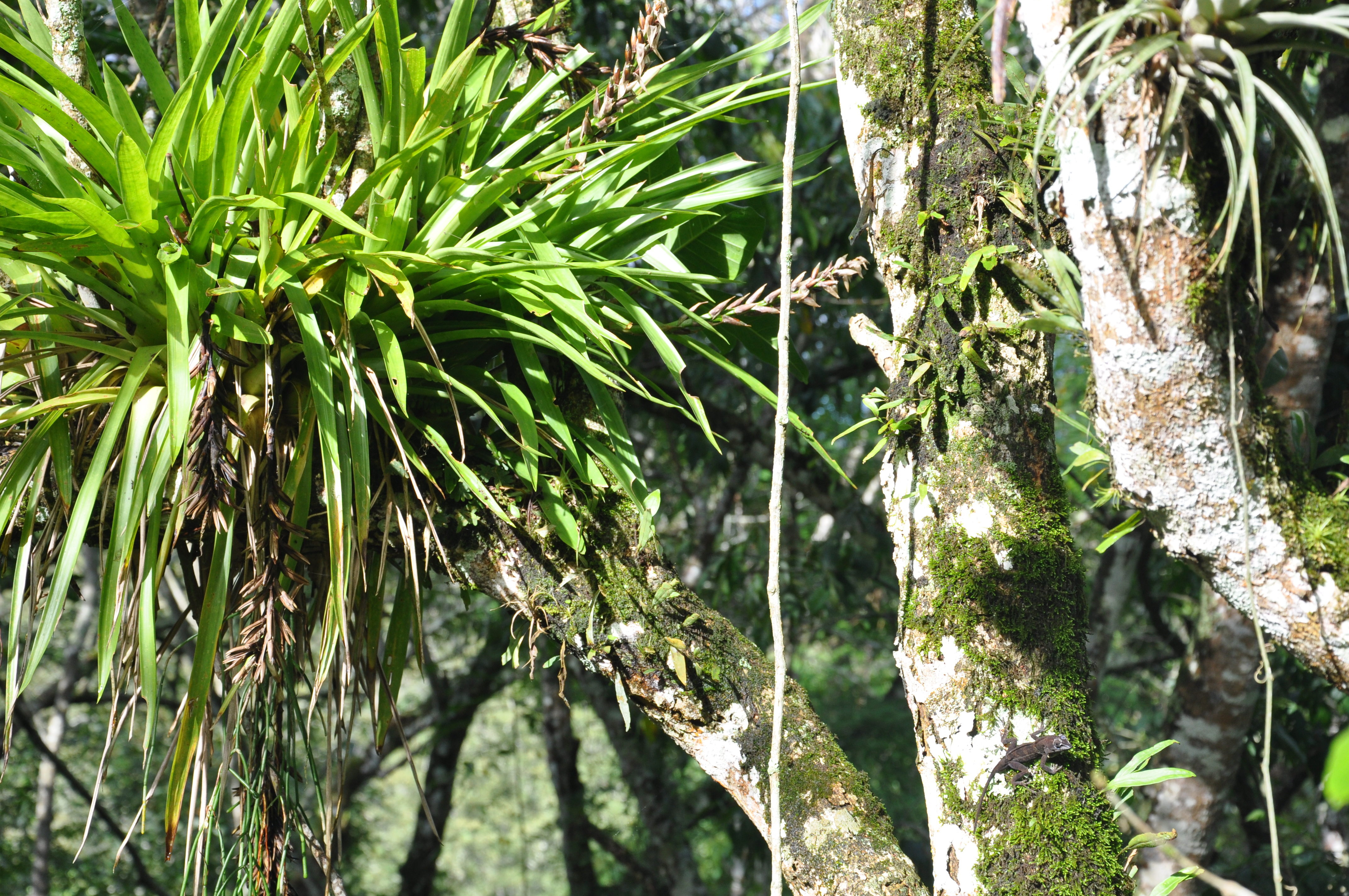
I took this photograph last summer in the Sierra de Bahorucos of the Dominican Republic, not far from Polo.  The first to answer the following three questions about this photo wins the respect of anole lovers around the world: (1) how many anoles are in this photo?, (2) what ecomorphs to they represent?, and (3) what species are they?  First correct answers in the comments wins.

Sexual Dimorphism and Species Richness

The figure above is a re-drawing from Schoener’s classic 1977 Biology of the Reptilia paper.  Though “Competition and the Niche” has been widely cited, this figure, buried in the midst of the 102-page opus, has not gotten the attention it deserves.  It shows that sexual size dimorphism in anoles is greatest on islands in which no other anole species are present and declines as function of the number of other anole species on an island.  Anole community size is strongly correlated with island species richness, so this trend indicates that dimorphism and community richness are negatively related.

Why might this be? 

More Introductions…


With the number of Florida’s exotics herp species already exceeding the number of native species, a couple more may be finding a new home in the Sunshine State.
Back in 2004 I was alerted to the existence of Anolis trinitatis at a Miami Beach hotel. I investigated the claim and sure enough they were there. I collected/removed 11 individuals (including juveniles) in 3 separate visits over a 6 month period. When I returned to the site in late 2006 they had begun renovation to the hotel and pool/garden area; the later being completely stripped of vegetation including the large Ficus trees and Pandanus in which the Anolis had been occupying. Subsequent visits to the site and surrounding area have not yielded any other animals and we think these have been extirpated.

More recently, 3 Anolis coelestinus have been captured in the vicinity of a reptile importer in Broward Co. I captured a large male 3 weeks ago, but did not see any other individuals in or around the area. We are uncertain if this species was released (or escaped) in large enough numbers to become established.

These and 75 other documented species will be discussed in a soon to be submitted paper, “A complete list of verified non-indigenous amphibians and reptiles in Florida through 2010: Outlining the invasion process and identifying invasion pathways and stages.”

Attached images are of anoles I collected in Florida.

Wipeout – Anolis lividus on the Volcanic Island of Montserrat

View of the defunct capital Plymouth as seen from the sea following dome collapse in January 2010

In 1493 Christopher Columbus named it after a mountain in northeastern Spain because he found the island to be as lush and green as the Catalonian province. It’s nicknamed the Emerald Isle of the Caribbean because its early Irish settlers found it reminiscent of their green coasts. But 500 years later most of the Lesser Antillean island of Montserrat has been anything but green. Its volcano became active again in 1995 and nearly two decades of periodic pyroclastic flows, lahars (mudflows with volcanic materials), as well as gas and ash venting have converted much of the island, especially the southern half, to a gray wasteland. The old capital of Plymouth, in fact, is covered under 40 feet of mud and ash. From the nearby town of Richmond Hill, which is about as close as you can get without being arrested (I’ve tried), you can see old sugar mills and three-story boulders that the volcano tossed all the way to Plymouth mixed together in a strange melange.

Yuck! Maggots in the Mouth

In the Dominican countryside, it is widely rumored that you can get worms from the bite of the salta cocote (a.k.a. a crown giant anole belonging to the ricordii group).  It’s easy to see how this rumor might have gotten started when you look in the mouth of a salta cocote!  The A. ricordii in the photo above had a large cluster of maggots in its mouth, as did other individuals from the same locality.  These maggots have some narly teeth that they seemingly use to dig into the flesh on the back of the lizards throat.  We’re taking measures to identify these larvae now, but perhaps somebody can save us the trouble of doing this work ourselves – have these buggers been described?

New On-Line Journal: Caribbean Herpetology

Caribbean Herpetology is a new on-line, open-access journal edited by S. Blair Hedges (Pennsylvania State University), Robert Powell (Avila University), Robert Henderson (Milwaukee Public Museum), and Byron Wilson (University of the West Indies).  On the basis of the content published thusfar, it seems devoted primarily to the publication of short notes on new distributional records, natural history observations, and discovery of species of conservation concern.  For this type of work, Caribbean Herpetology seems like a nice alternative to Herpetological Review. [Note: I’m not sure if the journal has a stable URL, the link above takes you to caribherp, from which point you’ll need to click on the journal link to arrive at Caribbean Herpetology. The html code used to generate this page is beyond me, so perhaps someone else can tell us if there is a direct, stable link to the journal?].

Page 300 of 306

Powered by WordPress & Theme by Anders Norén