Evolution of a Lizard Room, Part VI: Generating Food In House

Adult Gryllodes (image from http://www.just-green.com/)

In a previous post on the evolution of the Glor Lab’s lizard room, Julienne discussed our general strategy for acquiring anole food.  As Julienne discussed, the crickets for our adult lizards are obtained primarily in the form of bi-weekly shipments from Fluker Farms.  However, we also have a fairly large cricket breeding operation that provides many of the small crickets required by our hatchling lizards.  One reason for maintaining this colony is that Flukers does not reliably supply pin-heads that are small enough for some of our newest additions.  Another reason for maintaining this colony is the hope that this colony will eventually grow to the point that it also supplies feeder crickets to the remainder of our colony.  One somewhat unusual thing about our colony is stocked with Gryllodes rather than Acheta (the type of cricket that you get from Flukers and other large cricket farms).

One Night in Antigua – Photos from a Layover with the Colossus Anolis leachii

Early morning sighting of a female Anolis leachii on a leaf covered in raindrops.

Sometimes, they say, it’s about the journey, not the destination. This makes me think of exciting layovers I’ve had in Anolis country. At any place where the layover is long enough to permit stepping outside of the airport, I like to pop out and see what kind of anoles I can find lurking around the terminals. On a few occasions, travel requires an overnight stay in an exciting place. One of the benefits of working in remote Lesser Antillean islands is that infrequent (and unpredictable) airline schedules typically mean spending a night or two in tiny islands to and from the actual destination. For years I’ve been working in Montserrat, a small island with an active volcano, where I try to follow the flighty bugger Anolis lividus as close to the volcano as I can get. On our way home from Montserrat, we usually spend a night in Antigua, where the charming giant, Anolis leachii can be found.

View of a raincloud and rainbow as we descended into Antigua in January 2009.

Like most anoles from the Lesser Antilles, this species is abundant. However, few species from the Lesser Antilles are as large as A. leachii. It is a member of the bimaculatus clade of large anoles from the Northern Lesser Antilles. According to Scwhartz and Henderson (1991), it can reach a snout-vent length of 123 mm. For anyone who works with crown-giants, this may not seem so large, but for an aficionado of the Lesser Antillean anoles, Anolis leachii is a relative behemoth! Its body ranges from yellow to blue and green, and it’s covered in a purplish vermiculation. The large eyering ranges from a sulfurous yellow to a deep orange. Hands down, this is one of the world’s most beautiful anoles. Imagine my excitement when I got to spend a night chasing these lizards through the wilds of Antigua Village, a cushy beach resort teeming with Anolis leachii and the smaller congener, A. wattsii. Here I offer some photos of this dazzling species, and a bit of its taxonomic history.

Anole Biology Featured in the St. Augustine Times

Read up on the exciting experimental population biology studies of Dan Warner and Alexis Harrison here.

White Nose Fungus? Or Just Shed Skin?

Anolis carolinensis hatchling in our animal facility.

I’ve noticed that many of the anoles in my breeding colony occasionally have white protuberances emerging from their nostrils, like the two-month old hatchling to the left. I haven’t been able to determine whether these protuberances are the remnants of an old shed or whether the lizards have a fungus growing in their nostrils. By the time I catch an afflicted individual in its cage the protuberances are gone, seemingly because the lizard blew them out while moving to evade my hand. Has anyone experienced this phenomenon?

This Is Wrong on So Many Levels


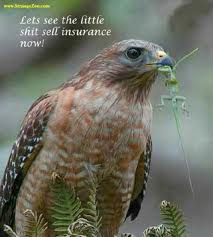
This brings up a bigger question: why isn’t there a spokesanole for any major company?

Scantlebags: A New Innovation for Anole Field Work

Scantlebags being used in the field.

When in the field, we often need to temporarily house many animals from multiple localities for a short period of time.  While doing this, we need to keep animals healthy and track collection sites during transportation.  Anole researchers have used a variety of techniques to bag and sort captured anoles and often  rely on commercial reptile bags, pillow cases or plastic bags.

Thanks to the ingenuity of Dan Scantlebury and his mother, the Glor Lab has another solution: Scantlebags.  Scantlebags are individually manufactured in Stone Mountain, GA to our precise specifications.  They are made from white ripstop cloth material that is machine washable.  By making our bags from white fabric we can also write specimen data directly on the bag with a sharpie.  Each Scantlebag has a zipper closure, allowing easy access to captured animals without completely opening the bag.  You’ll have to trust us when we say that dealing with zippers is much easier than trying to constantly tie and untie pillow cases.  Scantlebags come in sizes ranging from a few square inches (for small anoles and Sphaeros), up to bags that are about the size of a typical pillowcase (which can temporarily accomodate ~20 small anoles). Finally, each bag has a webbing strap in one corner which allows Scantlebags to be tied to a belt, where they are easily accessible but secure from accidental loss.  The strap is at the opposite end of the bag from the zipper opening because the anoles we work with tend to aggregate at the top of the bag and are less likely to escape when the bag is opened from the bottom.

How does everyone else secure animals in the field? Any ideas for Scantlebag improvements?  Let us know in the comments.

The Kings of Greater Antillean Anole Taxonomy I: E. D. Cope

Greater Antillean anoles would not be a model system for studies in ecology and evolutionary biology without the foundation provided by a century and a half of careful work by anole systematists.  Because their contributions often go unrecognized, I thought I’d use this post to call attention to the work of some of the most important figures in Greater Antillean anole systematics.  I’m going to focus here on alpha-taxonomy, and specifically on description of new species (we’ll do later posts on the history of anole phylogenetic systematics and descriptions of subspecies).  The majority of the nearly 120 species of anoles found on Cuba, Hispaniola, Jamaica, and Puerto Rico were described by  five key figures and their colleagues.

Anole Annals Poetry Competition extended

We’ve decided to extend the deadline for the poetry competition one more week. We’ve had a number of good entries but would love some more!

Holiday Gift Ideas for Anole Lovers

Still looking for the perfect gifts for friends and family? Nothing says “Happy Holidays” like an anole-themed present!

  • For the wine connoisseur: These wine glass charms can double as necklace pendants! They are also the perfect way to spice up your holiday parties.
  • For the home decorator: There’s nothing better to see just as you enter a room than a charming light switch plate.
  • For the fashionista: These headbands are sure to be seen on the runways any day now. Who doesn’t want to look like they have an anole crawling through their hair?!
  • For the green thumb: If you can’t have real anoles in your garden, the next best thing is a ceramic one.
  • For the coffee lover: Now the caffeine addict in your life can enjoy their morning cup with an anole in hand.
  • For the businessman: This stylish anole tie is sure to impress the boss at the next board meeting!
  • For the dog: Even man’s best friend can show off his/her love for anoles.

I hope that these fool-proof gifts will ease your stress this holiday season!

Not All Embryos are Created Equal

The pages of Anole Annals were recently graced with beautiful photos of Anolis embryos (here), their allure attracting attention from far and wide (here). Unfortunately, development doesn’t always go according to plan. While slight perturbations to development can create fodder for natural selection, more extreme phenotypic mutations can create not-so-hopeful monsters (a play on R. Goldschmidt’s theory of hopeful monsters which predicts that relatively large homeotic mutations can contribute to evolutionary saltations). Several years ago I dissected this embryo of A. sagrei. Count the body parts.What do you see?

This is likely one of the most extreme mutant Anolis embryos I have collected. I regularly find dead embryos that appear normal morphologically and died for unknown causes. But this is the other extreme. This embryo clearly possesses a well-developed, seemingly normal head, limbs, and tail. It is even beginning to develop scales on the limbs and body. Without dissection I cannot be precisely sure about the nature of this mutation, but one can readily discern that there is no well-defined body axis, the head, tail, limbs all emerge from a nondescript central mass of tissue. Perhaps more interesting  in this light, there also appears to be an axis duplication. Eight limbs, two tails, and two sets of hemipenes are visible, but only one head (note, only one eye is visible but both are present). Can’t see everything? Check out the labeled photos below.

Page 266 of 305

Powered by WordPress & Theme by Anders Norén