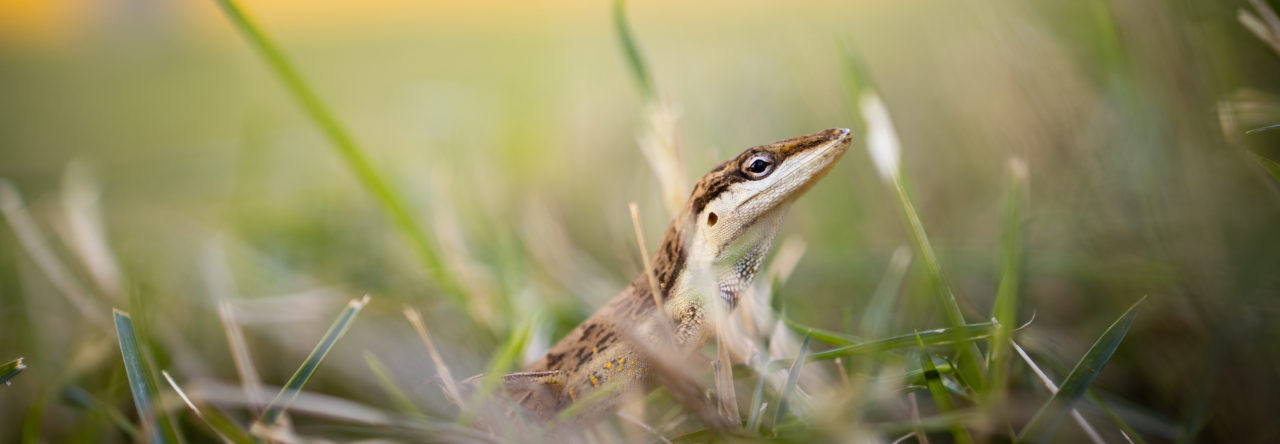
Taxonomic Splitting And The Meteoric Rise In The Number Of Reptile Species

The rise in number of recognized reptile species through the years.

The rise in number of recognized reptile species through the years.

The number of described species of reptiles has increased extraordinarily in recent times. In a fascinating recent article, Pincheira-Donoso and colleagues have catalogued this increase, as well as describing the taxonomic distribution of present-day reptile diversity. They report that since 2000, the number of described species of lizards has increased by 1164, a remarkable increase of 26%. They also point out that reptile diversity among clades is right-skewed, with most genera containing relatively few species and a few containing a lot. And, of course, they highlight everyone’s favorite genus, Anolis, as one of the largest outliers.

Speaking of anoles, AA wondered how anole diversity has changed since 2000. Daniel Pincheira-Donoso kindly provided the answer, with information provided by co-author Peter Uetz. Since 2000, 42 species have been described, bringing the total in March 2012 (when data were compiled) to 384 (the list of new species from 2000 til the present appears below). That’s only a 12% increase, lagging behind lizards in general, but more on par with the description rate for snakes, which has increased 16% over that period. As AA readers are well aware, however, new anole species are being described at a high rate (e.g., 1,2) and, indeed, Uetz’s Reptile DataBase now puts the number at 391.

What’s behind this incredible burst of species description, both in anoles and more broadly? Some of it is the result of exploration and discovery of truly new, previously unknown, lizards. But most of the increase—in my humble estimation—is the result of the taxonomic splitting of previously widespread species into multiple species. Systematics goes through phases of “lumping” and “splitting” and the field in general seems to be experiencing a massive phase of splitting at the moment. In some cases, this is the result of taxa being differentiated on the basis of morphological characters. However, most is the result of the discovery of genetic differentiation among populations. A naysayer might be prompted to say that this has gone to far, that species are sometimes being described on the basis of minor, insubstantial differentiation. It will be interesting to see if and how much the pendulum swings back.

Are these really the same species?

Are these really the same species?

Regardless, one of the reasons that anole diversity has not increased as much as that in other taxa is that anole systematists—to date—have been restrained in their splitting, particularly in the West Indies. Substantial genetic diversity has been found among populations in many anole species, differentiation so great that many would have described four, six, or eight species from single widespread Caribbean taxa. This, of course, may change in the future, and the diversity of Caribbean anoles may skyrocket.


Below are the abstract of the Pincheira-Donoso paper and then the list of new anoles described from 2000-2012. And when you’re done reading those, check out Daniel Pincheira-Donoso’s website, with much information on Daniel and his work on Liolaemus.

Abstract:

Reptiles are one of the most ecologically and evolutionarily remarkable groups of living organisms, having successfully colonized most of the planet, including the oceans and some of the harshest and more environmentally unstable ecosystems on earth. Here, based on a complete dataset of all the world’s diversity of living reptiles, we analyse lineage taxonomic richness both within and among clades, at different levels of the phylogenetic hierarchy. We also analyse the historical tendencies in the descriptions of new reptile species from Linnaeus to March 2012. Although (non-avian) reptiles are the second most species-rich group of amniotes after birds, most of their diversity (96.3%) is concentrated in squamates (59% lizards, 35% snakes, and 2% amphisbaenians). In strong contrast, turtles (3.4%), crocodilians (0.3%), and tuataras (0.01%) are far less diverse. In terms of species discoveries, most turtles and crocodilians were described early, while descriptions of lizards, snakes and amphisbaenians are multimodal with respect to time. Lizard descriptions, in particular, have reached unprecedented levels during the last decade. Finally, despite such remarkably asymmetric distributions of reptile taxonomic diversity among groups, we found that the distributions of lineage richness are consistently right-skewed, with most clades (monophyletic families and genera) containing few lineages (monophyletic genera and species, respectively), while only a few have radiated greatly (notably the families Colubridae and Scincidae, and the lizard genera Anolis and Liolaemus). Therefore, such consistency in the frequency distribution of richness among clades and among phylogenetic levels suggests that the nature of reptile biodiversity is fundamentally fractal (i.e., it is scale invariant). We then compared current reptile diversity with the global reptile diversity and taxonomy known in 1980. Despite substantial differences in the taxonomies (relative to 2012), the patterns of lineage richness remain qualitatively identical, hence reinforcing our conclusions about the fractal nature of reptile biodiversity.

New Anole Species:

Anolis cusuco (MCCRANIE, KÖHLER & WILSON 2000)

Anolis kreutzi (MCCRANIE, KÖHLER & WILSON 2000)

Anolis toldo FONG & GARRIDO 2000

Anolis hobartsmithi (NIETO-MONTES DE OCA 2001)

Anolis ocelloscapularis (KÖHLER, MCCRANIE & WILSON 2001)

Anolis oporinus GARRIDO & HEDGES 2001

Anolis roatanensis (KÖHLER & MCCRANIE 2001)

Anolis terueli NAVARRO, FERNANDEZ & GARRIDO 2001

Anolis wampuensis (MCCRANIE & KÖHLER 2001)

Anolis yoroensis (MCCRANIE, NICHOLSON & KÖHLER 2001)

Anolis zeus (KÖHLER & MCCRANIE 2001)

Anolis ruibali NAVARRO & GARRIDO 2004

Anolis paravertebralis (BERNAL-CARLO & ROZE 2005)

Anolis umbrivagus (BERNAL-CARLO & ROZE 2005)

Anolis anatoloros (UGUETO, RIVAS, BARROS, SÁNCHEZ-PACHECO & GARCÍA-PÉREZ 2007)

Anolis datzorum (KÖHLER, PONCE, SUNYER & BATISTA 2007)

Anolis gruuo (KÖHLER, PONCE, SUNYER & BATISTA 2007)

Anolis kunayalae (HULEBAK, POE, IBÁNEZ & WILLIAMS 2007)

Anolis magnaphallus (POE & IBÁNEZ 2007)

Anolis pseudokemptoni (KÖHLER, PONCE, SUNYER & BATISTA 2007)

Anolis pseudopachypus (KÖHLER, PONCE, SUNYER & BATISTA 2007)

Anolis williamsmittermeierorum POE & YAÑEZ-MIRANDA 2007

Anolis apletophallus (KÖHLER & SUNYER 2008)

Anolis campbelli (KÖHLER & SMITH 2008)

Anolis cryptolimifrons (KÖHLER & SUNYER 2008)

Anolis cuscoensis (POE, YAÑEZ-MIRANDA & LEHR 2008)

Anolis soinii (POE & YAÑEZ-MIRANDA 2008)

Anolis anchicayae (POE, VELASCO, MIYATA & WILLIAMS 2009)

Anolis ibanezi (POE, LATELLA, RYAN & SCHAAD 2009)

Anolis lyra (POE, VELASCO, MIYATA & WILLIAMS 2009)

Anolis monteverde (KÖHLER 2009)

Anolis morazani (TOWNSEND & WILSON 2009)

Anolis anoriensis (VELASCO, GUTIÉRREZ-CÁRDENAS & QUINTERO-ANGEL 2010) Anolis charlesmyersi (KÖHLER 2010)

Anolis osa (KÖHLER, DEHLING & KÖHLER 2010)

Anolis otongae (AYALA-VARELA & VELASCO 2010)

Anolis podocarpus (AYALA-VARELA & TORRES-CARVAJAL 2010)

Anolis unilobatus (KÖHLER & VESELY 2010)

Anolis benedikti (LOTZKAT, BIENENTREU, HERTZ & KÖHLER 2011)

Anolis tenorioensis (KÖHLER 2011)

Anolis sierramaestrae (HOLÁŇOVÁ, REHÁK & FRYNTA 2012)

Anolis ginaelisae (LOTZKAT, HERTZ, BIENENTREU & KÖHLER 2013)

 

Program For Upcoming Evolution Conference Released

Screen Shot 2013-05-17 at 1.27.18 PMAcademic conferences are important venues for researchers to learn what is new and exciting in science and to present our more recent work. The annual meetings for the Society of Integrative and Comparative Biology (SICB) is one major conference drawing over 2,000 scientists from around the world. This conference is always held in January and usually features an embarrassment of anoles. The 2012 SICB conference in Charleston, South Carolina featured many interesting talks on anoles, ranging from discussions on new eve-devo resources in this emerging model system to studies of behavioral ecology and thermal physiology (1, 2). SICB 2013 was recently held in San Francisco, and those of us following research in Anolis lizards had plenty to see and learn as there were 18 talks and posters featuring anoles. I attended many of these and summarized the findings as best I could in several AA posts this past January (1, 2, 3, 4).

As it turns out, SICB is not the only conference where anole biologists congregate in large numbers. Another major venue for learning what’s new in Anolis research is the joint meeting of the Society for Systematic Biology (SSB), Society for the Study of Evolution (SSE), and the American Society of Naturalists (ASN). This meeting is generally referred to as the Evolution conference, for short.

This year the Evolution conference will be held in Snowbird, Utah in the last week of June. Two days ago the organizers released the online program for the conference. A quick search using “Anolis” or “anole” as keywords revealed seven talks about these lizards. I’ll be attending this conference (and speaking!), and I’ll be getting updates on each of these studies onto the Anole Annals as much as I can, so stay tuned for more! In the meanwhile, here are titles for all the talks I found about Anolis. If there are more out there that I missed, please let me know!

(1) Title: Natural selection, developmental trajectories, and quantitative genetics underlying intraspecific variation in sexual dimorphism in an island lizard.
Authors: Cox, Robert; Daugherty, Christopher; Price, Jennifer; McGlothlin, Joel.

(2) Title: Extreme sex differences in the development of body size and sexual signals are mediated by hormonal pleiotropy in a dimorphic lizard.
Authors: Cox, Christian L.; Hanninen , Amanda F; Cox, Robert M.

(3) Title: Genomics of local adaptation and colorful pigmentation in Anolis lizards.
Authors: Crawford, Nicholas; McGreevy, Jr., Thomas; Mullen, Sean; Schneider, Christopher.

(4) Title: Identification of sex specific molecular markers from reduced-representation genome sequencing.
Authors: Gamble, Tony; Zarkower, David.

(5) Title: Natural selection on the thermal performance curve of Anolis sagrei.
Authors: Logan, Michael L; Cox, Robert M; Calsbeek, Ryan G.

(6) Title: Testing for simultaneous divergence and gene flow in sister-pairs of physiologically divergent Anolis lizards from Puerto Rico.
Author: McElroy, Matthew.

(7) Title: Divergence in coloration and the evolution of reproductive isolation in the Anolis marmoratus species complex.
Authors: Muñoz, Martha; Crawford, Nicholas; McGreevy, Jr., Thomas; Schneider, Christopher.

Green Anole Creeping And Displaying:The Video

httpv://www.youtube.com/watch?v=R2RXWqiHjhA

Here’s a nice video clip of a green anole (A. carolinensis) creeping along a branch and displaying. To me, it’s a nice reminder that the different ecomorphs not only live in different places, but interact with their environment in very different ways. You’d rarely see a trunk-ground anole, such as A. sagrei, behaving in this manner, but it’s quite typical for trunk-crown anoles.

Invasive Lizards: The Fast Food Chain Connection

Yesterday, we heard a report about red-headed agamas sipping lattes at Starbucks; today, news reaches us that invasive brown anoles in Georgia are munching on Doritos Locos at Taco Bell. Read Janson Jones residential brown anole report at dust tracks on the web.

Another Bad Boy Anole-Eating Lizard Gaining Ground In Florida

Red headed agama in Florida. Photo by John Rahn.

Red headed agama in Florida. Photo by John Rahn.

Anole correspondent John Rahn, of Big Kahuna fame, reports that red-headed agamas are becoming established well beyond Miami. Here’s what he has to say after re-spotting an individual in a Starbucks parking lot that he had previously seen last fall: “I don’t know what he’s eating in that parking lot, but he is HUGE now. My girl at Starbucks says these are all over the place in Jupiter now. He’s survived the fairly cold weather we’ve had, this winter. He is a beauty! Saw another one, same shape, but smaller and very little color.”

AA recently discussed these guys at the Fairchild Botanical Gardens in Miami, and James Stroud suggested that they may have a big and negative effect on anoles, similar to that of curly-tailed lizards. Curlies are also in Jupiter and areas north of Miami–I wonder how these two sun-loving species get along.

Divergence and Speciation in the Lesser Antilles

Fig. 1 from Muñoz et al.: Anolis marmoratus subspecies on Basse Terre (left) and Grande Terre (right)

Fig. 1 from Muñoz et al. (2013) Anolis marmoratus subspecies on Basse Terre (left) and Grande Terre (right)

Unlike the extensive within-island speciation that anoles have undergone in the Greater Antilles, we have no evidence that the same has occurred in the Lesser Antilles. Rather, Lesser Antillean islands that contain two species are thought to be the result of dispersal events rather than in situ cladogenesis. Despite such low species diversity, however, phenotypic diversity on many of these islands certainly is not lacking. Some Lesser Antillean anoles exhibit spectacular geographic variation in head, body and dewlap colouration and pattern, as well as body size and scalation, that appears to be adaptive to different environments. So, while this variation has not led to complete speciation in any Lesser Antillean anole, is there some evidence that these phenotypically divergent populations are at some stage of the speciation process? Also, how does phenotypic divergence occur on these smaller islands when there seems to be little opportunity for geographical isolation?

AA contributor, Martha Muñoz and colleagues tackle these very questions in a recent paper in Molecular Ecology. Muñoz et al. focus on the stunning phenotypic diversity of the Anolis marmoratus complex on Guadeloupe, which has been categorised into 12 subspecies. On Grande Terre, in particular, two subspecies can be found: A. m. speciosus inhabits mesic habitats in the southwest and A. m. inornatus inhabits the xeric lowlands of the north and east. Males share a yellow-orange coloured dewlap but differ in head, body and eye ring colouration, while females and juveniles of the two subspecies are similarly drab in colour.

Colors And Shapes Of The Horned Anole


Ecuador's most wanted! This lizard was thought to be extinct for nearly fifty years, and still after its "rediscovery" in 2005, it remains hard to locate.

Ecuador’s most wanted! This lizard was thought to be extinct for nearly fifty years, and still after its “rediscovery” in 2005, it remains hard to locate.

Most records of Horned Anole are in disturbed areas, including near roads vegetation, botanical gardens and bamboo trees.

Most records of Horned Anole are in disturbed areas, including near roads vegetation, botanical gardens and bamboo trees.

It took me more than two years of constant visits to Mindo, a cloud forest-town in the Western Ecuadorian Foothills, to meet with the Horned Anole (Anolis proboscis)! I always felt it was a mythological reptile, not only for Ecuadorian herps but throughout the world. Has anyone seen a lizard with a long appendix on the tip of his nose, a wide color throughout the body, prehensile tail and even spines on the back? It is difficult not to speak mystically when we refer to Horned Anole.

For over 50 years it was listed as “Possibly extinct,” until 2005, when a group of Ecuadorian scientists “rediscovered” it. But it was not until two years ago when the global and local Anole experts, led by Jonathan Losos, Steven Poe and Fernando Ayala, started several expeditions to investigate everything about its morphology, phylogeny and natural history.

Its tail is prehensile and is possibly used to embrace the branches when it sleeps.

Its tail is prehensile and is possibly used to embrace the branches when it sleeps.

The Horned Anole is a diurnal and slow-moving lizard that usually is found perched between 4-8 meters above the ground. Although most records are in vegetation on roadsides, highways and near open areas can be very difficult to find due to their excellent camouflage that blends perfectly with twigs full of mosses, lichens and epiphytes, perfectly rhyming its colorful skin.

But what use their proboscis? Sexual selection and defense of territory are the first hypotheses that leap to the mind. Science will tell us soon! But even that, we are left to enjoy its beauty and unparalleled mystique.


Definitely its silhouette is unmistakable. His sharp proboscis distinguishes it from all Ecuadorian lizards.

Definitely its silhouette is unmistakable. His sharp proboscis distinguishes it from all Ecuadorian lizards.

It can be difficult to find. Not only because they are commonly perched on high branches, but also for their camouflage, forming an ideal combination with branches and colorful leaves.

It can be difficult to find. Not only because they are commonly perched on high branches, but also for their camouflage, forming an ideal combination with branches and colorful leaves.

It is slow-moving and spends most of its time 450–800 cm from ground and feeds on a variety of arboreal arthropods.

It is slow-moving and spends most of its time 450–800 cm from ground and feeds on a variety of arboreal arthropods.


Anolis proboscis sleeps on horizontal twigs and leaves (juveniles seem to prefer lower perches).

Anolis proboscis sleeps on horizontal twigs and leaves (juveniles seem to prefer lower perches).

Some Cool Anole Photos

Not sure how I came across these on the web, but I found Robert Hoogveld’s flickr page and he kindly allowed me to post these fabulous photos. Some may recall the post on Robert’s article on A. proboscis two years ago. Apparently, he has some more good stuff up his sleeves, or so he tells me.

Photo by Robert Hoogveld

Anolis marmoratus. Photo by Robert Hoogveld


Photo by Robert Hoogveld.


Anolis (Chamaelinorops) barbouri. Photo by Robert Hoogveld.


Photo by Robert Hoogveld

Anolis oculatus. Photo by Robert Hoogveld

Marine Subsidies, Washed-up Seaweed, and Insect Damage To Plants: What’s the Role Of Lizards?

Seaweed washed ashore on a Bahamian island. Photo by Dave Spiller.

Ecologists are increasingly recognizing the myriad connections not only among species within an ecosystem, but between species in different ecosystems. Case in point: seaweed often washes ashore, and it affects leaves on the plants found near the shoreline. How’s that, you might ask? Well, the seaweed decays and releases nutrients that act as fertilizer, increasing the growth of land plants. That’s good for the plants, but it also makes their leaves more tasty, and hence plant-eating insects are attracted and cause more damage to the leaves.

That seems straightforward enough, but then it gets more complicated. As the seaweed decays, it attracts lots of insects. And the insects, in turn, attract lizards. And, in fact, if you happen to be studying this process on small islands in the Bahamas, as Jonah Piovia-Scott and a team from UC-Davis were, then those lizards are our favorites, brown anoles. And if there are more brown anoles around, then they’ll eat more of the herbivorous insects that plague the land plants, and so the washed-up seaweed actually decrease the damage to land plant leaves, thanks to the helpful consumption of the anoles.

Except…maybe the lizards will be so delighted by the seaweed that they’ll spend all of their time there, eating the insects on the seaweed, and thus neglecting the insects on the landplants, so now the effect of seaweed on the land plants becomes negative again.

path diagramSo which is it? That’s what Piovia-Scott et al. set out to discover, and they’ve just reported the results in a paper in Oecologia. And the diagram to the left explains it succinctly. Seaweed increases nitrogen in the leaves, which increases herbivory. Seaweed also increases lizard density, which decreases herbivory, though the negative effect isn’t as great as the positive effect of the nitrogen. Moreover, seaweed also causes lizards to shift their diet, which has a small (and statistically non-significant) positive effect on herbivory because the lizards aren’t eating as many of the land plant herbivores. Bottom line: seaweed increases leaf damage; lizards can’t prevent it, in part because their effects are schizophrenic: more lizards, but eating fewer herbivores.

Interestingly, these results are opposite of what the same team of authors found in a study we discussed two years ago. The difference was that in that study, a big pile of seaweed was laid out at one time and the results were followed over a short period, whereas this study followed natural seaweed deposition and compared sites differing in the amount of seaweed washed ashore, following their sites for a lengthier period of time.

One last point: how did the researchers document that the lizards were switching diet? Not from sitting around and watching the lizards, but by measuring the carbon isotope ratios in their tails. Marine vegetation tends to have higher ratios of Carbon-13 than terrestrial sources, and so insects feeding on plants from different areas will, in turn, have different ratios, which means that, in turn, one can look at the Carbon-13 ratios in lizard tissue and get a sense of from which ecosystem they’re deriving their carbon. And in this case, the more seaweed, the higher the ratio. Pretty nifty!

Attempted Predation Of A “Yelping” Cuban Treefrog By A Knight Anolis

httpv://youtu.be/Du9oQr8PQC4

This occurred at 10:20 AM April 12, 2004 in South Miami Florida. I was working in my kitchen at my home in South Miami Florida with my back porch door open, when my attention was captured by a loud “yelp-yelp” sound in repetition. I also noticed that I heard the “distress” call of a cardinal – similar to what I would hear if there was a cat or snake in my backyard. I grabbed my Sony cybershot 3.2MP and ran out my back door. On an adjacent pony tail palm (Nolina recurvate) just below the crown, about 8’ off the ground I saw a large knight anole (Anolis equestris) in a head down position. The anole had in its mouth, the back legs (below the knees) of a Cuban treefrog (Osteopilus sepentrionalis). The frog was making a very loud repetitive “yelp-yelp” sound while trying to climb out/away from the lizard’s mouth using its front legs. There were a pair of cardinals and mockingbirds, and a blue jay that were attracted to the sound. The cardinal was calling, and the mockingbird was approaching and slowly opening and moving its wings in a “swimming fashion,” making it obvious as it walked across the ground. The birds’ focus seemed due to the frog’s call. I have never experienced any reaction of a bird to the many resident Knight anoles in my property or elsewhere. I managed to get a short clip (meaning to take an image) and a captured still is what you see attached. After a few more cycles of yelping, the frog managed to break free from the Anolis’ mouth and hopped away behind my AC unit. Having had some firsthand past experience with Osteopilus’s antipredatory compounds, I wondered if they had the same effect on lizard’s bucccal cavity as they did on this (at the time intoxicated) human. I had heard a very similar call from an unidentified tree frog in Costa Rica 1998. It had been captured by a parrot snake (Leptophis sp.) that fell to the ground in front of a friends horse while we were jungle riding in Guanacaste. To humans, the call does sound very much like a baby, or toddler’s wail. I would be interested in knowing if it serves to attract other predators giving the “crier” a possible distracting means of escape.

Page 199 of 305

Powered by WordPress & Theme by Anders Norén