
Category: New Research Page 37 of 67

Replaying The Tape Of Life: Lizard Evolution Proceeds In Similar Ways On Caribbean Islands

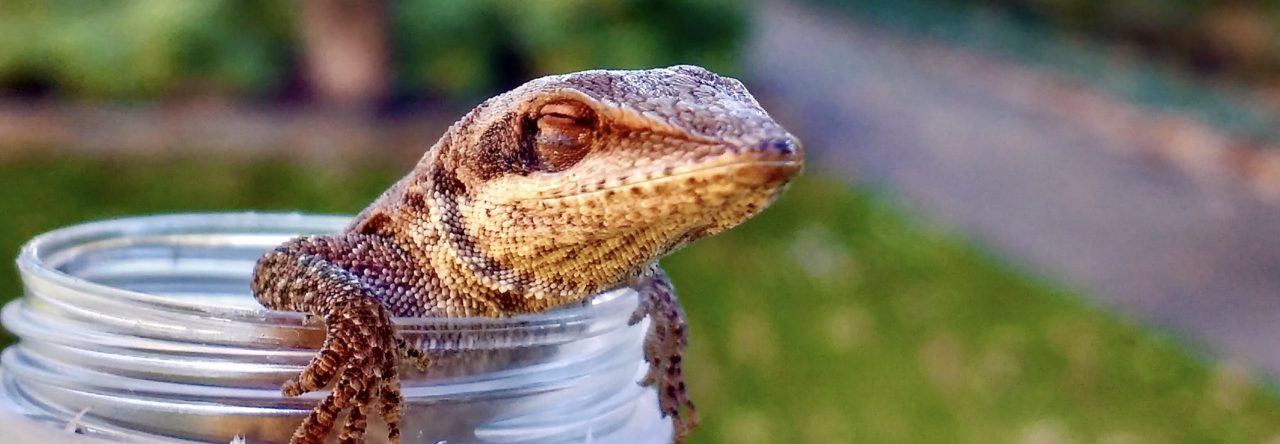
Chamaeleolis, the un-anole anole. Does this evolutionary one-off demonstrate that island anole radiations are not convergent? Photo by Veronika Holanova and more on this snail crunching anole in a previous post.

Stephen Jay Gould famously proclaimed that if the tape of life were rewound and played again, a different evolutionary outcome would result. He argued that chances events–a lightning strike, a particular mutation–would send evolution careening down a different path. Gould’s idea has been controversial and provocative, but also untestable beyond the confines of the laboratory (you actually can replay the tape of life with microbes, but that’s another story).

The next closest possibility is to look at closely related species evolving in similar environmental settings. These “natural experiments” are in some ways a test of Gould’s hypothesis–will evolution from a similar starting point, in similar environments, unfold in similar ways? Gould would have said no, but what do the lizards say?

The evolutionary radiations of Anolis lizards on the islands of the Greater Antilles are renowned for their convergence, with the same set of “ecomorphs” (i.e., habitat specialists) evolving repeatedly on each island. The existence of the ecomorphs would seem to indicate that, in fact, evolution is deterministic–put an ancestral anole on a Caribbean island and let it evolve, and you get the same ecomorphs each time. But there’s a catch, two of them, actually. First, not all ecomorphs occur on all four Greater Antillean islands. Grass-bush anoles are missing from Jamaica and trunk anoles from both Jamaica and Puerto Rico. Moreover, second, there are some habitat specialists that are unique to a single island, with no ecomorphological counterpart on the other islands. The leaf-litter dwelling Anolis (Chamaelinorops) barbouri from Hispaniola or the Chamaeleolis clade–snail-crunching chameleon döppelgangers–from Cuba, pictured above. These quite distinctive habitat specialists–and a number of others–are evolutionary one-offs, with no convergent counterparts elsewhere.

So, convergence isn’t complete across the Greater Antilles. And that raises the question of whether the island radiations are actually replicated or not. Sure, there are some particular instances of convergence, but it’s always possible that these are instances embedded in a larger sea of non-convergence. Is island radiation truly deterministic? Are the evolutionary outcomes on the four islands actually more similar than one might expect by chance?

Average distance of species to their nearest neighbor on another island (gray line) is considerably less than would be expected by chance (gray blocks representing the results of many simulation trials).

Average distance of species to their nearest neighbor on another island (gray line) is considerably less than would be expected by chance (gray blocks representing the results of many simulation trials; see papers for details on how these simulations were conducted).

A paper just published by Luke Mahler et al. in Science asks exactly that question (disclosure: I’m one of the authors). The paper took two approaches, using data on the morphology of each species (e.g., limb length,  head length,  number of toepad scales). First, the morphological similarity of each species to all others was quantified, based on these measurements. In this way, the morphological distance (in a statistical sense) to the nearest species on another island could be calculated. We then asked whether species had a nearest neighbor on another island that was closer (more similar) than would be expected by chance. The result is clear, and illustrated by the figure above. The average distance to nearest neighbor is much smaller than expected by chance. In other words, species tend to have convergent counterparts on other islands.

The number of convergent shifts to the same adaptive peak is substantially greater than expected by chance.

The number of convergent shifts to the same adaptive peak is substantially greater than expected by chance.

The second approach used a new method developed by Travis Ingram and Luke Mahler which estimates the underlying macroevolutionary landscape. To make a long story short, based on phylogenetic relationships of species and their morphology, the method identifies the minimum number of adaptive peaks across all islands. Convergent evolution would be indicated by unrelated species evolving to occupy the same peaks. The results indicate that there is far more convergence than expected by chance. This result indicates that the underlying macroevolutionary landscape on the islands is similar on the four islands, thus driving evolutionary diversification to occur in similar ways. The idea of the macroevolutionary landscape traces back to famed paleontologist George Gaylord Simpson, and this study is perhaps the first to explicitly test the idea that similarity in the macroevolutionary landscape is what leads to replicated adaptive radiations.

So, Gould seems to have gotten it wrong–let anoles diversify in similar settings, and the outcome will be very similar. Not identical–perhaps revealing the importance of his so-beloved historical contingencies–but pretty darn  close, much more so than one would expect by chance. Now, in Gould’s defense, there is reason to believe (because he once told a reporter so) that he didn’t mean his tape rewinding metaphor to apply to the minor dabblings of insignificant little lizards; rather,he was concerned about grand patterns, deep in evolutionary time, when evolution was much less constrained and life was still exploring vast horizons and testing its limits.

Regardless, there is one last Gouldian twist. Anoles have been diversifying on these islands for tens of millions of years. So, the fact that the placement of the adaptive peaks is so similar suggests that there is a long-term stability to the macroevolutionary landscape. Such a long term arrangement would lead to lack of evolutionary change. As we all know, evolutionary stasis was another of Gould’s favorite ideas, so it would  seem that SJG went one-for-two with anoles, a .500 average good enough for the all-star team in many leagues.

If you want to more on this paper, there’s a nice article/interview of Luke Mahler by Ed Yong on the Phenomena: Not Exactly Rocket Science website.

2013 Herp Meetings: Does Shape Matter?

The anole talks at the 2013 Herp Meetings have focused on speciation, hybridization, and systematics. Dr. Gunther Köhler of the Senckenberg Museum in Germany presented his talk on anole genital diversity on Saturday.

Slide from Gunther's talk, demonstrating striking differences in hemipenal morphologies in sister species pairs.

Slide from Gunther’s talk, demonstrating striking differences in hemipenial morphologies in sister species pairs.

Genital morphology in anoles is an understudied yet promising area of research. Although hemipenial morphology is a good indicator of phylogenetic relationships in other squamates, anoles are a different case. There is a massive range of diversity in hemipenis size, shape, and ornamentation within Anolis. Unexpectedly, closely related species pairs have very differently shaped hemipenes, despite their external morphological similarities. This suggests that changes in genital morphology evolve very quickly in Anolis.

Along contact zones of closely related species, individuals with intermediate hemipenial morphologies are found. This result is confirmed by looking at hemipenial morphologies of hybrids produced in the laboratory. Not only does hybridization occur, but this phenomenon raises the question of functional neutrality for anole genital morphology. Does having the “wrong” hemipenis shape matter for reproductive success?

There is a strong correlation between female cloacal morphology and male hemipenis morphology, which would suggest that shape does, indeed, matter. However, there is no evidence of reinforcement along contact zones in the mainland. Differences in hemipenial morphology does not prevent hybridization, indicating that a “key-lock” mechanism is not operating in anoles.

As Gunther says, there are more questions than answers when it comes to this phenomenon. There are many potential projects for investigating the genetics of genital morphology of both sexes, as well as the role genital morphology plays in speciation, if any. I am excited to see if answers to these questions develop in the future.

Dr. Gunther Koelher at the 2013 Herp Meetings.

Dr. Gunther Köhler at the 2013 Herp Meetings.


Anole Posters at 2013 Herp Meeting

With the 2013 Herp Meetings in Albuquerque coming to a close, there have been some great anole posters presented over the 3 poster sessions. I spoke with some of the presenters about their exciting results.

Kristin Winchell presenting her award-winning poster at the Friday ASIH poster session.

Kristin Winchell presenting her award-winning poster at the Friday ASIH poster session.

SSAR Student Poster Winner Kristin Winchell of the Revell Lab studied differences in morphology in urban and natural Anolis cristatellus populations in Puerto Rico. Kristin found that urban populations had longer limbs, more subdigital lamellae and higher body temperatures than natural populations of lizards. She believes these morphological features are adaptations for clinging to the broad, smooth surfaces of an urban landscape. She will continue this work by using a common-garden setup to rule out phenotypic plasticity as the cause of these differences. This is an interesting study that will hopefully inspire more research on how reptiles will adapt to an increasingly urban world. You can read more about Kristin’s research on her website. Congratulations Kristin!

Ian Latella's poster on changes in anole habitat use in All-American Park in Miami, FL.

Ian Latella’s poster on changes in anole habitat use in All-American Park in Miami, FL.

Continuing with the theme of anoles in human-mediated environments, Ian Latella of the Poe lab presented his poster on changes in a small, introduced Anolis community. An assemblage of six introduced species reside in All-America Park in Miami: A. distichus, A. equestris, A. garmani, A. porcatus, A. sagrei, and A. cristatellus. This provides a natural experiment for investigating invasion dynamics and short-term community assembly. Ian compared data on habitat use from 2002 and 2012 to identify changes across time. The preliminary results are interesting: after a 10 year period, A. sagrei utilized higher perches, while A. porcatus switched to lower perch heights.

Aja King of Steven Poe's lab presenting her poster on island differences in A. allisoni.

Aja King of Steven Poe’s lab presenting her poster on island differences in A. allisoni.

Aja King, also from the Poe lab, was interested in comparing A. allisoni populations in Cuba and the Bay Islands. She constructed a molecular phylogeny containing specimens from Cuban and Bay Island populations. Her phylogeny showed that the Bay Island populations nested within an Eastern Cuba clade, suggesting the possibility of an invasion of the Bay Islands from Cuba. Aja also performed a discriminant function analysis to look for differences in continuous morphological characters. She was excited that the Bay Island and Cuban populations were significantly different with respect to morphology: she could correctly identify the island of origin based on specimen morphology every time!

Poster from Steven Poe describing their in-progress computerized key.

Poster from Steven Poe describing their in-progress computerized key.

Steven Poe, New Mexico’s local anole expert, presented his poster on Sunday publicizing the lab’s efforts to develop a computerized Anolis key. The key would include all 381 species of Anolis. Rather than a dichotomous key-style approach, the user would check a series of boxes representing character states. The key would then search through the species matching the set of inputted characters. This project would lead to an app-style user interface that researchers could use on the go. This will be a great resource for professional and hobbyist herpetologists alike.

Kirsten Nicholson's poster on South-North expansion of Norops capito.

Kirsten Nicholson’s poster on South-North expansion of Norops capito.

Kirsten Nicholson, professor at Central Michigan University, presented some of the results of her phylogeographic study on Norops capito, a mainland species. Previous hypotheses suggested that members of the Norops group originated in the Caribbean after the separation of North and South America and the break-up of Caribbean islands, dispersing overwater to Mexico and then moving southward. Kirsten’s molecular phylogeny of N. capito shows a contrasting pattern. Panamanian individuals form an outgroup, with Costa Rican, Nicaraguan, and Honduran individuals nested within. This suggests a South->North dispersal pattern. Along with N. limifrons, this is the second species to show this pattern. Kirsten plans to estimate divergence times from her data to further elucidate the picture of anole dispersal.

The 2013 Herp Meetings have showcased an assortment of great ongoing anole projects. What a great venue for drawing the anole community together! Check back soon for more on the conference.

Herp Meetings 2013 Day 1: Reproductive Isolation In Parapatric Subspecies Pairs

Slide from Anthony Geneva's talk, showing the placement of the A. d. ravitergum and A. d. ignigularis crosses on the scale of reproductive isolation.

Slide from Anthony Geneva’s talk, showing the placement of the A. d. ravitergum and A. d. ignigularis crosses on the scale of reproductive isolation.


The Joint Meeting of Ichthyologists and Herpetologists kicked off this week in Albuquerque, NM. Anoles are well represented, with 7 posters and 5 talks. During the conference, I will report on some of the exciting work being presented.

Anthony Geneva, Ph.D. student in Rich Glor’s lab at the University of Rochester, gave a proper introduction to the meetings with his talk Friday morning. Anthony’s study investigates the degree of reproductive isolation in the parapatric subspecies pair A. disticus ravitergum and A. d. ignigularis. Each subspecies is genetically and morphologically distinct, though not completely isolated. Along the pair’s contact zone, there is a clinal gradient from a pure red (ignigularis) to a pure white (ravitergum) dewlap. Evidence for introgression in mtDNA haplotypes also follows this clinal pattern, with hybrids existing in the middle of the range. This provides an excellent model system for studying the process of speciation.

Anthony used a classic genetic cross to search for evidence for intrinsic isolating mechanisms in the subspecies pair. The product of these crosses was a whopping 1702 eggs and 857 babies. One convincing result was that hybrid crosses produced a greater proportion of slug (unfertilized eggs) than pure crosses! These results suggest that the barrier preventing coalescence is post-mating, prezygotic isolation. He was able to quantify the degree of intrinsic isolation on the index above, with 0 representing no isolation and 1 representing complete isolation. On this index, the focal Anolis disticus subspecies pair is placed in between the classic speciation model systems of Ficedula flycatchers and Rhagoletis apple maggots.

The presence of post-mating pre-zygotic isolating mechanisms suggests that cryptic female choice and sexual selection play a role in separating the two subspecies. Anthony plans to continue this work by backcrossing hybrid individuals to pure individuals, and hopes to use genetic cline analysis to identify the genomic regions underlying intrinsic isolation.

Over the next few days, I will also post about some of the other Anolis talks and posters here at the JMIH. Check back soon!

Walking The Natural History Trail With Laurie Vitt

Eminent herpetologist Laurie Vitt, recently retired from the University of Oklahoma (but active as ever), gave the Distinguished Herpetologist’s Lecture at the 2012 Annual Meeting of the Herpetologists League, which was part of The World Congress of Herpetology 7. The talk, the basis of a just-published paper in Herpetologica, was a paean to the fundamental importance of natural history to modern science, using vignettes from Laurie’s career as excellent examples.

The article starts in a thought-provoking way:

“Darwin’s studies provide a prime example of the importance of natural-history studies to conceptual biology… [On his voyage on the Beagle], Darwin collected a massive amount of data on geology, zoology, and botany while on land; and after returning, publishing some classic monographs, and mulling over his observations, he assembled his classic volume “On the Origin of Species,” in which a massive amount of natural-history data combined with experimental studies on selective breeding were used to support his theory of evolution by natural selection.”

And the key take-home:

“At least five key elements contributed to Darwin’s ability to put together his compelling theory, which continues to be the unifying theme of modern biology: (1) five continuous years in the field collecting natural-history data, (2) funding with no apparent restrictions on what he could do, (3) no electronic distractions, (4) time to write and think after returning, and (5) much help, including funding for the classic Zoology series, edited by Darwin but published by various authors.”

Though not extensively autobiographical at a personal level, there are some vignettes:

This wasn’t mentioned in the article.

“I grew up with an interest in natural history, subjecting my parents to loose bats and garter snakes in the house, as well as rattlesnakes and later, Old World vipers including puff adders, Gaboon Vipers (Bitis gabonica), and Russell’s Vipers (Daboia russelii) in terraria in my bedroom (which in retrospect suggests that I was either ignorant of the potential effects of snakebite, or downright stupid!).”

And it concludes with an important, little appreciated message

Dactyloa Phylogeny Redux: Morphology Plus Molecules

A pretty Dactyloa, Anolis chloris. Photo from the Reptile Database.

Two years ago, Castañeda and de Queiroz published a phylogeny of Dactyloa clade anoles based on molecular data for 40 species, approximately half of the clade. It was far and away the best phylogenetic work published on the clade and brought sense to a previously not well understood part of the anole world. The study revealed the existence of six geographically coherent clades and had important implications for our understanding of morphological evolution in this clade, which contains the mainland giants.

Name that Dactyloa. Photo from Pbertner’s photostream. See end of this post for a hint.

Recently, Castañeda and de Queiroz have published a follow up study in which they add morphological data for 60 species (the original 40 plus 20 more). The paper is published in the Bulletin of the Museum of Comparative Zoology and, like all MCZ publications, is freely available for download (click on Breviora or BMCZ on the left hand of the page). We’ve already previously discussed one aspect of the paper, a note added in press critiquing the Nicholson et al. proposal to split Anolis into eight genera.

The main focus of the paper, however, is to ask whether adding morphology increases the resolution or changes the story of the phylogeny based on molecular data. And the answer is: no, it doesn’t. As found in previous studies, morphology on its own does not provide a coherent picture of anole relationships, nor does it seem to substantially change the results derived from the much more informative molecular data. However, morphology certainly has one advantage–it allows us to add in taxa for which no molecular data are available.

The paper’s abstract gives much more detail and, of course, you should check out the paper itself.

ABSTRACT. We present a phylogenetic analysis of the Dactyloa clade of Anolis lizards, based on morphological (66 characters of external morphology and osteology) and molecular (4,700 bases of mitochondrial and nuclear DNA) data. Our set of morphological characters includes some that exhibit continuous variation and others that exhibit polymorphism within species; we explored different coding methods for these classes of characters. We performed parsimony and Bayesian analyses on morphology-only and combined data sets. Additionally, we explicitly tested hypotheses of monophyly of: 1) Dactyloa including Phenacosaurus, 2) Dactyloa excluding Phenacosaurus (as traditionally circumscribed), 3) taxa previously ranked as series or species groups described based on morphological characters, and 4) clades inferred from molecular data. The morphological data alone did not yield Dactyloa or any of the previously recognized series described based on morphological characters; only the Phenacosaurus clade (as delimited based on molecular data) was inferred with the morphological data, and only in the parsimony analysis. In contrast, Dactyloa was inferred as monophyletic with the combined data set, although topology tests failed to reject the hypothesis of non-monophyly. Additionally, five clades inferred based on molecular data (eastern, latifrons, Phenacosaurus, roquet, and western) were inferred with the combined data sets with variable support and including additional species for which molecular data were not available and which have geographic distributions that conform to those of the clades in which they were included. Of the previously recognized taxa based on morphological characters, only the roquet series, which corresponds in species composition to the roquet clade, was inferred with the combined data. Topology tests with the combined data set rejected the monophyly of the aequatorialislatifrons (as traditionally circumscribed), and punctatus series but not that of the tigrinus series and Phenacosaurus (as traditionally circumscribed). Our phylogenetic analyses and topology tests indicate that a new taxonomy for Dactyloa is warranted; we therefore present a revised taxonomy based on the results our phylogenetic analyses and employing phylogenetic definitions of taxon names.


Geographic Variation In Body Size And Cells In Anolis Carolinensis

Anolis carolinensis from Miami. Photo by J. Losos.

Anolis carolinensis from Miami. Photo by J. Losos.

Think quick: how many states does A. carolinensis occur in naturally? And can you name them?

Community Structure And Phylogeny Of Cuban Trunk-Ground Anoles

Anolis jubar. Photo by Miguel Landestoy

Two months ago, Masakado Kawata summarized the ongoing collaborative research program between Tohoku University in Japan, Habana University and the National Museum and Natural History of Cuba. The first fruit of this research has now been published in this month’s issue of Ecosphere (lead author Antonio Cádiz recently received his Ph.D. from Tohoku).

samplingThe paper is the result of an impressive field research program in which 12 species of Cuban trunk-ground anoles were studied at 34 sites throughout the breadth of Cuba. The abstract pasted below provides the nitty-gritties (and, of course, read the paper yourself), but here are some of the interesting take-home messages:

1. Three species–A. allogusA. homolechis, and A. sagrei–are widespread throughout Cuba, but the remainder have localized distributions.

2. Co-occurring species are a phylogenetically random subset of the clade, a result that obtains because of the combination of localized and widespread species that co-occur (four can occur in sympatry and five in an area).

3. Sympatric species are ecologically overdispersed, with species occupying different thermal microhabitats co-occurring.

4. Both A. allogus and A. jubar are paraphyletic with deeply divergent, geographically disjunct clades. The authors treat the clades as different species, and perhaps it is time for someone to formally describe them as such.

phylogenyphyl 2

5. Anolis delafuentei–known, if I’m not mistaken, from a single individual–defied efforts to recollect it. Is this a real species? Is it extant?

Overall, this is an excellent study that could serve as model for the study of other species-rich ecomorph clades, both on Cuba (e.g., alutaceus group) and elsewhere.

Abstract:

Anole Talks At Herp Meetings

This year’s herp meetings will be held next week (July 10-15) in Albuquerque. Appropriately enough given the venue, it’s the Steve Poe Lab Show, with eight presentations emanating therefrom. Nonetheless, there are a number of other anole talks as well. Below is the list of the talks and below the fold, and attached as a pdf, are the abstracts.

AA is looking for reporters to provide eyewitness accounts of these talks. Many of the abstracts are cagey about what their actual findings are, no doubt out of paranoia and, more likely, an early abstract submission deadline combined with talks that are probably still being finalized. Those attending these talks, please let us know–any level of detail would be welcome!

Titles:

Julian Davis, Steven Poe

0702 Herp. Systematics & Evolution, San Miguel, Saturday 13 July 2013

A Phylogenetic Analysis of the Anolis pentaprion species group


Anthony Geneva, Richard Glor

0746 SSAR SEIBERT AWARD SYSTEMATICS & EVOLUTION, San Miguel,  Friday 12 July 2013

Reproductive Isolation in Anolis lizards


Levi Gray, Robbie Burger

0512 SSAR SEIBERT AWARD PHYSIOLOGY & MORPHOLOGY,  Galisteo/Aztec, Friday 12 July 2013

Do allometries reveal evolutionary constraints in Anolis lizards?


Aja King, Steven Poe

0610 SSAR EVOLUTION, SYSTEMATICS, AND GENETICS BEST STUDENT  POSTER AWARD, Poster Session I, NW Exhibit Hall, Friday 12 July 201

Colonization and Differentiation in the Honduran Bay Islands Populations of Anolis allisoni


Ian Latella, Steve Poe

0662 SSAR ECOLOGY, NATURAL HISTORY, AND DISTRIBUTION BEST  STUDENT POSTER AWARD, Poster Session I, NW Exhibit Hall, Friday 12  July 2013

Habitat Use in Naturalized Anolis Lizard Communities


Deidre Linden, Steven Poe

0692 SSAR EVOLUTION, SYSTEMATICS, AND GENETICS BEST STUDENT  POSTER AWARD, Poster Session I, NW Exhibit Hall, Friday 12 July 2013

Estimation of phylogeny of the Anolis cupreus (Squamata: Dactyloidae) species group


Kirsten Nicholson, John Phillips, Sarah Burton

0288 Poster Session III, NW Exhibit Hall, Sunday 14 July 2013

Biogeography of Norops capito: Second Example of a Contradictory Pattern


Steven Poe

0460 Poster Session III, NW Exhibit Hall, Sunday 14 July 2013

Identification Key for Anolis Lizards


Steven Poe

0455 Herp Systematics & Evolution, San Miguel, Saturday 13 July 2013

Phylogeny of Anolis


Bradley Truett, Steven Poe

0471 Poster Session II, NW Exhibit Hall, Saturday 13 July 2013

Revisiting the Aquatic Anole Ecomorph


Kristin Winchell

0664 SSAR ECOLOGY, NATURAL HISTORY, AND DISTRIBUTION BEST  STUDENT POSTER AWARD, Poster Session I, NW Exhibit Hall, Friday 12 July 2013

Phenotypic shifts in urban populations of the tropical lizard, Anolis  cristatellus

Abstracts below the fold

Hybridization In Puerto Rican Grass Anoles: Another View

Anolis pulchellus with a cool aggressive display. Photo by Manuel Leal.

A few days back, we reported on a recent paper on hybridization between the Puerto Rican grass-bush anoles, A. krugi and A. pulchellus. But what better way to get the backstory than to hear it straight from the horse’s mouth? So, check out co-author Manuel Leal’s description of how the paper came to be over at Chipojolab.

Page 37 of 67

Powered by WordPress & Theme by Anders Norén