
Category: New Research Page 32 of 67

Are Bark Anoles (Anolis distichus) Native to Abaco Island, Bahamas?

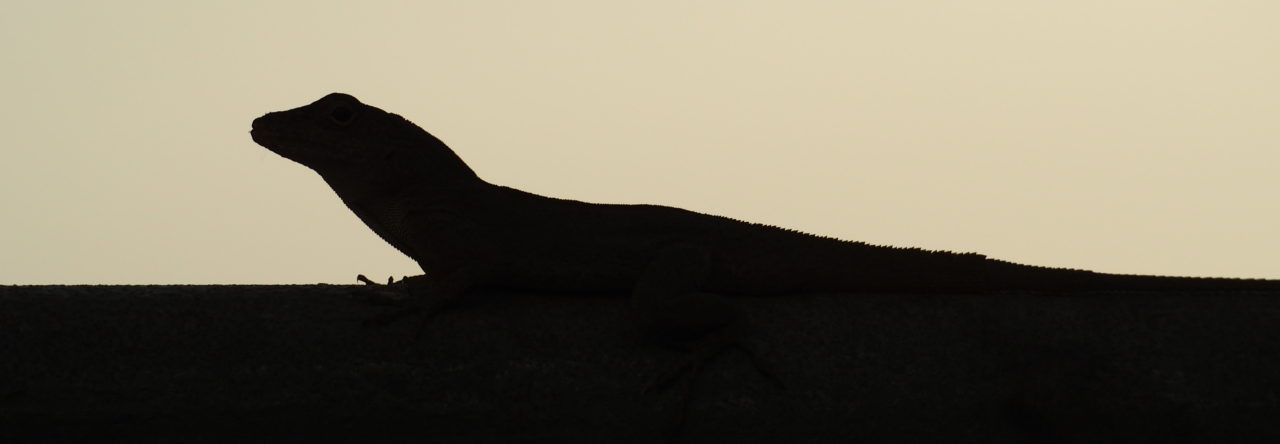
Bark anole, A. distichus

Bark anole, A. distichus

I’ve been working on Abaco, in The Bahamas for several years now. The Bahamas, Abaco in particular, is famous for the abundance of terrific science that originates there. Currently, Abaco has three species of anole: A. sagrei, A. smaragdinus, and A. distichus. However, only A. sagrei has been considered native to the island, the others likely introduced relatively recently from islands of the Great Bahama bank such as New Providence or Bimini. However, a recent study reports fossil evidence of A. distichus in peat deposits from about 950 YBP supporting a long history of A. distichus on Abaco.

One interesting aspect of this find is that the contemporary distribution of A. distichus on Abaco appears to be limited to the main port town of Marsh Harbour. I always suspected that this limited distribution suggested that A. distichus was not native to the island, but rather came in on landscaping plants over the last several decades.

So why are there conflicting observations here? Is it possible that A. distichus was extirpated on Abaco due to settlement by indigenous peoples (seems to be contemporaneous with the fossil sediment formation)?  While it might seems rather hard to extirpate such a small, abundant animal, there is growing evidence that the Bahamas were reptile-dominated ecosystems at the time of human arrival. Therefore, the coincident extirpation of tortoises, Cuban crocodiles, and rock iguanas places the modern hiatus of A. distichus in a different light. I am guessing that the altered (intensified) fire regimes initiated by ancient human civilizations may have contributed to the absence (rarity) of A. distichus from contemporary, natural ecosystems. This is admittedly, a lot of conjecture, but how else might one explain their ancient presence, yet contemporary confinement to a human-dominated habitat?

I look forward to hearing more from the interesting work that Dave Steadman, Janet Franklin and Nancy Albury are doing on these ancient Bahamas communities. And it looks like there is a lot more to come! Also, the name of the journal is The Holocene. How cool is that?!

Steadman DW, NA Albury, P Maillis, JI Mead, J Slapcinsky, KL Krysko, HM Singleton, and J Franklin. 2014. Late-Holocene faunal and landscape change in the Bahamas. The Holocene. DOI: 10.1177/0959683613516819.


Genetic Differentiation in the Beach Anole, Anolis onca, in Venezuela

DSC_0010x

Everyone’s favorite beach anole, A. onca. Photo by J. Losos

Anolis onca, the only padless anole, occurs in sandy habitats in Venezuela. Little is known about the evolutionary history of this quite distinctive species (we had a discussion of its natural history last year [1,2]).

Now a recent paper appears in the journal Saber  in which a team of Venezuelan scientists led by Alejandra Tejada used starch gel electrophoresis methods to measure the degree of genetic differentiation among populations. The paper can be downloaded, albeit a bit slowly, and is in Spanish, but here’s the English summary:

Anolis onca is a lizard species located in the Araya peninsula, in northern Venezuela. Populations of this species may have been isolated in the late Cretaceous and later recombined during the Quaternary through a new isthmus by sedimentary processes. To test this assumption, in five populations of A. onca, starch gel electrophoresis was used to estimate genetic variability within populations, interpopulation differentiation (FST), and gene flow (Nem). Additionally, under the premise of genetic differentiation between subpopulations under the isolation by distance (IBD) model, we conducted a phylogenetic analysis for five subpopulations of this lizard. Increases of genetic distance values (D) between subpopulations arranged consecutively between the Chacopata and Guayacán locations and a clear structuration as estimated by the FST parameter, evidence isolation by distance as indicated by the IBD model. However, Nem values did not conform to this model, suggesting that the subpopulations, although actually connected, may have been shaped by independent evolutionary processes. The two clades resulting from the phylogenetic analysis do not group populations closer geographically since clade B (Chacopata+Istmo Sur) lies in areas geologically ancient whereas clade A [(Istmo Centro+Istmo Norte)+Guayacán)] occupies areas of recent sedimentary origin. It is thus reasonable to infer that other factors besides the geographical distance between subpopulations may have also conditioned the structure found.


SICB 2014: Testosterone Regulation of Multiple Traits


Anolis sagrei has impressive sexual size dimorphism, but what causes it? (Photo by Bob Reed)

Sexual dimorphism is always a hot topic at SICB, and this year it was no exception for anoles (1, 2). Christian Cox, a postdoc in the laboratory of Bob Cox (no relation) at the University of Virginia, sought to explain how testosterone might lead to phenotypic divergence in a number of sexually dimorphic traits. As many of us are aware, sexual dimorphism varies widely among lizard species, and evolutionary shifts to and away from dimorphism are common, including in anoles. Testosterone has been shown to be an important regulator of growth in several lizard species, so Cox experimentally tested this effect in Anolis sagrei.

Both males and females were given a testosterone or blank implant and allowed to grow to maturation. One group was manipulated as juveniles, just as phenotypic divergence was beginning, and the other group was manipulated as subadults after divergence. Testosterone addition increased growth in body size and mass, increased metabolic rate, increased dewlap size, and changed dewlap coloration in both sexes and both juveniles and subadults. Fat storage was reduced as expected, in both sexes and age classes. These results are intriguing, because a sex difference in testosterone production may play a role in the degradation of between-sex genetic correlations. The next question is how that happens, as both sexes produce testosterone, just to different extents.

SICB 2014: Phenotypic Selection in Anolis sagrei

Numerous variables can affect an organism’s survival, including its age and sex, the demographics of the population in which it resides, and environmental conditions like climate, and habitat. However, the relative importance of these factors is poorly understood. Dan Warner described his investigation into factors affecting natural selection in wild populations of anoles in his talk titled, “Spatial and temporal variation in phenotypic selection in the lizard Anolis sagrei.”

A sagreiWarner measured directional selection on A. sagrei on six islands in the Matanzas National Estuarine Reserve in Florida. These islands were intentionally founded with populations having unequal adult sex ratios. Half of the islands were founded with more males than females (male-biased), and the other islands received more females than males (female-biased). This manipulation was done to strengthen the effects of male-male competition on the male-biased islands. Warner measured survival selection on adult and juvenile body size by marking and recapturing individuals over the last three years.

Warner found a lot of variation in the strength of directional selection on adult and juvenile body size both across islands and within each island in different years. However, there was no relationship between the strength of selection on each island and either habitat structure (represented by canopy openness) or island size. Thus, the probability of survival at a particular body size does not seem to depend on environment.

However, population demographics did seem to affect survival at different body sizes. There was a negative correlation between the strength of selection on body size and the density of adult lizards, indicating that smaller body sizes are favored at high population densities (and vice versa). This trend was observed in both adults and juveniles, but was more pronounced in juveniles. Warner hypothesized that it was the density of adult males in particular, rather than the total density of adults, that was driving the observed trend. To test this idea, he tested for a correlation between the strength of selection on juvenile body size and the adult sex ratio. He found a negative correlation, indicating that large juveniles are favored in more female-biased populations while small juveniles do better in male-biased populations. One possible explanation is that on islands with male-biased sex ratios, large juveniles are more likely to come into contact with territorial adult males, are more likely to be perceived by these males as a possible competitor, and are therefore more likely to be harassed by these males. The presence of adult males might even reduce recruitment, as evidenced by slower population growth rates on male-biased versus female-biased islands.

These results suggest that patterns of natural selection on individuals can depend on characteristics of the population. Only with long-term field studies such as this one can we begin to unravel the many factors affecting selection in wild populations.

SICB 2014: Between-Sex Genetic Correlations

Although sexual dimorphism is found in many animal species, the mechanisms by which it evolves remains a hot topic. Selection may favor different phenotypes in the two sexes, but sharing a genome may put constraints on if and how sexual dimorphism might evolve. Many anoles have sexual dimorphism, of course, but the degree to which they are dimorphic varies quite dramatically. Robert Cox studied how between-sex genetic correlations in Anolis sagrei, a very dimorphic species, might degrade over ontogeny to result in divergent male and female phenotypes.

Anolis sagrei displays marked sexual dimorphism. (photo from Bob Cox’s website)

Using a large breeding colony of brown anoles from the Bahamas, Cox found that between-sex genetic correlations were lowest for traits that are the most dimorphic, like body size. Even more interestingly, the correlations change as the individuals get older. Whereas juvenile anoles have high between-sex genetic correlations for most traits, those correlations decrease around sexual maturation, most strongly in those traits that are dimorphic. This suggests that the pronounced divergence in phenotype seen in adults is associated with a degradation of the between-sex genetic correlations for those traits. Cox is currently exploring what mechanisms lead to this degradation, and is especially interested in whether testosterone is a major player.

SICB 2014: Abiotic Constraints on Tropical Lizard Abundances

Tropical ectotherms such as anoles are considered to be especially vulnerable to climate change. Given that tropical lizards already function near their upper tolerances, even a modest increase in ambient temperature can have disproportionately large negative fitness consequences. Most models that predict how climate warming will impact tropical ectotherms rely on ambient temperature. Michael Logan, a graduate student at Dartmouth College, presented a study suggesting that temperature alone is insufficient to predict the impacts of environmental warming on organismal fitness. He points out that other abiotic factors, such as humidity and wind speed, may be equally important in determining whether and how organisms will be impacted by climate warming.

Screen Shot 2014-01-10 at 4.18.03 PM

For this study, Michael explored how daily variation in temperature, humidity, and wind speed interact to determine the abundance of two species of anole, Anolis allisoni and A. lemurinus, from the Bay Islands of Honduras (see map above). He deployed sensors that recorded temperature, humidity, and wind speed in a forest site, where A. lemurinus is found, and an open-habitat site, where A. allisoni is found.

Contrary to expectations, he found that environmental temperature alone is a poor predictor of lizard abundance in the open habitat. Rather, wind speed constrained lizard activity in the open habitat more than any other environmental factor. Further, environmental temperature predicted lizard abundance only when wind speed was low. Michael posits that there might be a trade-off between thermoregulation and evaporative water loss on windy days, such that the ability to achieve high body temperatures through basking may be counterbalanced by the ability to maintain water balance. Michael found that in the closed forest habitat, the variance in environmental temperature and the degree to which the temperature varied from the lizard’s optimal range were important predictors of A. lemurinus abundance. These results suggest that this species might thermoregulate more than was previously thought, as forest anoles are generally considered to be thermoconformers.

Together, Michael’s results suggest that factors besides temperature are important determinants of lizard abundance, and that they should be more explicitly considered in predictive models for the biological impacts of climate warming.

SICB 2014: Dewlap Variation in Sitana

Both images from ganeshdhane’s flickr page: http://www.flickr.com/photos/ganeshdhane/

A non-anole regular on Anole Annals (e.g., 1, 2, 3) made an appearance at SICB this year. Not the species itself, but a fascinating presentation by Ambika Kamath on population variation in dewlap dimorphism in Sitana ponticeriana. Kamath presented information on display behavior for three color variants of Sitana: uncolored, colored, and intermediate. She wondered whether the three geographically separated variants display differently and whether the dewlap variation might be due to environment or sexual selection.


Coloured-fanned, intermediate-fanned, and white-fanned male Sitana ponticeriana. Photographs by Shrikant Ranade, Jahnavi Pai, and Jitendra Katre respectively.

By studying eight populations of this species, Kamath found that the three variants did indeed display differently. The colored variants had long displays with remarkable head turns and twists (wow, there was some amazing video!). The uncolored variants had body position changes, but no head turns and twists. Finally, the intermediate variants simply had short displays with no head turns or body position changes. Multivariate analysis of behavior clearly separated the populations based on color variant. Also, they flick that throatfan VERY quickly!

Based on the available data, it seems unlikely that environmental variation in habitat type or vegetation explains the variants, but sexual selection does appear possible. Colored dewlaps are associated with male-biased sexual dimorphism, whereas the uncolored variants have no dimorphism or female-larger dimorphism. Further, scaling of dewlap area to body size revealed that the colored and intermediate variants have evolved large dewlaps in different ways. This also supports Kamath’s proposal that there are multiple origins of large dewlaps and colorful dewlaps within the distribution of this widespread species. Future research will no doubt be of interest to us at Anole Annals and beyond!

SICB 2014: Anole Reproductive Serine Protease Similar to Snake Venom Enzyme

Among Anolis lizards, sexual opportunities are typically monopolized by males and female mate choice is low. One way for female anoles to gain back some control in the mating process is through their specialized sperm storage system and selective fertilization. In her talk titled “Females bite back: Sexual conflict and the evolution of venom proteins in the reproductive tract of female anole lizards,” M. Catherine Duryea described her investigation into the genetics of sperm storage in anoles.

First, Duryea asked which genes are expressed in the female reproductive tract after copulation. Duryea extracted tissue from recently mated and virgin female A. carolinensis and generated cDNA libraries. From these libraries, Duryea found that over 160,000 genes were expressed in the reproductive tract, and that 5,153 of these genes were expressed differently in mated versus virgin females. Using a gene ontology analysis, which groups genes by function, Duryea found that many of the genes that showed increased expression in mated females were related to catalytic activity, protein binding, and nucleotide binding. The Anolis genetic response to mating is similar to that reported in Drosophila, suggesting that similar processes may be occurring across distantly related lineages.

Enzymes expressed after mating in anoles may be related to enzymes in snake venom (Image: Kendall McMinimy/Getty)

Enzymes expressed after mating in anoles may be related to enzymes in snake venom (Image: Kendall McMinimy/Getty)

Next, Duryea looked for evidence of selection in a subset of the genes identified in the previous experiment. Specifically, she focused on the serine proteases, which are known to be important in sperm storage in Drosophila. Using a BLAST search, Duryea found eight serine protease genes in her A. carolinensis data. She then sequenced the orthologous genes in A. sagrei and compared the sequences to those of A. carolinensis. One serine protease gene showed evidence of positive selection, indicated by a large number of synonymous changes shared between species. This gene displayed striking similarity to a snake venom gene. Snake venom genes have a deep origin in squamates, including in non-venomous lineages; thus, Anolis reproductive serine protease may be derived from a venom serine protease. Compared to Drosophila, in which reproductive serine proteases are derived from digestive enzymes, this would represent a novel origin of reproductive serine proteases.

While these fascinating results are an important first step towards understanding the genetic basis of sperm storage in anoles, much work remains to uncover the exact function of serine protease expression in post-copulatory processes.

SICB 2014: Martha Muñoz Wins Huey Award for Talk on Anolis cybotes

Anole Annals contributor Martha Muñoz of Harvard University won the second annual Raymond B. Huey Award for her presentation discussing the role of behavior in the evolution of Anolis cybotes. The Huey Award, sponsored by the Division of Ecology and Evolution of the Society of Integrative and Comparative Biology, is given for the Best Student Presentation in the division.

Behavior is thought to play two contrasting roles during evolutionary diversification. First, behavior can expose individuals to novel environments, thereby driving physiological and morphological change. Second, behavior can be used to compensate for environmental differences, thereby impeding organismal change. In her talk, Martha described how she tested these two contradictory hypotheses in a clade of trunk-ground anoles that span a wide environmental range.

Screen Shot 2014-01-02 at 3.39.18 PM

The Anolis cybotes species complex occurs in Hispaniola from sea level up to 2,500 meters in elevation. By comparing two populations of a lowland generalist, A. c. cybotes, to two independently derived high-altitude specialists, A. c. armouri and A. c. shrevei, Martha was able to detect signatures of adaptation to high elevation. First, Martha asked whether physiological evolution had occurred. She found that body temperatures in the field were not significantly different at high and low elevations, despite the fact that lizards experience air temperatures 15 degrees cooler, on average, at high elevation. In addition, there were no significant differences in preferred body temperature (measured in the lab) among the four populations, and in each case the preferred body temperature matched the field body temperature. These results clearly support a lack of change in the thermal physiology of these lizards despite occupying very different thermal environments.

Martha then tested whether behavioral inhibition was the cause of the observed stasis in thermal physiology. By recording the perch sites of lizards in the field, Martha found that low-elevation lizards perch primarily on trees while high-elevation lizards have shifted to perching primarily on rocks. To quantify how this perch shift affects a lizard’s thermal environment, Martha deployed a series of copper lizard models at each site. The copper models closely mimic the thermal properties of a live lizard, so the temperatures recorded by the models are essentially those experienced by a non-thermoregulating lizard (i.e., the operative temperature). By placing the copper models on both rocks and trees at each site, she was able to assess the thermal properties of each perch type. Martha found that at low elevation, models on both trees and rocks achieved temperatures in the lizards’ preferred temperature range, and sometimes models on rocks got dangerously hot. At high elevation, however, only models placed on rocks achieved temperatures in the preferred range, while models on trees remained too cool. These results support the hypothesis that behavioral inhibition (perch switching) is preventing evolution in thermal physiology.

In a final twist, Martha asked whether evolutionary stasis is also observed in morphology. Morphology is known to correlate with microhabitat in Anolis lizards and is rapidly evolvable, and so stasis would be a surprising result. Martha found the high-elevation populations have significantly flatter and wider heads, a common feature of rock-dwelling lizards, compared to low-elevation populations. She found no differences in limb length or lamellae number. Martha hypothesized that for head morphology, perch switching was a form of behavioral drive that promoted evolutionary change.

Martha concluded by emphasizing that niches are multidimensional, and, therefore, evolution can occur along multiple niche axes simultaneously. By examining adaptation to both the thermal niche (body temperature) and structural niche (morphology) in this study, she revealed that behavioral drive and behavioral inhibition—previously thought to be incompatible—can in fact occur simultaneously in the same organism.

Congratulations, Martha, on your award-winning talk!

SICB 2014: Regulation of Anole Limb Development

Readers of AA are very familiar with the dramatic differences in limb length among the anole ecomorphs, but we don’t yet know which genomic regions are involved in the evolution of anole limb length.  Carlos Infante, currently a postdoc in Doug Menke’s lab at the University of Georgia, presented a talk on his work to identify enhancers (short regions of DNA where proteins bind to enhance the transcription of a gene) that are associated with anole limb development.

Carlos first described a series of previous studies that did not find differences in the proteins expressed in the limbs of different anole species, suggesting that the differences in limb length are likely controlled by differences in gene regulation. However, examining a series of enhancer regions that were identified from previous work in mice also did not reveal differences in sequence variation that were correlated with limb length.

So, Carlos and his collaborators are using tools from the field of functional genomics to address this issue, using ChIP-Seq (a method that analyzes interactions between DNA and proteins) to identify active enhancers and promotors in embryonic Anolis carolinensis tissue using antibodies against Pitx1 (a transcription factor involved in hindlimb development) and H3K27ac (an acetylated histone mark).  By comparing results from these two datasets, they could identify enhancers that are expressed in forelimbs, hindlimbs, trunk tissues, or tubercles. Their plan for future work involves using the list they’ve generated of enhancers expressed in both forelimbs and hindlimbs to identify the regulatory regions that control the development of limb morphologies among Anolis species.

Page 32 of 67

Powered by WordPress & Theme by Anders Norén