Category: New Research Page 3 of 67

Dirt Determines Developmental Directions: Natural Nest Substrates Influence Anole Embryo Development

Brown anole eggs in the field. Photo by Jenna Pruett.

Most oviparous reptiles (excluding birds) bury their eggs in the ground. Usually, after laying, females abandon the eggs and provide no parental care thereafter. As such, non-avian reptiles (henceforth “reptiles”) have often served as model organisms to understand how the environment influences embryo development. Environmental factors of interest are usually temperature and moisture. Indeed, nest temperature can have large effects on development. For example, warm incubation temperatures often result in hatchlings that can run relatively fast while cool temperatures result in hatchlings that run slow. Moisture is also important during development since relatively wet incubation conditions improve the conversion of yolk to body mass resulting in larger hatchlings compared to dry conditions. This process by which the environment has lasting effects on development is known as developmental plasticity. Despite decades of research concerning developmental plasticity in reptiles, there are still many aspects of natural nest environments that are understudied.

One example of such an understudied environmental factor is the type of substrate (i.e. soil) in which females bury eggs. Although many field studies demonstrate that females lay eggs in a diversity of substrates, very few studies have considered exactly how these different substrates might influence development. These few existing studies have focused on turtles. For example, Mitchell and Janzen (2019) buried turtle eggs in three types of substrates in the field: loam, sand, and gravel. Despite all nests experiencing the same prevailing weather conditions, important aspects of the nest environment like moisture available to eggs and temperature differed among the substrates. This resulted in important differences among the hatchling turtles. Indeed, because this species exhibits temperature-dependent sex determination (i.e. the egg temperature determines if hatchlings are male or female), the sex ratios of the hatchlings differed according to the type of substrate in which the eggs were buried.

No study has rigorously considered how substrate types influence development of squamates (lizards and snakes). Therefore, my research associates and I decided to conduct a lab experiment using our good friend the brown anole (Anolis sagrei). This study was recently published in the journal Integrative Zoology (Hall et al. 2021). At our field site in Florida, female anoles lay eggs in two main types of substrates: sand/crushed sea shells and organic debris (Figure 1). We collected male and female lizards from one of our study islands and brought them back to our lab at Auburn University. We also collected a few buckets of the two substrates in which females commonly nest. We collected eggs from the breeding colony and incubated them in each substrate at 4 different moisture concentrations. The goal was to understand if these two substrates had any important effects on development. Moreover, using different moisture concentrations in each substrate allowed us to see if the two substrates might have similar effects on development given particular moisture concentrations.

Figure 1. Representative photos of (a) a female brown anole (Anolis sagrei), (b) aerial view of the substrate collection island, (c) ground view of substrate collection island, (d) organic substrate, and (e) sand/shell substrate. In panel (b), the area inside the red circle is the portion of the island that is most densely populated with lizards. The area within the black line is an example of open canopy habitat where substrate is primarily sand and crushed shell. The area inside the white line is an example of closed canopy habitat with dark, organic substrate. Panel (c) shows the ground view of the same open and closed canopy sites outlined in panel (b).

We measured a variety of traits including water uptake by eggs (eggs absorb water during development), developmental rates of embryos, egg survival, hatchling body size, and hatchling performance (i.e. endurance). The amount of moisture available to eggs provided expected results: greater moisture content resulted in greater water absorption by eggs and larger hatchling body size. We found that the two substrates had little effect on most traits; however, egg survival and developmental rate differed between the substrates: eggs were more likely to die and developed more slowly in the organic substrate than in the sand/crushed shell. Although statistically significant, these effects were not large. The difference in egg survival was about 6% and the difference in developmental rates between the substrates resulted in a one-day difference in the incubation period (i.e. the number of days it takes for the egg to hatch).

It isn’t completely obvious why we observed these differences in egg survival and physiology (i.e. developmental rate). We think the organic substrate might support a greater load of microbes (i.e. fungal spores and bacteria) than the sand/shell substrate. Thus, in the organic substrate, eggs may compete with microorganisms for resources like oxygen during development. Additionally, when exposed to an abundance of microorganisms, eggs may expend energy to fight infection which could slow development and reduce survival. Regardless, other studies have also found that developmental rate can be influenced by the type of incubation substrate, but no mechanism has yet been rigorously tested. Thus, there is still much to learn about how reptile embryos interact with natural nest environments!

In conclusion, the type of incubation substrate can have important effects on embryo physiology and survival, but only a few studies have explored these relationships. What would be most helpful now is a series of studies that consider how microbial communities differ among substrates and how these communities might interact with eggs. Perhaps this work will rest on the shoulders of Kaitlyn Murphy who is currently using microbiology techniques to understand effects of the microbiome on embryo development using brown anoles. If so, the future of this unexplored area of research is in capable hands.

You can read the full article here: http://doi.org/10.1111/1749-4877.12553

Hall, J. M., Miracle, J., Scruggs, C. D., & Warner, D. A. (2021). Natural nest substrates influence squamate embryo physiology but have little effect on hatchling phenotypes. Integrative Zoology.

Mitchell, T. S., & Janzen, F. J. (2019). Substrate influences turtle nest temperature, incubation period, and offspring sex ratio in the field. Herpetologica75(1), 57-62.

Robot Lizard Army versus Deadly Predators

Over the years, there has been a lot of discussion on Anole Annals about the large, conspicuous dewlap. And rightly so because it is arguably the most evocative feature of the anoles. Much of this discussion has focussed on its function, such as its role in species recognition, mate choice, and territorial communication. But is there a cost to having such an audacious visual signal?

We needn’t isolate this question to just Anolis lizards. All socially communicating animals need to produce a signal that will be obvious to conspecifics. There’s little point producing a mating or aggressive signal if females or rivals never detect it. But there is a cost to being conspicuous and it can be a matter of life and death: the unintended attraction of predators.

Generally, the assumption has been that animals just incur the potential risk of predation for the sake of successful communication. But just how risky is it? The dewlap is often large and brightly coloured, but when it’s not being used in display, you’d never know anoles even had one.

There are also at least two other independent origins of the dewlap, including in the gliding lizards of Southeast Asia, the Draco. In these lizards, the dewlap is again large and often conspicuously coloured.

For both Anolis and Draco, one of the best ways to find lizards in the wild is by the quick flash of colour as males rapidly extend and retract the dewlap during their territorial displays. In fact, it is often the only way to find Draco, which are camouflaged and extremely difficult to spot, even when you happen to be staring right at them.

I had this crazy idea a few of years ago… Would it be possible to build an army of robotic Draco lizards with plasticine bodies that could retain impressions of predator attacks and measure the risk of predation from performing a conspicuous dewlap display?

It really was a ridiculous thought, but my long-time collaborator Indraneil Das was game.

And it worked, with the results just published.


Robotic lizards compared to the real thing in (a) morphology and (b) behaviour (robots were modelled on Draco sumatranus from Borneo).

It was an awful experiment to do. Building the robot army turned out to be the easy bit. To be clear, it took months of development and manufacture, all of which I did in my garage (long story). It then took years to run the experiment, with multiple replications across two continents because the data was puzzling. There were bushfires, floods, battles with swarming wasps and kamikaze leafcutter ants, chipped teeth, falls from ladders, bogged car rentals, hammered thumbs, and in the end I only just managed to get it finished before the world turned side-ways in 2020.


Left: fresh-faced and optimistic in June 2018; Right: brave-faced but really a little shellshocked with the retrieval of robot 2,120 in February 2020 (NB: batteries have a habit of failing and parts started to corrode so only 1,566 robots were fully functional in the experiment).

It turns out that prey that can produce a signal intermittently — effectively turning their conspicuous display on and off at strategic moments, like the dewlap — can drastically reduce their risk of predation. In fact, attack rates by predators on dewlapping robotic lizards were no different to robots that remained unmoving and cryptic in the environment. Which means there doesn’t really seem to be a large cost from increased predation for animals that perform bouts of conspicuous behaviour.

But this wasn’t the biggest surprise.

The experiment included robotic lizards that kept the large, conspicuously coloured dewlap permanently extended so it was always visible. Think of peacocks with their massive tail trains or other animals that are spectacularly ornamented. These features are always visible and are not signals that can be turned on and off. My assumption was that these robotic lizards would be the hardest hit by predators.

This wasn’t the case at all. Predators actually avoided these robotic prey and to such an extent that the probability of attack was lower than the robotic lizards that remained cryptic and didn’t perform any conspicuous behaviour.


Photo montage of predator attacks left in the plasticine body of the robotic lizards

At first, I found this to be confusing and replicated the experiment over and over again. I even called in my partner Katrina Blazek who is a biostatistician to blind the data and independently perform the analyses (Katrina is also a skilled tailor and made all the robot dewlaps). I also dragged in my colleague Tom White who is an expert on animal colour discrimination to confirm that the dewlap really was as conspicuous to predators as I thought it was.

The data was robust.

This type of predator phobia actually helps explain the evolution of a completely different type of animal signal in nature: aposematic signals or warning signals that some prey evolve to explicitly advertise their location to predators to warn them against attack, usually because they’re toxic. Conspicuous poison dart frogs are an obvious example, so are ladybirds (or ladybugs).

The paradox is how these warning signals could evolve in the first place given the first individuals that tried to advertise their warning would be quickly eaten by predators that had no idea the signal was meant to advertise unprofitably until after the attack.

One of the key hypotheses that has been proposed to resolve this evolutionary paradox is that predators are highly conservative in the types of prey they go for. That is, they tend to avoid prey that look unusual in some way, even if those prey are more easily detected.

This is exactly what happened in this experiment. The robotic lizard with the permanently extended dewlap was ‘weird’ and so predators instead targeted the robotic lizards that either displayed intermittently or remained cryptic, both of which were more typical of their familiar prey.

The take home message is:

Follow your ridiculous idea and call on your friends to help.

(But don’t hold metal tools between your teeth. Your dentist will be very annoyed with you.)

How Do Anoles Get Their Colors?

A male A. distichus favillarum (a.k.a. a male Fav) extending it’s dewlap. This animal was photographed in the contact zone between orange- and yellow-dewlapped Favs.

Color and color-pattern research is a powerhouse in the study of evolution. Don’t believe me? I bet that at least one of your top five examples of evolution includes either color or color pattern. It is also very likely that some of the gene names you know by heart are from either color or color-pattern genes. Here’s an exercise: think which were the ‘textbook’ examples of evolution that you were taught in school. I’m sure that at least one of those included either color or color pattern. Here’s a famous example: Peppered moths. Another one? Deer mice. Another one? Heliconius butterflies. Another one? Coral snakes. What about color genes? Does MC1R ring a bell? Another one? ASIP (a.k.a. agouti)? Another one? Well, I should stop here before DJ Khaled sues me for copyright infringement.

Most of these early studies, however – and specially studies that attempted to unveil the genetic basis of color and color pattern – focused on melanin-based traits. The reason for this bias was simple: human color is melanin-based. This means that when these early studies took place, we knew more about the genetic basis of melanin synthesis than any other pigment by a long shot. As a consequence, melanin-based traits were ideal for candidate gene approaches – like the ones implemented in early color and color-pattern studies. As you and I know, though, the world isn’t black and white (see what I did here?). Color is all around us, and it plays all kinds of amazing roles, such as intra-specific communication (think dewlapping anoles), inter-specific communication (think dewlapping anoles), and crypsis (think non-dewlapping anoles). This means that, until recently, we didn’t have the tools to connect the genetic basis of most colorful traits to their phenotypes, specially in non-model organsisms.

Then, something happened: second generation sequencing came around. Illumina, a key player in second generation sequencing, was founded in 1998, the same year that Brazil lost the World Cup Final to France (many Brazilians, like me, think about time in four-year cycles due to the World Cup… and we don’t talk about 2014). With second generation sequencing, we could finally gather loads of data to do all kinds of glorified regressions (sorry generalized linear mixed models), and run computers for very long times so that we could try every feasible parameter combination (sorry Markov Chains) to identify candidate genes for the trait we are interested in. Connecting genotypes to phenotypes and understanding how both genotypes and phenotypes interact and change due to selection is, in fact, one of my main research interests.

I’m particularly interested in understanding the genetic basis of two phenotypes: those associated with color and color pattern, and those associated with the evolution of reproductive isolation.

Repeated Evolution of Underwater Rebreathing in Diving Anolis Lizards

Semi-aquatic Anolis lizards have some of the most fascinating ecologies, colour patterns, and behavioural strategies in the genus (though I may be biased). Twelve of these neotropical streamside specialists are distributed across much of mainland Latin America and on the two largest islands of the Caribbean. All are rarely found more than a few meters from a stream and some have been observed to consume semi-aquatic prey (or, in the case of A. vermiculatus, even small fish and freshwater crustaceans).

Range map of all 12 semi-aquatic anole species

A riparian lifestyle is also responsible for the signature move that unites all species of semi-aquatics—escape dives! As anyone who has encountered one of these lizards in the wild can attest, semi-aquatics will readily dive underwater when approached. They can stay down for awhile too—up to 18 minutes by my count (Mexico’s A. barkeri currently holds the record). Diving anoles have attracted the attention of tropical biologists for more than half a century now (e.g., Robinson 1962; Brandon et al. 1966; Campbell 1973; González Bermúdez and Rodríguez-Schettino 1982; Birt et al. 2001; Leal et al. 2002; Henderson and Powell 2009; Muñoz et al. 2015; Herrmann 2017) and this work has begun to fill out our natural history knowledge of these enigmatic lizards. However, understandably, most work to date has focused on what these lizards are doing when they’re not in the water. And, as it turns out, there’s a lot to learn if we look below the surface…

In 2009, while studying Anolis eugenegrahami, an endangered semi-aquatic anole from Haiti, Luke Mahler and Rich Glor noticed that an individual they had just released into a clear, shallow stream proceeded to repeatedly exhale and re-inhale an air bubble as it clung to the rocky bottom. Luke and Rich had to move to their next site later that day, so weren’t able to learn more. Sadly, a follow-up field season was cancelled in the aftermath of the 2010 Haiti earthquake.

Years later, when I started my MSc thesis on aquatic anoles in at the University of Toronto, Luke shared this observation with me. When an anole does something once, another anole somewhere else usually does it convergently, so we couldn’t help but wonder whether aquatic anole species elsewhere also exhibited this apparent “rebreathing” behavior. So, when I was planning my first field season in Costa Rica, on a hunch, we purchased an oxygen microsensor, and I set out to establish whether this intriguing behaviour occurred in any other semi-aquatic anoles.

The aquatic anoles did not disappoint! During my Master’s, along with an amazing team of colleagues, I visited stream habitats in Costa Rica, Colombia, and Mexico, studying A. oxylophus, A. aquaticus, A. maculigula, and A. barkeri along with the non-aquatic anoles we were able to find at each site. I found that each of these species routinely performed the same behaviour that Luke and Rich had observed in A. eugenegrahami! We named this phenomenon “rebreathing” after the SCUBA apparatus. All of the semi-aquatics we observed performed rebreathing extensively during experimental submersions and are from five phylogenetically distinct lineages, showing a pattern of remarkable behavioural convergence!

As I was conducting these experiments, “rebreathing” was independently discovered in Anolis aquaticus by Lindsey Swierk (see image below, and Lindsey’s 2018 AA post). Lindsey is the world authority on Costa Rica’s diving anoles, and has reams of firsthand knowledge about their ecology and behavior. So we did the obvious thing when we found out about her observation – we invited her to join our project. We managed to deliver our oxygen sensor to Lindsey in Costa Rica via a colleague with overlapping travel plans, and she helped fill out our oxygen use data set for the Costa Rican diving anole species. In addition, Luke tested Anolis lynchi in Ecuador, and various non-aquatic species during fieldwork there and elsewhere (Dominican Republic, Jamaica) to help round out the data set.

A diving A. aquaticus performing rebreathing (Photo: Lindsey Swierk)

Speaking of non-aquatic anoles, what role do they play in this story? An interesting one, as it turns out. Rebreathing clearly seemed fascinating, but one possibility was that it was relatively ubiquitous and that all anoles would rebreathe if you submerged them. To find out, we did just that, carefully dunking aquatic and non-aquatic anoles alike in aquaria or buckets at our field sites.

What we discovered is that most non-aquatic anole species are indeed capable of basic rebreathing, but for the most part, they don’t rebreathe anything like the semi-aquatics do. If they rebreathed at all, non-aquatic species tended to do so only occasionally and irregularly (usually only one or a few re-inhalations). Since semi-aquatic anoles performed rebreathing extensively and consistently, while non-aquatics were capable of the basic components of rebreathing, but did not rebreathe regularly, we think consistent rebreathing may have evolved when natural selection found a new utility for a trait that all anoles possess—hydrophobic skin. The hydrophobicity of anoles’ scales is likely what enables the air bubble to adhere to the diving anoles’ heads (and thereby also enables re-inhalation).  All anoles therefore appear to be capable of forming a thin layer (or ‘plastron’) of air along their scales during submersion, but only semi-aquatics appear to make regular use of this ability (see plot below). Hydrophobic skin evolved in anoles long before it was co-opted for rebreathing in stream-dwelling species, and likely had nothing to do with the use of aquatic habitats. In this way, the innovation of underwater rebreathing apparently owes its origins to a fortuitous ‘evolutionary accident.’

Semi-aquatic anoles rebreathed more frequently than non-aquatics (from Boccia et al. 2021)

Although we observed regular rebreathing in all aquatic anole species we studied, we discovered some interesting differences in the way they go about it. There were three main locations along the head to which diving anoles would exhale bubbles (see image below). We noted some variation in the bubble positions used by semi-aquatics, perhaps indicating that are multiple ways to achieve the same rebreathing function.

Bubble positions and use percentages for five semi-aquatic anole species (Drawing credit: Claire Manglicmot)

To determine if ‘rebreathing’ was truly involved in respiration, we used our oxygen sensor to measure the oxygen concentration of the bubbles produced by diving semi-aquatics. This is not as easy as it sounds; bubbles were frequently re-inhaled quickly and diving anoles do not take kindly to being accidentally poked in the nose with a probe. But we persevered, and found that bubble oxygen levels decreased through time, consistent with the respiration hypothesis!

Experimental submersion of an A. maculigula male in Colombia; field assistant James is holding oxygen and temperature sensors ready.

We found some evidence that oxygen decrease followed an exponential decline curve, suggesting either that anoles extract some additional oxygen from the surrounding water by rebreathing (thus slowing the rate of oxygen loss from the bubble), or that metabolic rate (and thus oxygen demand) drops over time during submersion (see figure below). We compared our results to diving insects that use a similar rebreathing apparatus while submerged and found that anole oxygen use matches up well with our expectations for their sizes, and that the metabolic rate of anoles is probably too high for them to remain underwater indefinitely using oxygen captured from the water by the rebreathing bubble (the same is true for the largest diving insects).

Plots A-E show bubble oxygen concentrations through time for five species of semi-aquatic anole. Plot F shows a sham trial (in which I mimicked the bubble movements of diving anoles with a submerged syringe; no oxygen declines were observed). Plot G shows semi-aquatics (blue) and diving insect oxygen consumption rates (black) by mass. The dotted line indicates the theoretical limit of oxygen replenishment per second that could be supported by a bubble gill structure. From Boccia et al. 2021.

The consistency with which unrelated semi-aquatic anoles rebreathed suggests that rebreathing is adaptive for semi-aquatic living; however, our data currently do not allow us to favour a particular physiological functionality for this behaviour. Our top three (not mutually exclusive) hypotheses are: 1) rebreathing allows anoles to access air trapped in their head cavities or within the plastron, which might otherwise not be incorporated into their air supply; 2) the rebreathing bubble functions as a physical gill (as has been observed in diving insects), allowing diving semi-aquatics to extract some oxygen from the surrounding water; and 3) bubble exhalation and re-inhalation allows anoles to remove excess carbon dioxide which builds up during dives. We hope to investigate these possibilities during future work!

We published this work in Current Biology (Boccia et al., Repeated evolution of underwater rebreathing in diving Anolis lizards, Current Biology (2021), https://doi.org/10.1016/j.cub.2021.04.040)

See also coverage from National Geographic, the University of Toronto, and Binghamton University. Special thanks to Day’s Edge Productions who created the amazing video summary!

An A. oxylophus taking over camera duties

References

Birt RA, Powell R, Greene BD. 2001. Natural History of Anolis barkeri: A Semiaquatic Lizard from Southern México. Journal of Herpetology. 35(1):161. doi:10.2307/1566043.

Brandon RA, Altig RG, Albert EH. 1966. Anolis barkeri in Chiapas, Mexico. Herpetologica. 22(2):156–157.

Campbell HW. 1973. Ecological observations on Anolis lionotus and Anolis poecilopus (Reptilia, Sauria) in Panama. Am Mus Novit. 2516:1–29.

González Bermúdez F, Rodríguez-Schettino L. 1982. Datos etoecologicos sobre Anolis vermiculatus (Sauria: Iguanidae). Poeyana. 245:1–18.

Henderson RW, Powell R. 2009. Natural history of West Indian reptiles and amphibians. Gainesville: University Press of Florida.

Herrmann NC. 2017. Substrate availability and selectivity contribute to microhabitat specialization In two Central American semiaquatic anoles. Breviora. 555(1):1–13. doi:10.3099/MCZ33.1.

Leal M, Knox AK, Losos JB. 2002. Lack of convergence in semi-aquatic Anolis lizards. Evolution. 56(4):785–791. doi:10.1111/j.0014-3820.2002.tb01389.x.

Muñoz MM, Crandell KE, Campbell-Staton SC, Fenstermacher K, Frank HK, Van Middlesworth P, Sasa M, Losos JB, Herrel A. 2015. Multiple paths to aquatic specialisation in four species of Central American Anolis lizards. Journal of Natural History. 49(27–28):1717–1730. doi:10.1080/00222933.2015.1005714.

Robinson DC. 1962. Notes on the Lizard Anolis barkeri Schmidt. Copeia. 3:640–642.


Urban Lizards Like It Hot (and Their Genes May Tell Us Why)

Anolis allisoni, Photo by breslauer iNaturalist

Cities are hot. Because of the urban heat island effect, urban environments tend to be significantly warmer than nearby non-urban environments. For ectothermic organisms, like lizards and insects, elevated urban temperatures create thermally stressful conditions. It might be unsurprising then that researchers have documented an increase in thermal tolerance in urban animals (e.g., City Ants Adapt to Hotter Environment). These studies point to the ability to cope with elevated urban temperatures as a critical aspect of persisting in urban environments.

Although there is evidence that the urban environment shapes adaptive thermal tolerance in Anolis lizards at the genomic level, it is also possible that anole species that thrive in hot urban environments have an innate ability to do so due to local adaptation in their ancestral habitat (i.e., forests). In fact, an analysis of patterns of urban tolerance across Caribbean anoles found that species that experience hotter and drier temperatures in their native ranges and those that maintain higher field body temperatures tended to be the ones that do well in urban environments (Winchell et al. 2020). And when researchers looked at genomic variation in Cuban species not found in urban areas, they identified genes associated with thermal sensitivity (Akashi et al. 2016), suggesting tolerance of different thermal environments may be encoded at the genomic level. But does this mean that some anoles are predisposed to tolerate hot urban temperatures based on the climate of their ancestral forest homes?

Kanamori et al. (2021) — “Detection of genes positively selected in Cuban Anolis lizards that naturally inhabit hot and open areas and currently thrive in urban areas” — set out to answer this question by examining the transcriptome of nine species of Cuban anoles that occupy different thermal microhabitats. Cuba is home to the largest number of anole species, with species diversifying to occupy distinct thermal and structural microhabitats. In their study, the researchers attempted to identify genomic signatures of selection in non-urban populations of species that thrive in urban environments in order to understand if there was something unique about the genetic background related to thermal tolerance in these species that enables urban colonization.

Of the nine species Kanamori and colleagues studied, three are found in naturally hot and open environments: A. allisoni, A. porcatusand A. sagrei, representing two different branches of the Cuban anole radiation. These three species (and several of their close relatives) also thrive in urban environments both in Cuba (e.g., Havana) and in their non-native range (e.g., Miami, Florida).

Five other species are found in cool and deeply shaded forests: A. alutaceusA. isolepisA. garridoiA. allogus, and A. mestrei. The last species, A. homolechis, is common in the shaded areas of forest margins.

Kanamori and colleagues examined a total of 5,962 genes and found genomic signatures of selection in 21 genes in the two main branches of species that contain urbanophilic species (A. porcatus  A. allisoni, and A. sagrei), but did not identify selection in the same genes across the two lineages. In other words, these closely related species have found unique genomic pathways to deal with the hot and dry forest environments in which they thrive. This finding suggests that the predisposition to tolerate hot urban environments is determined by different genes in different anole species, and raises the possibility that further local adaptation to urban thermal environments may also be lineage specific.

When the researchers looked at the functional associations of the genes under selection in each species, they found that they were related to stress responses, epidermal tolerance to desiccation, and cardiac function. All three of these biological functions are implicated in maintaining appropriate acclimation responses to thermal stress in anoles. These findings implicate ancestral selection on stress responses, perhaps in response to thermal or ultraviolet radiation, as potential factors influencing tolerance of anoles in urban environments. Further exploring the importance of these functions will shed light on their role in the initial tolerance of urban environments upon urban colonization and adaptive modification as urban lineages persist.


Read the full paper here: 

Kanamori, S., Cádiz, A., Díaz, L.M., Ishii, Y., Nakayama, T. and Kawata, M., 2021. Detection of genes positively selected in Cuban Anolis lizards that naturally inhabit hot and open areas and currently thrive in urban areas. Ecology and Evolution, 11(4), pp.1719-1728.

This post was cross-posted on the blog “Life in the City” — check it out if you want to learn more about urban evolution!

Tail Autotomy Is Associated with Boldness in Male but Not Female Water Anoles

Photo by Lindsey Swierk

Although most people use “personality” to describe human characteristics, animals also exhibit personality traits, which behavioral ecologists categorize as aggressiveness, exploration, activity, sociability, and boldness. Each personality trait is linked to inherent trade-offs that could affect one’s overall fitness, and may differ between the sexes due to different life history strategies. Boldness is a personality trait that includes behaviors such as risk-taking, response to predators, and resistance to being handled. It is assumed that bolder individuals are more likely to “take chances” and forage under predation risk compared to less bold individuals, whereas less bold individuals may spend more time scanning for predators and less time foraging.

Austin Carriere (The University of Oklahoma), Dr. Lindsey Swierk (Binghamton University – SUNY), Dr. Bree Putman (California State University San Bernardino) and I investigated the sex differences in the trade-offs between boldness and predator avoidance in water anoles (Anolis aquaticus), using the voluntary shedding of the tail (tail autotomy) as a proxy for predation risk. This project involved a two-year mark-recapture study, morphological data collection, and behavioral trials. We conducted and recorded boldness trials in the field for all captured adult anoles, and we analyzed the video footage in the lab. We quantified boldness as the latency for a lizard’s head to emerge from a refuge into a novel environment.

Fig 1. Adjusted survival curves showing how tail break (yes or no) affected time to head estimated from the Cox proportional hazard model in a) female and b) male water anoles. Survival rate is the proportion of individuals still in the refuge.

We found that there were sex-differences in the costs of boldness, as tail autotomy was positively associated with boldness in males but not in females. Tail autotomy has been shown to have serious fitness consequences in lizards; therefore males likely suffer a higher cost of boldness. We also found that males tended to be more likely to show evidence of tail autotomy. Our results could be due to the fact that lizards exhibit a polygynous mating system, wherein males defend territories to acquire mates, and so males may exhibit bolder behavior to increase their reproductive success. However, the trade-off of boldness in males is the higher probability of tail autotomy, probably due to increased exposure to predators or more involvement in aggressive encounters with conspecifics. Our study contributes to the understanding of sex differences in behavior within an ecological context.

Source: Talavera, J.B., Carriere, A., Swierk, L., Putman B.J. Tail autotomy is associated with boldness in male but not female water anoles.  Behav Ecol Sociobiol 75, 44 (2021). https://doi.org/10.1007/s00265-021-02982-w

Exercise and the Immune System in Green Anoles

Female Green Anole

Exercise has many effects on your body, most of which are good, and is why we humans do it to stay healthy. However, some of those changes, especially under very intense regimens, can have unseen consequences that might be bad. Your immune system, for example, responds to different types of exercise (aerobic endurance versus anaerobic resistance) by altering which branch of your immune system is dominant at that time. Both kinds of exercise tend to increase the more specific ‘humoral immunity’ (B-cell immunity below) over the more general ‘cell-mediated immunity (T-cell immunity below), though the routes to get there are very different for the two kinds of exercise. However, most of what we know about exercise-immunity tradeoffs is from humans and rodents. What about in other animals that have limited access to resources? Might simple energy limitation cause overall immunity suppression when energy is diverted to athletic performance?

My former student Andrew Wang and I studied this experimentally with green anoles. We trained lizards for endurance on a treadmill, or for resistance with weights on a racetrack, for 9 weeks, and compared those to a sedentary control group. Both of these types of locomotion are important to anoles in the wild, and the training schedule was meant to simulate the high end of movement patterns in nature. We then subjected them to three immune challenges: (1) swelling response to phytohemagglutinin (cell-mediated immunity), (2) antibody response to sheep red blood cells (humoral immunity), and (3) wound healing ability (integrated response across all parts). We expected that if simple energy limitation explained tradeoffs, all immune measures would decrease, with endurance-trained suffering the most. If protein limitation was the reason for tradeoffs, then we expected all immune measures to decrease, with sprint-trained suffering the worst. Finally, if the response is due to changes in molecular pathways specific to type of exercise, we expected humoral immunity to be favored over cell-mediated in both trained groups.

Figure 1 from Wang and Husak (2020)

Our results did not support only one of our hypotheses. Endurance-trained lizards had the lowest cell-mediated immunity, whereas sprint-trained had the lowest wound healing ability. Antibody production did not differ among treatments. Our hypothesis of sprint-trained lizards (or even endurance-trained) having the lowest overall immune function was not supported, suggesting that energy limitation alone does not explain immune system alteration. For sprint-trained lizards, energy was likely important, since wound healing, an expensive task, went down the most in that group. For endurance-trained lizards, though, the change in T helper cell production favored humoral over cell-mediated immunity. Since both types of exercise favor humoral immunity, it was not too surprising that antibody production did not differ among treatments. Lots of questions remain to be answered, though!

What does this all mean? In nature, individuals vary dramatically in how much, and for how long, they move around their environment. Those that are more active, thus likely have different immune capabilities compared to more sedentary individuals. It would be very interesting to see how natural variation in survival strategies, high-performance versus high-immunity, affected success in nature. This is a wide-open field for anoles and other reptiles!

Source: Wang, A. Z. and J. F. Husak. 2020. Endurance and sprint training affect immune function differently in green anole lizards (Anolis carolinensis). Journal of Experimental Biology

Clouded Anoles: How Islands Affect Morphology

Ecogeographical rules attempt to simplify ecological and evolutionary processes that shape morphology. In a cool study published this summer in Current Zoology, Anaya-Meraz and Escobedo-Galván (2020) examine the combined effect of Rensch’s Rule and van Valen’s Island Rule in Clouded Anoles. Specifically:

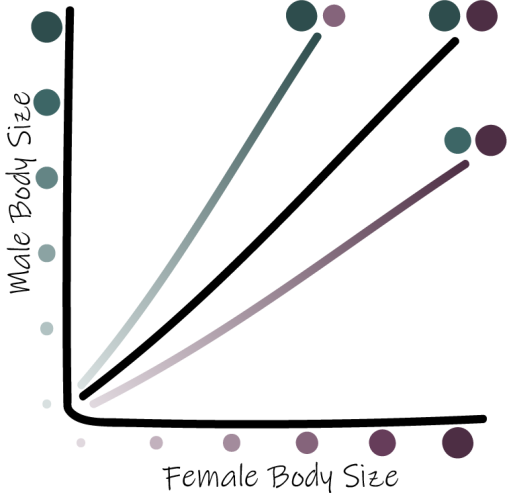
Rensch’s Rule: within lineages, sexual dimorphism decreases in magnitude with increased body size when females are the larger sex but increases in magnitude when males are the larger sex.

The center black line indicates 1:1 male to female size, the top line and bottom lines indicate male- and female-biased size dimorphism, respectively. *Adapted from Piross et al. 2019.

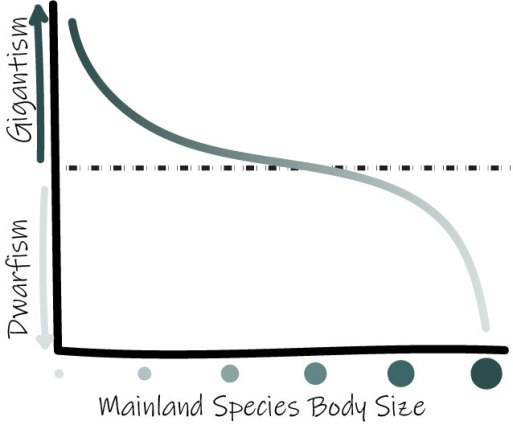
van Valen’s Island Rule: describes the tendency of diminutive and large mainland species to trend toward gigantism or dwarfism on islands, respectively, due to competitive factors.

*Adapted from Lomolino, 2005

In their paper, Anaya-Meraz and Escobedo-Galván ask, how does Clouded Anole (Anolis nebulosus) sexual size dimorphism change when the Island Rule could be in effect?

Using 305 Clouded Anole museum specimens, they found that sexual size dimorphism differs between the mainland and island populations. While all populations revealed variation in the degree of sexual size dimorphism, populations on the Islas Tres Marías uniformly possess male-body size bias. But on the mainland, 40% of the populations had the opposite pattern, female-body size bias.

Intriguingly, Anaya-Meraz and Escobedo-Galván note that in the Clouded Anole, island males spend almost 50% more of their waking period engaged in some form of social interaction (Siliceo-Cantero et al. 2016). This is offered as an explanation for why male Clouded Anoles also have larger dewlaps among the Tres Marías populations.

In lizards, the Island Rule may not necessarily stand out as a trend (Meiri, 2007), but we see from Anaya-Meraz and Escobedo-Galván’s study that male Clouded Anoles are larger on islands. On the Antillean Islands, the magnitude of sexual size and shape dimorphism of anoles decreases with increased anole species diversity (Butler et al., 2007). The Islas Tres Marías populations follow this pattern in having increased sexual size dimorphism when not competing with other anole species.

*Adapted from Poe et al. 2017.

Overall, Clouded Anole body and dewlap sizes are larger in insular populations while Rensch’s Rule does not show a clean pattern in this species. However, as noted by the authors, it is important to consider the adaptive force of being on an island versus the ancestral condition. To truly understand morphological evolution within a species and across the genus we need to know body size trends of closely related species. Moreover, some researchers are discouraging studies that determine the universality of ecogeographical rules in favor of integrative approaches based around hypothesis testing (Lomolino et al. 2006, Lokatis & Jeschke, 2018).

What do you think? Is there room for using ecogeographical rules within an integrative framework (See Benítez-López et al. 2020)? Or do ecogeographical rules obscure true drivers of adaptation?

References:

Anaya-Meraz, Z. A., and A. H. Escobedo-Galván. 2020. Insular effect on sexual size dimorphism in the Clouded Anole Anolis nebulosus: when Rensch meets Van Valen. Current Zoology, doi: 10.1093/cz/zoaa034.

Benítez-López, A., L. Santini, J. Gallego-Zamorano, B. Milá, P. Walkden, M. A. J. Huijbregts, and J. A. Tobias. 2020. The island rule explains consistent patterns of body size evolution across terrestrial vertebrates. bioRxiv 2020.05.25.114835. Cold Spring Harbor Laboratory.

Butler, M. A., S. A. Sawyer, and J. B. Losos. 2007. Sexual dimorphism and adaptive radiation in Anolis lizards. Nature 447:202–205. Nature Publishing Group.

Lokatis, S., and J. M. Jeschke. 2018. The island rule: an assessment of biases and research trends. Journal of Biogeography 45:289–303. Wiley Online Library.

Lomolino, M. V. 2005. Body size evolution in insular vertebrates: generality of the island rule. Journal of Biogeography 32:1683–1699.

Lomolino, M. V., D. F. Sax, B. R. Riddle, and J. H. Brown. 2006. The island rule and a research agenda for studying ecogeographical patterns. Journal of Biogeography 33:1503–1510.

Meiri, S. 2007. Size evolution in island lizards. Global Ecology and Biogeography, 16:702-708.

Poe, S., A. Nieto-montes de Oca, O. Torres-Carvajal, K. De Queiroz, J. A. Velasco, B. Truett, L. N. Gray, M. J. Ryan, G. Köhler, F. Ayala-Varela, and I. Latella. 2017. A Phylogenetic, Biogeographic, and Taxonomic study of all Extant Species of Anolis (Squamata; Iguanidae). Systematic Biology 66:663–697.

Piross, I. S., A. Harnos, and L. Rózsa. 2019. Rensch’s rule in avian lice: contradictory allometric trends for sexual size dimorphism. Scientific Reports 9:7908. Nature Publishing Group.

Siliceo-Cantero, H. H., A. García, R. G. Reynolds, G. Pacheco, and B. C, Lister. 2016). Dimorphism and divergence in island and mainland Anoles. Biological Journal of the Linnean Society, 118:852–872.

This post was originally published on biomh.wordpress.com.

Riding the Ups and Downs: Naturally Fluctuating Nest Temperatures Are Important for Proper Development in Brown Anoles

A cartoon of a brown anole hatching from the egg. This cartoon was created by Francesca Luisi for Inside JEB.

A common challenge facing biologists is measuring environmental conditions in the field and appropriately replicating these conditions in a controlled experiment. What makes this particularly hard is that natural environments are always changing. For example, most lizards lay eggs in nests in the ground and then abandon them, providing no parental care during development. While eggs develop, nest temperatures are not constant; they fluctuate on a daily, weekly, and seasonal basis along with weather conditions. Think, for example, about how temperatures fluctuate every day due to the rise and fall of the sun. Most egg incubation experiments, however, fail to capture the true variation in nest temperatures when they design experimental treatments. For example, they might incubate eggs at a constant temperature or at temperatures that repeat the same daily change in temperature over and over again. Real nest temperatures, however, rise and fall by different degrees each day. Over a long incubation period (e.g. 40-60 days), eggs can experience a lot of different temperatures! This can result in lots of important effects on development because nest temperatures can influence the body size, running speed, and even learning ability of hatchling lizards.

In this study, we incubated brown anole eggs under incubation treatments that differed in how closely they match real nest temperatures. We found that natural temperature fluctuations improved hatchling lizards’ endurance and survival compared to simpler approximations (e.g. constant temperatures, repeated daily fluctuations). This paper was featured in the Journal of Experimental Biology‘s Inside JEB; therefore, Kathryn Knight has written a summary of our study for a general audience, and the cartoon above was created by Francesca Luisi to illustrate the main findings of our study.

HallJ. M. and WarnerD. A. (2020). Ecologically relevant thermal fluctuations enhance offspring fitness: biological and methodological implications for studies of thermal developmental plasticityJ. Exp. Biol. 223jeb231902. doi:10.1242/jeb.231902

How Do We Deal with Non-Confirmatory Results?

Fig 1. Photo of some members of the research team on one of our experimental small islands by J. Losos

Thanks to Nick for doing a new research post when our paper “Consumer responses to experimental pulsed subsidies in isolated vs. connected habitats” first came out. Here I want to give some backstory on the road to publication (all views are my own).

This was an epic experiment overall: 52 experimental units, 4+ years, thousands of person-minutes of lizard surveys, thousands of food web stable isotope samples, several tons of seaweed, and one hurricane that washed it all away.

I think the most interesting thing about this paper is that we did not find what we expected.

For some biological background, a meta-analysis (Yang et al. 2010) of largely observational studies found that populations increase the most and the fastest when consumers respond to resource pulses (brief, unpredictable periods of resource superabundance) via both aggregation and reproduction. To test the prediction that without aggregation the numerical response would be slower and smaller, in the current study we manipulated seaweed on mainlands (as in our previous study, e.g., Spiller et al. 2010, Wright et al. 2013) and also on very small islands (Fig. 1) where aggregation on ecological time scales is not possible.

Despite a bigger N this time around, we did not replicate the numerical response on mainlands that we saw in Spiller et al. (2010). In other words, more seaweed did not result in more lizards on mainlands. Conversely, we saw fast and large population gains on small islands. We did replicate the timing and magnitude of the diet shifts, indicating that lizards were consuming the subsidized resources. So whether resource pulses translate into more individuals is context-dependent, even with the same researchers using the same methods with the same species. In the discussion we talk about what could be driving these differences.

Now to my main story with this post: what happens when you have un-tidy, non-confirmatory results? The first reviews at a top tier ecology journal were very positive about the generality of the questions and the realistic temporal and spatial scale of the experiment. We were rejected for not being able to explain the mechanisms; fair enough. However, this same critique would be true even if we had confirmatory results. I don’t think we would have drawn that critique, or at least it would not have had such a large impact on the editorial decision, with confirmatory results. We next tried at a second-tier ecology journal, and were rejected without review.

I was up for the tenure the year this paper was going through the review process. Pretty much the only way the paper would be accepted pre-dossier would be to go back to the first journal and accept their original offer to shunt to their online-only sister journal. I have happily made that call in the past given different trade-offs. In this case, I felt rejection was largely being driven by the non-confirmatory results, which I stubbornly believed did not compromise the quality of the paper. To me, good science is asking good questions (i.e., rooted in theory) with good design; the value of the paper is not predicated on the outcome of the study. I asked some senior profs in my department for advice and got both, “a published paper is better than no paper” and “do what you would have done regardless of tenure.” I went with the latter because at that point I felt one paper was not going to make or break my diverse contributions over the prior five years.

I decided to try next at The American Naturalist for a couple reasons. One, their checklist for authors signals similar values to mine, such as indicating whether the study was pre-registered. Another was that by chance, Dan Bolnick, current EIC, was in my session at the ESA meeting. Dan announced that he would be holding “office hours” to promote submission to AmNat. I had never pitched a paper to an editor before, but this was made easier since (also by chance) I know Dan from grad school.

I gave Dan my 2-minute pitch, emphasizing that we had unexpected results that we couldn’t fully explain. He opened his response with, “I sympathize…”, and I braced for the polite rejection. But he meant that he literally sympathized, because he had a study with confirmatory results published in a high profile journal, but a later replication with more data was non-confirmatory and ended up several tiers down. He encouraged me to submit (with no guarantees of course), and I leaned in hard to our unexpected results and lack of replication, from the cover letter through supplemental material, being as transparent as possible. It was still a tough and long review process, and the paper has several real limitations, but I am gratified that it got into a top journal on its merits as planned, warts and all, without spin.

We haven’t seen the replication crisis in ecology I think for two main reasons. One is that big field experiments like our pulsed subsidies studies are rarely repeated (for lots of reasons), and two because ecologists are very comfortable with context-dependency. But how often is a lack of replication due to real biological differences that are useful to understand (as I argue was the case in our paper) vs. the statistical issues that plague other disciplines? Ecologists are often taught to cope with non-confirmatory results by reframing to “tell the story you have,” which runs the risk of HARKing, one of the four horsemen of the reproducibility crisis. Preferences for confirmatory results help drive these practices. In our study, the questions, hypotheses, and design were essentially pre-registered in the grant that funded the work, and staying committed to a plan regardless of the results is the best defense against the garden of forking paths. 

As for studies rarely being repeated in the first place, I am haunted by a review of restoration studies by Vaughn and Young (2010) that found fewer than 5% of studies were initiated in more than one year, and 76% of studies that did use multiple years found different results in different years. To me this means that we should not inhale too deeply on single studies, we should focus more on replication and less on novelty, and that our inability to replicate some of the results of Spiller et al. 2010 is a feature, not a bug!

If you are interested in learning more about this system, check out Piovia-Scott et al. 2019 which shows that the strength of top-down control by lizards varies predictably over the course of the pulse.


Page 3 of 67

Powered by WordPress & Theme by Anders Norén