Category: New Research Page 11 of 67

JMIH 2018: How Does Artificial Light at Night Affect Anoles?

Crested Anole (Anolis cristatellus) under a leaf. Photo by Chris Thawley.

Conservation biologists have long been concerned about the effects of human development on species and environments. Urban habitats can significantly change lighting patterns for animals by increasing nocturnal ambient illumination. Artificial light at night (ALAN) has the potential to disrupt an organism’s physiology, behavior, and ecology. However, light pollution remains poorly studied and is a concern for urban herpetofauna.

Anolis lizards in Miami, Florida are a great system to study the effects of ALAN on behavior, health, reproduction, and survival. Anoles are diurnal and are adapted to a distinct photic habitat appropriate to their sun/shade preferences. However, many anole species have been observed active at night where artificial lights are prevalent. So, what are the effects of ALAN on anole fitness?

Chris Thawley, a postdoctoral researcher in the Kolbe Lab at the University of Rhode Island, is interested in whether ALAN  imposes selection on anoles and how they might adapt to these pressures. Chris conducted a field experiment introducing landscape lightning into a previously unlighted habitat within an urban matrix. For over two months, he assessed whether Brown Anoles (Anolis sagrei) and Crested Anoles (A. cristatellus) experienced higher levels of ALAN at their sleeping perches and if these lizards behaviorally avoided exposure to artificial light. Also, lizards were marked and followed to determine if light exposure impacted survival, growth, body condition, and physiology.

Chris found that A. sagrei and A. cristatellus lizards are not behaviorally avoiding ALAN at night. Anoles that were more exposed to artificial light had lower glucose levels compared to those that were less exposed. Also, there were no dramatic changes in reproduction, but ALAN reduced follicle size. Egg mass showed a positive relationship with snout-vent length (SVL) in lizards exposed to ALAN, which suggests that ALAN increases egg mass in larger lizards. Chris continues analyzing growth and survival data and aims to explore if there is a correlation between levels of corticosterone (CORT), melatonin, and glucose.

JMIH 2018: Brown Anoles Have Broader Diets Where They Co-occur with Other Anoles

A brown anole (Anolis sagrei) surveys its domain.

Trophic ecology deals with questions about the ways in which organisms acquire energy and how that process interacts with the communities and ecosystems surrounding them. Anole-focused research has played a strong role in our understanding of trophic ecology and ideas abut how communities come together and evolve, particularly in papers by Schoener, Roughgarden, and Lister. However, many trophic ecology studies have focused on specific communities or locations and haven’t dealt with how the ecology of one focal species varies across space and as a function of the presence of other close competitors.

Sean Giery, a post-doc at the University of Connecticut, in collaboration with James Stroud, a post-doc at Washington University in St. Louis, worked to address this gap in our knowledge by studying how the trophic ecology of the brown anole, Anolis sagrei, varies across its range. Brown anoles are voracious predators of insects, known to chow down on a diverse range of arthropods, including some of surprising size. Since the brown anole is also a prodigious invader, it occupies habitats with a variety of potential competitors, including locations with few competitors. Sean and James leveraged this situation to their advantage by compiling stomach content data from previously published papers (including a follow-up on Lister’s paper above). They also added their own sampling, including in Southern Florida, the Bahamas, and Hawaii…tough work! Sean and James then used the articles themselves, field guides, and citizen science sources like iNaturalist to determine the presence of other species which might compete with the brown anole, including other anoles and diurnal, insectivorous lizards.

Sean and James assembled an impressive database of the diet of A. sagrei.

They found that as community richness increases, the dietary niche of A. sagrei actually becomes broader, the opposite of the direction predicted by theories of ecological release. Additionally, average niche overlap between individual anoles declines as community richness increases. When only brown anoles are present in a community, individuals are highly similar in the types and proportions of what they eat, another finding which runs counter to models of how niche breadth should vary when a species is released from interspecific competition. Sean concluded his talk by suggesting that interference competition may be more important than generally recognized and soliciting suggestions for ways to continue looking at this impressive dataset. We’ll look forward to reading the paper!

JMIH 2018: Do Ecomorphs and Parasites Coevolve?

Spencer Asperilla presenting his poster, “A Biodiversity Survey of Parasites from Anolis Lizards on Andros Island, Bahamas”, at the 2018 Joint Meeting of Ichthyologists and Herpetologists (JMIH).

Anolis species inhabiting the Caribbean provide a great example of adaptive radiation and convergent evolution in ecology, morphology, and behavior. Adaptation, diversification, and specialization to a particular microhabitat and dietary resource, created a great diversity among anoles. But what about their parasite assemblages? Andros Island in the Bahamas is the fifth largest island in the Caribbean Archipelago. However, it is still unclear if the parasite fauna hosted by Anolis lizards show similar evolutionary pathways.

In 2016, after an amazing experience studying abroad at ForFar Field Station on Andros Island, Spencer Asperilla and Katie Brittain joined the Langford Lab at Florida Southern College. Spencer and Katie were interested in documenting parasite species present in Bahamian Anolis lizards to determine if these are specialists or generalists among ecomorphs and identify if parasite populations vary seasonally. They conducted parasite biodiversity surveys on three sites on Andros Island, which involved capturing lizards and collecting blood smears and fecal matter. Specimens and samples were transported to Florida Southern College where they were processed and analyzed for parasites.

Spencer and collaborators found that parasitic infection rate was highest during the Summer (66.66%), and lowest during the Spring (60.56%); however these differences were not significant. Climate variables, such as mean daily temperature and precipitation, were evaluated, but no seasonal pattern could be determined for parasite infections in Bahamian lizards. As for parasite diversity, Brown Anole (Anolis sagrei; trunk-ground ecomorph) lizards had most species of parasites present, while A. angusticeps (twig ecomorph), A. distichus (Bark Anole; trunk ecomorph), and A. smaragdinus (Green Anole; trunk-crown ecomorph) had lower species diversity. The authors suggest these differences are related to the biology of the different ecomorphs. Trunk-ground anoles, such as A. sagrei, might be more susceptible to parasite infection by descending to the ground to capture prey or interact with a conspecific, whereas the other ecomorphs remain higher up in the tree. Ground-dwelling insects may serve as intermediate hosts for parasites found in trunk-ground anoles. Spencer and collaborators propose that habitat use, as well as dietary composition, serve as an ecological explanation for parasite distribution among ecomorphs.

The big question remains unanswered: have parasite species coevolved with specific lizard hosts? The Langford Lab continues identifying parasites species to assess the diversity, host-specificity and infection patterns of Bahamian Anolis lizards. Spencer wants to resume this project as part of his master’s thesis and he looks forward to traveling back to Andros Island to collect additional samples.

JMIH 2018: How Can We Measure Immune Function in Anoles?

Measuring the swelling induced in anole feet during the PHA assay may result in swelling in one’s own fingers.

The immune system is critical to the survival of animals, including anoles, which are faced with an environment full of potential pathogens and toxins. Ecoimmunologists have developed a myriad of assays to measure various aspects of the immune system and its function in a variety of species, but these assays are often applied to organisms without fully validating them. This issue can prevent a full and accurate interpretation of the results obtained. The PHA skin test is widely used in lizards, including anoles, to test immune function, but has exactly this problem: it has only been validated in cane toads and a crocodile…a large oversight!

Caty Tylan, a PhD candidate and DVM at Penn State University in Tracy Langkilde’s lab, set about rectifying this situation by validating the PHA assay in our favorite squamate lab “rat,” the green anole, Anolis carolinensis. To conduct the PHA test, Caty injected two different types of phytohemagglutinin (PHA-L and PHA-P) into the footpads of green anoles and compared the swelling produced to that of control injections. She also measured types of white blood cells in the blood and foot tissue at regular intervals after injections. Caty found that both types of PHA work well and induce similar levels of swelling with a standard assay protocol in green anoles, but that they induce different types of immune responses. PHA-P elicits a broader response with different types of immune function that varies with time after injection, meaning that the outcomes of this test may be harder to interpret. PHA-L on the other hand, induces higher concentrations of T-lymphocytes,  a specific type of white blood cell. As a result, using PHA-L for PHA assays may lead to a test that is more interpretable, especially in studies looking at how the stress response affects immune function.

PHA-L injections result in a clear peak in lymphocytes at the injection site after 24 hrs., an ideal response for a test of immune function.

The research represents the completion of work Caty first presented at SICB 2017 and has now been published!:

Tylan C, Langkilde T. Local and systemic immune responses to different types of phytohemagglutinin in the green anole: Lessons for field ecoimmunologists. J Exp Zool. 2017; 327:322–332.

JMIH 2018: Does the Bluefields Anole (A. opalinus) Contain a Cryptic Species?

Kiyomi Johnson (L) and Marina Carbi (R) presenting their poster, “Speciation and Phylogeography of Anolis opalinus on Jamaica,” at JMIH 2018.

Caribbean anoles have been studied extensively, with researchers examining their evolution, ecology, physiology, morphology, and behavior in many different contexts. In some respects, they are one of the best known groups of organisms in the world. But are there still unique species “hidden” within the diversity of anoles we already know? Some papers suggest just that. In 2002, Jackman et al. examined the mitochondrial DNA of Jamaican anoles and found evidence that several species contained deeply diverged clades, indicating the potential presence of cryptic species.

Enter Marina Carbi and Kiyomi Johnson, two public high school students with a drive to dig into the biological sciences and a budding curiosity about all things Anolis. Ms. Carbi, a recent high school graduate, and Ms. Johnson, a rising senior at Fiorello H. LaGuardia public high school, began an internship specifically for high school students at the American Museum of Natural History. Working with Dr. Ed Myers, they set out to investigate the phylogenetic diversity in A. opalinus, the Bluefields anole, by sequencing a combination of mitochondrial and nuclear DNA from a series of 22 specimens of Jamaican anoles.

Mss. Carbi and Johnson found that both the mitochondrial data and combined species tree support the existence of a cryptic species within what is currently considered A. opalinus. Populations of the Bluefields anole found in the Blue Mountains area are monophyletic and sister to A. valencienni, indicating a potentially deep divergence from A. opalinus. Todd Jackman, whose initial work inspired this research, dropped by to check out Kiyomi and Marina’s follow up to his paper and was impressed. “Hopefully, they can go to Jamaica themselves,” Todd remarked, before adding as an aside, “I’m glad that their results match ours.”

The authors presented strong evidence that A. opalinus contains a cryptic species. Pic via Twitter.

Looking forward, Ms. Carbi has plans to attend Cornell University in the future, while Ms. Johnson is completing her high school degree. Both expressed interest in continuing to work in biology, with Ms. Carbi noting that she was excited to have had the opportunity to interact with researchers from Cornell at JMIH. The Society for the Study of Amphibians and Reptiles provided support for Mss. Johnson and Carbi to attend the meeting. More extensive sequencing is ongoing in order to further elucidate the phylogeography of what is currently known as Anolis opalinus. Stay tuned!


Three in The Bed: a Curious Case of a Shared Sleeping Perch in a Neotropical Anole

Opposite views of a communal sleeping event (1 male, 2 females) of Anolis cusuco at Parque Nacional Cusuco, Departamento Cortes, Honduras (Brown & Arrivillaga, 2018)

Let’s be honest: anoles are fascinating! These charismatic and well-adapted lizards are always a pleasure to watch and document. Better yet, no matter how well you think you know a species, they’re still always full of surprises.

The sleeping behavior of anoline lizards is a fascinating aspect of their natural history, and a growing amount of literature has detailed species-specific sleeping activities.  Typically, anoles are considered solitary sleepers owing to their territorial nature,  but ‘behind closed doors,’ this may not always be the case!

For those curious,  a recent  ‘behavioral oddity’ published in Mesoamerican Herpetology  by Brown & Arrivillaga (2018), reported an example of three individual Anolis (Norops) cusuco sleeping together on a perch! The individuals were so close that portions of their bodies overlapped! Strange, indeed; this observation contrasts the typical view of anole sleeping ecology, territoriality and indeed that what is known for this species (Clause & Brown, 2017).  In over 5 years of visiting Cusuco NP (observing countless solitary sleeping A. cusuco), imagine the surprise in finding these anoles having a sneaky snuggle!!

As we wrote: “Although a conclusive explanation is not available, we suggest that because the sleeping group consisted of one male and two females, that the shared perch might have been breeding-related. This situation might be associated with the overlap of male and female territories, or by the anoles awakening close to necessary resources. Conceivably, however, courtship might have been interrupted by nightfall, and the orientation of the sleeping male ensured that courting would continue the following morning.”


Anole Outpost: The Cay Sal Bank, Part III

This is the final of a three-part post on our work on the anoles of Cay Sal Bank, Bahamas. In this post, I will visit the Brown Anoles (Anolis sagrei). Like many, many places in the Caribbean, Anolis sagrei occurs across the Cay Sal Bank. This species has the widest range of any Caribbean anole, having colonized a huge range of regions from ancestral origins in Cuba- from the northern Bahamas, throughout the northern Caribbean, all the way to the Atlantic versant of Mesoamerica.

(Mostly) native range of Anolis sagrei.

Our ongoing work on this species has resolved the evolutionary history of A. sagrei across this great range, but one hole that had lingered was the status of the populations on the Cay Sal Bank. Prior to our cruise to the region in 2015, A. sagrei was known from the following islands: Cay Sal Island, the Anguilla Cays (including Cotton Cay), and Elbow Cay (Buckner et al. 2012). Further, these populations were considered to be the subspecies A. sagrei ordinatus, or, the Bahamian Brown Anole (Buden and Schwartz 1968; Buckner et al. 2012).  This subspecies was originally described owing to having supraorbital scales in contact and a different dewlap color. We know now that dewlaps are highly variable both among and within populations of brown anoles on the Bahamas banks (e.g., Vanhooydonck et l. 2008). Populations proximal to the Cay Sal Bank- that is- populations on the Bimini islands, have a very distinct dewlap comprised of a light orange background streaked with dark red. Brown anoles on Cay Sal do not share this dewlap color; instead, they have a more classic sagrei pattern of darker red with a light distal border. This is not a smoking gun for considering Cay Sal anoles something other than A. s. ordinatus, of course, given the range of dewlaps we see to the east.

Cay Sal (left), South Bimini (right). Photos by R. Graham Reynolds.

If Cay Sal browns were indeed A. s. ordinatus, that would imply a (likely) westward colonization across the Santaren Channel–not an implausible scenario. During periods of lower sea level, the Cay Sal Bank would have been a big ‘ol target for lizards involuntarily leaving the Great Bahamas Bank. Of course, an alternative would be the reverse: an initial colonization of Cay Sal, followed by dispersal to the east across the Channel. Of relevance, during the course of the work I’m presently describing, we also found a snake: Tropidophis. We determined, using the same molecular phylogenetic techniques, that this snake is most likely T. curtus, and thus a population conspecific with Tropidophis over on the Great Bahamas Bank, evidence for a likely westward colonization.
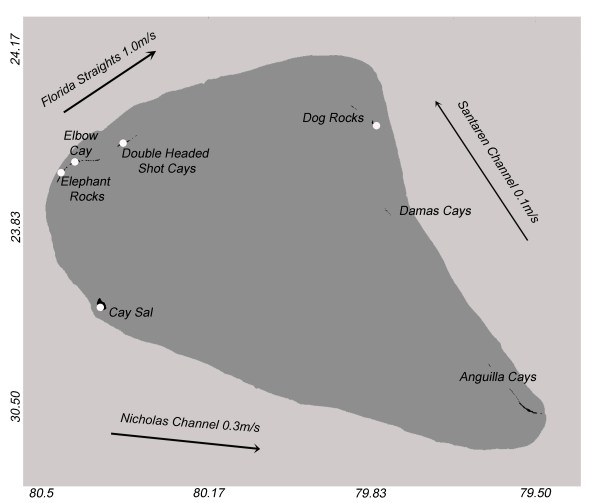
Map of the Cay Sal Bank, from Reynolds et al. (2018). Note that Cotton Cay is part of the Anguilla Cays.

Of course, Cay Sal browns could also be Cuban in the sense that they might have colonized the bank directly from Cuba across the Nicholas Channel. To parse these alternative origin stories, we collected samples of the species from across the Cay Sal Bank and generated a coalescent gene tree paired with all our sampling from other brown anole populations across the region. We find that Cay Sal A. sagrei are actually much more closely related to western Cuba A. sagrei, rather than Bahamas A. s. ordinatus. Combining this finding with our analysis of A. fairchildi, we find that this particular Anole Outpost was colonized from Western Cuba by at least two species–and likely at different times.

Phylogeny of A. sagrei, showing Cay Sal Bank lineagers in blue (and a Cay Sal specimen in the inset). From Reynolds et al. 2018.

New Records

In addition to these findings, we also documented some novel populations of A. sagrei on the Cay Sal Bank. We added East Doubled Headed Shot Cay, Elephant Rocks, Great Dog Rock to the list of known populations on the bank. What is particularly interesting about these new records is the range of habitat types that they support. Cay Sal Island and the Anguilla Cays are by far the most lush, with lots of vegetation. To the north, the cays become increasingly xeric and barren. East Double Headed Shot Cay is the most vegetated of the northern islands, and has a thick, but low, covering of coastal shrub plant community. Anolis sagrei is not abundant on this island, and we only saw a few dozen during several hours of searching.

East Doubled Headed Shot Cay. Photo by R. Graham Reynolds.

In stark contrast, the Elephant Rocks to the west are tall, jagged, steep, and rocky islets with almost no vegetation at all. We had low expectations as we jumped into the sea from the dingy to start our ascent of these islands at dawn. But, to our surprise, we found some anoles happily living among the rocks. Not at high densities, but here they were, a saxicolous population of A. sagrei.

Elephant Rocks, Cay Sal Bank. Photo by R. Graham Reynolds.

Naturally, Alberto and I would love to follow up on some of this, but Cay Sal is a tough place to work. Maybe someday we’ll get back there, in the meantime, we can reflect on what a special opportunity we had to visit this Anole Outpost.

Sunrise on the Cay Sal Bank. Photo by R. Graham Reynolds.


References

Buckner, S. D., R. Franz, and R. G. Reynolds. 2011. Bahama Islands and Turks & Caicos Islands. In R. Powell and R. W. Henderson, editors. Island Lists of West Indian Amphibians and Reptiles. Bulletin of the Florida Museum of Natural History 51: 85–166.

Buden, D. W., and A. Schwartz. 1968. Reptiles and birds of the Cay Sal Bank, Bahama Islands. Quarterly Journal of the Florida Academy of Sciences 31: 290–320.

Vanhooydonck, B., A. Herrel, J. J. Meyers, and D. J. Irschick. 2009. What determines dewlap diversity in Anolis lizards? An among-island comparison. Journal of Evolutionary Biology 22: 293–305.

What’s New in Anole Literature?

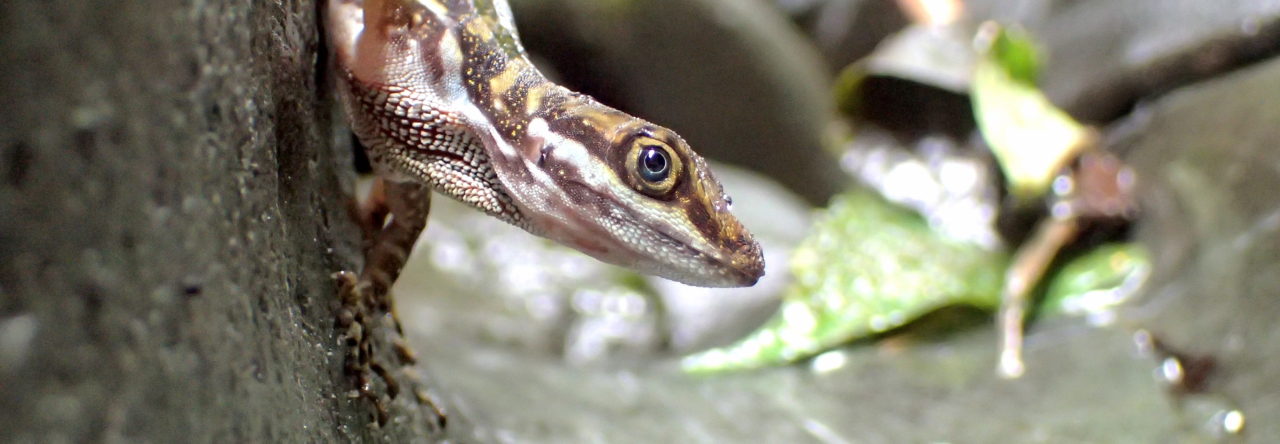
Anolis biporcatus. Photo by Jessica Pita Aquino.

Anole biologists and enthusiasts, stay updated on the latest anole research and find out about these fascinating creatures as scientists continue to make amazing discoveries! Here’s what’s been published in the last year and a half (2017-2018): nearly 150 papers in just a year and a half!

Anole Annals welcomes posts on new anole literature. Our goal is to try to keep the anole community up-to-date with regard to new publications, but we need help! So, if you’d like to try your hand at some science communication (or need something to list as a Broader Impact), please consider writing a post summarizing or discussing a recent paper.

And authors: there’s nothing more interesting than to get the insider’s view of a recent paper. Tell us the backstory: how a paper came to be and why you conducted the study in the first place. Provide the fascinating details that you can’t find in a published paper. It’s a great way to disseminate your work, and looks good on grant proposals.

We invite anyone interested to write posts! If you’d like to be a contributor, please write anoleannals@gmail.com.

2017

Alibardi, L. 2017. Review: Biological and Molecular Differences between Tail Regeneration and Limb Scarring in Lizard: An Inspiring Model Addressing Limb Regeneration in Amniotes. Journal of Experimental Zoology Part B: Molecular and Developmental Evolution 328:493–514.

Armstead, J. V., F. Ayala-Varela, O. Torres-Carvajal, M. J. Ryan, and S. Poe. 2017. Systematics and Ecology of Anolis biporcatus (Squamata: Iguanidae). Salamandra 53:285–293.

Birke, L. L., A. M. Cespedes, E. R. Schachner, and S. P. Lailvaux. 2017. Cystic Calculus in a Laboratory-housed Green Anole (Anolis carolinensis). Comparative Medicine 67:112–115.

Bochaton, C., S. Bailon, A. Herrel, S. Grouard, I. Ineich, A. Tresset, and R. Cornette. 2017. Human Impacts Reduce Morphological Diversity in an Insular Species of Lizard. Proceedings of the Royal Society B: Biological Sciences 284.

Bonneaud, C., I. Sepil, L. Wilfert, and R. Calsbeek. 2017. Plasmodium Infections in Natural Populations of Anolis sagrei Reflect Tolerance Rather Than Susceptibility. Integrative and Comparative Biology 57:352–361.

Boyer, J. F. F., and L. Swierk. 2017. Rapid Body Color Brightening is Associated with Exposure to a Stressor in an Anolis Lizard. Canadian Journal of Zoology 95:213–219.

Anole Outpost: The Cay Sal Bank, Part I

What determines species composition on remote Caribbean islands? Geographic proximity to source populations? The vicissitudes of dispersal and colonization? Propagule pressure and prevailing biotic and abiotic environmental conditions? The study of biogeography addresses such questions, and is concerned with understanding the geography of biodiversity- where do species occur and why?

We perhaps often think of species groups accumulating from colonists arriving from the same place, that is, we identify a likely natal source for island colonists. But might species groups be chimeric, in that they contain groups of diasporic species from different natal lands? This is certainly a plausible scenario and could potentially lead to some interesting evolutionary outcomes.

The Cay Sal Bank is a remote island bank, or shallow carbonate platform, on which rests a line of small islands strung out along its margins. This region, as well as our recent expedition, has been mentioned in a previous AA post. Here I am returning to discuss the anoles and the results from our recently published work describing the evolutionary relationships of the terrestrial squamate fauna. Fundamentally, we ask a question that has circulated for the better part of a century: where do the anoles on Cay Sal come from?

Six terrestrial squamates are found on this bank:
Anolis fairchildi (endemic)
Anolis sagrei
Tropidophis curtus
Sphaerodactylus nigropunctatus
Cubophis cantherigerus
Typhlops biminiensis

Dispersal hypotheses for terrestrial squamates found on Cay Sal Bank, from Reynolds et al. 2018

Of these, all but Anolis fairchildi and the recently discovered population of Cubophis were thought to have Bahamian evolutionary affinities. The endemic A. fairchildi has been of particular interest, owing to its status as the product of one of the ex situ speciation events occurring in the green anoles as they dispersed from Cuba (Williams 1969). But a previous AA post (1) reminded us that the origins of Anolis fairchildi had not been resolved- did they come directly from Cuba or are they derived from Bahamian A. smaragdinus (among other alternatives?). Here we tackle this question, using a basic mitochondrial dataset and lots of taxon sampling from previous study of the group (more on A. fairchildi in a future post). We constructed a coalescent gene tree of all “carolinensis-clade” Cuban green anole species, including our samples obtained from Cay Sal Island in 2015. We find unequivocally that A. fairchildi is a recent colonist from western Cuba- nested within the western Anolis porcatus lineage. Thus we see both ancient and recent emigration (divergence) events leading to what we recognize as species in the carolinensis clade of green anoles, setting up a really nice opportunity to examine the accumulation of variation in diasporic populations over different time periods.

Phylogeny of “carolinensis clade” green anoles from Reynolds et al. 2018, with A. fairchildi highlighted in green and shown in the inset photo

Drivers and Constraints of Within-Species Diversity in Dewlap Design

Sampling locations of the populations of study across the Caribbean. (1) Soroa (Cuba), population 1; (2) Soroa (Cuba) population 2; (3) Grand Cayman; (4) Santa Clara (Cuba); (5) South Bimini; (6) Chub Cay; (7) Andros; (8) Crooked Island; (9) Acklins; (10) San Salvador; (11) Staniel Cay; (12) Pidgeon Cay; (13) Grand Bahama; (14) South Abaco; (15) Cayman Brac; (16) Little Cayman; (17) Jamaica.

The dewlap is arguably one of most fascinating features of anoles. For me, it is the baffling diversity in dewlap size, coloration, and use —both among and within species— that makes it so interesting. However, understanding the origin and evolution of dewlap diversity in Anolis has proven a daunting task (Nicholson et al. 2007; Vanhooydonck et al. 2009). In an attempt to make (a little more) sense of the drivers and constraints of anole dewlap variation, a team of Belgian researchers from the University of Antwerp, led by evolutionary ecologist Tess Driessens, decided to look at dewlap diversity in Anolis sagrei. They surveyed 17 island populations of A. sagrei across the Caribbean and quantified dewlap design (color, size) and dewlap display behavior of both males and females.

Last year, Driessens and colleagues published their findings on how variation in abiotic factors (such as precipitation, temperature and other climatic variables) could explain much of the observed inter-island variation in dewlap design and use in A. sagrei (‘signal efficacy’ hypothesis). In a paper that came out last week, the team reports on the role of the biotic environment in driving dewlap diversity in the brown anole. Inspired by the wonderful study of Vanhooydonck et al. (2009), the researchers tested whether among-population dewlap variation could be (at least partially) assigned to variation in predation pressure (estimated by island size, tail break frequency, presence/absence of the predatory curly-tailed lizards, clay model attack rate), sexual selection (using sexual size dimorphism), and/or species recognition (number of syntopic Anolis species). Overall, they found only limited support for the idea that the extensive interpopulational variability in dewlap design and use in A. sagrei is mediated by variation in their biotic environment. Although they did find that males from larger islands show higher dewlap display intensities than males from smaller islands, and that males are more likely to have a ‘spotted’ dewlap pattern when co-occurring with a high number of syntopic Anolis species, the direct connection with predation pressure and species recognition remains ambiguous and demands further investigation.

In another recent paper, focusing only on the size of the male dewlap and their maximum bite capacity, the Belgian researchers asked a different question: does dewlap size signal fighting capacity (estimated by bite force) in A. sagrei, and is this true for all 17 sampled populations? And, does the level of signal honesty (that is, the steepness of the dewlap size-bite force relationship within a population) vary among populations, and is it linked with the strength of intrasexual selection? Their results showed that absolute dewlap size is an excellent predictor of bite force in all A. sagrei populations. However, relative dewlap size was only an honest signal of bite performance in 4 out of the 17 populations. Surprisingly, the level of signal honesty did not correlate with the strength of intrasexual selection.

Male brown anole biting on a purpose-built force plate. Photo by Tess Driessens

While the work of Tess Driessens and her team sheds new light on the drivers and constraints of dewlap diversity in A. sagrei, there is still plenty of study material left for future dewlap fanatics.

Page 11 of 67

Powered by WordPress & Theme by Anders Norén