Category: All Posts Page 120 of 154

Evolution 2014: Hot Lizards in the City, and How They Adapt to Urban Settings

IMG_3884

AA‘s man in Wisconsin, Greg Mayer, filed this report:

In Ernest E. Williams’ 1969 classic on the ecology of colonization, he identified Anolis cristatellus as one of the ‘minor colonizers’– not as widespread as carolinensis and sagrei, but having close relatives on Mona, Desecheo, and the Turks and Caicos. This natural colonization has now been augmented by human introductions– including Florida, Costa Rica, and the Dominican Republic, so that it is moving up on the colonization hit parade. In many of these places (e.g. Miami, Limon, Costa Rica), they have become established in highly human modified habitats.

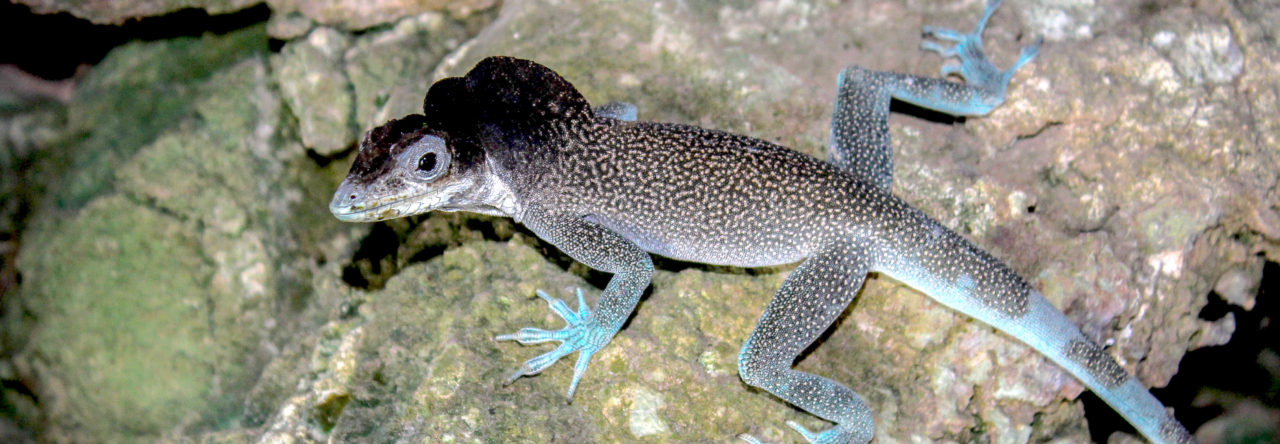
Another sort of invasion has been taking place within Puerto Rico, as Kristin Winchell of U. Mass., Boston, has reminded us– cristatellus is also occupying (and thriving in) urban habitats in the densely populated parts of Puerto Rico. In her talk, coauthored by Graham Reynolds, Sofia Prado-Irwin, Alberto Puente-Rolon and Liam Revell, she shows that urban habitats present many challenges to anoles. The typical urban habitat is full of man-made surfaces (wood, masonry, glass, metal, oftrn painted), there is little or no canopy, the ground is made up largely of impermeable surfaces (so water runs of quickly), all of which lead to urban habitats being hotter, drier, and quite distinctive compared to the natural forest and woodland habitats. And let’s not forget the cats–all those awful, lizard-eating cats! (Apologies to Jerry Coyne!)

Kristin and company supposed, naturally, that all these environmental differences could lead to fairly intense selection for local adaptation. In particular, they supposed that city lizards should have longer legs (because running on larger, flatter surfaces is done better with longer legs), and that they would have more toe lamellae (to deal with the slippery, texture-less artificial surfaces, where claws are less effective for grip).

They tested these predictions at 3 paired sites near San Juan, Ponce, and Mayaguez (the natural site in San Juan was labeled by a sign at the site as “Una esmeralda verde en un mar de cemento”!) They confirmed their environmental characterization of cities, and found, as expected, that lizards perched on wider surfaces, did have more lamellae, and had longer legs–a resounding success. Interestingly, they did not find a change in perch height distribution between urban and natural. My one query would be about the change in lamellae number. High lamellae number is associated with narrower perch diameters– the numerous lamellae allowing the toepad to curl round to conform to the curved shape of the narrower perch (as shown in trunk crown anoles having more lamellae than similar-sized trunk ground anoles). I’ll have to think about what exactly I would expect in a trunk ground lizard adapting to man-made surfaces.

Kristin mentioned that they are planning a common garden experiment to test whther the differences have a genetic basis, as opposed to representing phenotypic plasticity. So we can look forward to more interesting results from this project.

Evolution 2014: Physiological Divergence and Adaptive Radiation

IMG_3865

Alex Gunderson asked the question: What ecological axes are involved in ecological divergence during adaptive radiation, and what phenotypic traits occur along them?

Here are the specific questions he investigated:

IMG_3866

Alex pointed out that we usually talk about the ecomorphs that have diverged to use different parts of the structural habitat (e.g., twigs, canopy, grass, etc.), but less attenion is paid to divergence along the thermal niche axis, yet since Ruibal’s work in the early 1960’s, we’ve known such divergence occurs. Morphological divergence allows species to coexist by using different structural microhabitats; does divergence in thermal physiology have the same effect?

Most of the research involved the Puerto Rican cristatellus group, in which there are four pairs of sister species that differ in thermal environment, one more in the sun, one more a shade species. Some data also included Jamaican anoles. The study focused on two aspects of physiology related to thermal niche use, the critical thermal maximum temperature (CtMax) and the optimal temperature for sprint performance (Topt).

IMG_3868

Results: In 3 of 4 sister taxa, the species in the warmer environment had a higher CtMax. In 2 of 4, the species had a higher optimal temperature (in both cases, in the other comparisons, the species did not differ statistically).

Q2: What are the performance consequences of physiological divergence?

Alex measured temperatures in shaded and open habitats and asked what the risk was of a species overheating in each habitat. In shaded habitats, no species were at risk of overheating, but in open habitats, for three pairs of sister taxa, the species from the cooler environment was at greater risk of lethal overheating.

Q3: Does physiological divergence promote species co-occurrence?

In cases where morphologically similar species co-occur (same ecomorph), do they diverge in physiology? The answer: Invariably yes in Puerto Rico and Jamaica. When morphologically similar species co-occur, they always differ in thermal physiology. Thus, thermal physiological differentiation seems to be important for increasing local species richness.

Q4: How quickly does physiology evolve relative to morphology?

Surprisingly (at least to me), physiology evolves considerably more slowly than morphlogy.

Summarizing across this work, Alex concluded that physiological differentiation may be an important component of adaptive radiation. In many cases, workers studying adaptive radiation focus on morphology for a number of reasons, not the least of which that it is much easier to measure. But, by doing so, they may be missing an important part of the puzzle.

Evolution 2014: A New Method for Placing Species of Interest that Lack DNA on a DNA-Based Phylogeny, Illustrated by Anolis roosevelti

IMG_3861

Liam Revell gave a talk entitled “Placing cryptic, recently extinct, or hypothesized taxa in an ultrametric phylogeny using continuous charater data: a case study.” The title pretty much says it all and is a report on an ongoing project conducted with Luke Mahler, Graham Reynolds, and Graham Slater (sorry, I failed to think of anything clever about two authors named Graham. S’mores, anyone?).

The problem being addressed: we have a phylogeny for a group and want to add a taxon for which we only have continuous data, such as leg length, etc. How can we place it on the tree?

IMG_3862

The details are too technical for me to summarize (note: if you want to get to the good, anole stuff and don’t care about the method, skip to the next paragraph), but entails using a likelihood formula that Felsenstein developed for building trees with continuous characters (another note: you must have continuous characters for all taxa). The method works by considering all possible placements of the missing species. It computes the likelihood of the model and tree conditioned on the dataset to find the maximum likelihood tree including the taxon of interest that is consistent with the tree based on nuclear data for the other taxa (note that the tree must be ultrametric). Liam reported that even for trees with 100 or more taxa, an approximately exhaustive search for the ML position of the tip taxon is possible. Because the tree is ultrametric, all we’re interested in is where the attachment on the tree occurs, because the branch length is then determined by the ultrametricity of the tree.

Liam assured the audience that the drawing was not of co-author Graham Slater

Liam assured the audience that the drawing was not of co-author Graham Slater

Now for the good stuff: the method was illustrated with regard to Anolis roosevelti, the feared-extinct crown giant anole of the Puerto Rican bank. Known from only eight specimens and last collected in the 1930’s, things don’t look good for roosevelti. It has been assumed to be closely related to the Puerto Rican crown-giant, A. cuvieri, which it does look like. Moreover, Steve Poe’s morphological phylogeny supports this placement.

The analysis can reject many potential placements of roosevelti, but many others are not ruled out statistically; i.e., the likelihood surface is flat particularly close to root of tree, not surprising given the extensive morphological convergence of anoles. However, for what it’s worth, placement of roosevelti as a close relative to cuvieri is ruled out.

It will be interesting to see how this project develops and whether these results hold. More importantly, someone needs to go out and find a living roosevelti.

Evolution 2014: Travis Ingram Receives Young Investigator Prize for Research on Adaptive Radiation

Travis Ingram in the field

At each of the Evolution meetings over the last few years, anole researchers have been honored with some of the major awards  (1, 2, 3) recognizing talented young scientists. That trend continued here in 2014, when Travis Ingram was named as one of the winners of the  American Society of Naturalists’ Jasper Loftus-Hills Young Investigator Prizes.

Travis made a 30-minute presentation on his work on adaptive radiation. This work has combined the development of new analytical methods along with detailed analysis of two systems, our beloved anoles as well as Pacific rockfishes. In particular, Travis spoke about research investigating two questions: the extent to which adaptive divergence occurs specifically during speciation events, and the degree to which within adaptive radiations, convergent evolution occurs to the same adaptive peaks. In considering this work, Travis also discussed the difference between what are called “alpha” niches, which refers to ecological differentiation between co-occurring species, and “beta” niches, which refers to ecological differences across a landscape or environmental gradient.

Travis first discussed the method in to determine the extent to which morphological variation among species evolved during speciation. Travis has already published work on rockfishes that shows that substantial proportions of morphological variation among species appears to have evolved during the speciation process. He then discussed new work asking the same question in anoles, which shows that variation in traditional ecomorph traits—related to differences in structural habitat use—seem to be little correlated with speciational evolution. In contrast, climatic niche evolution—the divergence that arises within ecomorph clades—seems to be largely speciational.

Travis then switched gears to discuss research on convergent evolution within adaptive radiations, for which he and colleagues have developed a new method, Surface. Application of this work to Greater Antillean anoles—published in Science last year—shows that there have been 29 peak shifts in anoles, that there are 15 separate adaptive peaks, and that eight of these peaks have been occupied convergently. Moreover, Travis pointed out that even though the method does not start out with a priori categorization of species to ecomorph, the tradition ecomorph categories are for the most part recovered in the analysis, with some exceptions.

Travis then presented new work applying the same method to rockfish radiations on both sides of the Pacific in the northern hemisphere. Again, many convergent peaks were found; however, of the nine convergent peaks, eight were occupied by multiple lineages with a lineage, and only one occupied by lineages in both regions. This work was published this year in the American Naturalist.

Travis summarized by noting the interesting differences found in the two aspects of adaptive radiation he studies. His work indicates that axes related to environmental gradients, i.e., the beta niche illustrating differences across space, are related to speciational evolution, whereas traits related to alpha niche (microhabitat partitioning) are related to convergence within radiations.

Evolution 2014: Ecomorphological Analysis of Scale Number in Anoles

Hanna Wegener talks about Anolis scales at Evolution 2014.

Hanna Wegener talks about Anolis scales at Evolution 2014.

Talks are underway at Evolution 2014 and anoles are already off to a strong start! Early this morning, Hanna Wegener, a Ph.D. student at the University of Rhode Island, discussed some of her work on the diversity in scale size in Anolis lizards. The work she presented was conducted in collaboration with Gabe Gartner and Jonathan Losos from Harvard University. Hanna started by discussing the adaptive radiation of anoles in the Caribbean. As a community, she said, we know quite a bit about how certain morphological traits, namely skeletal dimensions and lamella counts (i.e., number of toe pad scales) differ among ecomorphs and among different climatic habitats. Scale number, however, remains comparatively unexplored in anoles. For her study, Hanna examined ventral and dorsal scale counts in anoles. Her sampling strategy was impressive – by mining the collections in the Museum of Comparative Zoology at Harvard University, she was able to get scale counts for well over 100 anole species, and Caribbean anoles were particularly well represented in her dataset.

She first sought to examine the relationship between scale number and climate. There are prevailing ideas regarding how scale size and number should relate to climate. Specifically, Michael Soulé and Charles Kerfoot have posited that larger scales are advantageous in hot environments because their greater surface area increases radiative efficiency. Larger scales are also thought to reduce water loss in dry environments. Thus, lizards in hot, dry environments should have fewer, larger scales than lizards in cool, wet environments. Hanna found a positive relationship between scale number (both dorsal and ventral) and precipitation, but she did not find a significant relationship between scale number and temperature.

Hanna showing the variation in scale number and size among anoles. The top two rows show dorsal scales, whereas the bottom two rows show ventral scales.

Hanna showing the variation in scale number and size among anoles. The top two rows show dorsal scales, whereas the bottom two rows show ventral scales.

Hanna then asked whether scale number relates to structural microhabitat use. Here the study became much more exploratory and exciting because, if there is little known about the relationship between climate and scale number, there is even less known about the relationship between scale number and microhabitat use. Hanna found significant differences among ecomorphs in scale number. She found that higher perching ecomorphs, such as crown-giants and trunk anoles, tended to have more, smaller scales. Lizards that perched lower and used broad surfaces, such as trunk-ground species, tended to have fewer, larger scales. Although the precise mechanism underlying this relationship remains unknown, Hanna posited that aspects of microclimate, such as temperature, might vary with structural habitat, which may in turn drive scale number patterns. She also suggested that the observed patterns of scale number variation might represent correlated evolution, such that scale number covaries with a trait that relates to differences in structural microhabitat use. Hopefully Hanna’s study leads to more research on the significance of scale number in anoles and other lizards.

Newspaper Article on Brown Anoles Affecting Green Anoles Gets It Right

Battling anoles. Image Credits: Ken King // Dixie Native


The St. Augustine Record published a very nice article two weeks ago discussing the invasion of brown anoles, A. sagrei, and how they’ve affected green anoles. But instead of the usual alarmist hysteria–green anoles being pushed to extinction–this article pretty much gets it right!

“…the invasion of the brown anoles have chased the natives into the treetops. The brown anoles, having few enemies, have taken over the former habitat of the greens, forcing them into new territories and farther from our sight.”

That’s right–the green anoles aren’t going extinct, they’re just shifting their habitat use to get away from the browns. The only quibble I would have is that this is not really “a new territory” because not only have green anoles in Florida been using high perches all along, but that’s what their ancestors in Cuba, who’ve always lived with brown anoles, have always done.  Green anoles experienced what’s called “ecological release” when they got to Florida and found it brown anole-less; now they’re simply returning to their ancestral niche.

For more on this topic, see previous AA posts [e.g., 1, 2, 3].

Do Communities of Introduced Anoles Differ from Natural Communities?

Anolis cristatellus awakened on a leaf. Photo credit: Tom Kennedy, University of New Mexico.

Anolis cristatellus, native to Puerto Rico but introduced to a number of areas, awakened on a leaf. Photo credit: Tom Kennedy, University of New Mexico.

Human-mediated species invasions are excellent real-time experiments to assess community assembly. These recent invasions are considered accurate analogues of ancient colonizations, which contribute to today’s natural species communities. Whether this is a correct assumption, however, had until now not been sufficiently tested.

A new paper by Steven Poe available online in the American Naturalist examines this point. His results are very exciting for many people working on anoles, and everyone interested in species invasions and community assembly. Therefore, I present a summary of his findings here.

Previous studies have shown that recently naturalized species are morphologically similar to ancient colonizers, indicating that processes shaping biotic communities could be the same in both situations. However, the unnatural (i.e., human-mediated) mode of dispersal responsible for assembling modern communities and the frequent establishment of animals in urban areas may result in unique species combinations that are not normally present in nature. Poe examined this proposition by comparing natural and nonnative two-species communities of anoles based on morphology and phylogenetic structure.

The results show that the morphological differences among the species in natural communities are not significantly lower or higher than those in naturalized species pairs. Furthermore, the anole species in natural and nonnative communities are morphologically indistinguishable; they have unusually high colonization scores and all morphological trait comparisons of species from naturalized communities versus natural communities are nonsignificant.

Please Help Us Make the Sungazer the National Lizard of South Africa

Cordylus giganteus

South Africa has various national wildlife symbols:

National animal – the springbok (Antidorcas marsupialis)

National bird – the blue crane (Anthropoides paradisia)

National fish – the galjoen (Dichistius capensis)

National flower – the king protea (Protea cynaroides)

National tree – real yellowwood (Podocarpus latifolius)

Now, I would like to appeal to Anole Annals readers to help get the sungazer, Smaug giganteus (formerly Cordylus giganteus), formally recognized as South Africa’s national lizard by the Department of Arts and Culture. This would promote the conservation of this species, but by using it as an umbrella species, the conservation of their grassland habitats would also benefit various other organisms. It will only take a few minutes of your time. Just visit and sign the petition at: https://secure.avaaz.org/en/petition/Department_of_Arts_and_Culture_Make_Sungazers_South_Africas_national_lizard/.

The Swinhoe’s tree lizard (Japalura swinhonis) is a common endemic lizard species in Taiwan.

The Swinhoe’s tree lizard (Japalura swinhonis) is a common endemic lizard species in Taiwan.

Wouldn’t it be great if we could get a national lizard nominated for every country?

I nominate the Swinhoe’s tree lizard (Japalura swinhonis) for Taiwan.

Which anoles would you nominate for which countries?

The Battle over Anole Classification Ignores the War

Should Anolis be split into several genera, and why is this is the wrong question? The battle over anole classification is not about splitting Anolis into several genera; it is about changing the content of a well-understood taxon, by pointing the name Anolis to a different branch or node of the tree. The war, then, is about the failure to connect taxonomy to phylogeny in an evolutionarily meaningful way, which is that taxon names should be associated with evolutionary lineages (clades) and not with ranks. If one accepts this, then it is rarely necessary to change the association of a name with its taxon, as proposed by Nicholson et al. (2012) in the case of Anolis.

Below I respond to several misconceptions about taxonomy, some with reference to anoles. I am not claiming that Nicholson et al. (2012) espouse these explicitly, but they are germane to anole taxonomy.

Misconception 1. Taxonomic stability is ignorance. Put another way, stability in taxonomy is not necessary, or even desirable. In contrast, I argue that stability should be a basic characteristic of taxonomy.

Taxonomies become unstable when the association between a name and its taxon changes, i.e., when the name points to a different taxon. However, stability does not mean that taxonomies do not change at all. Stable taxonomies can change, that is, improve, by adding more information about hierarchy. That is, as new nodes are discovered, names are progressively applied to those nodes. The existing associations between names and taxa need not change.

Misconception 2. Taxonomies are primarily for systematists. Unfortunately, some systematists view taxonomy as a personal sandbox. Rather, taxonomies are reference systems that are fundamentally important to the community of non-systematists. If not conservative, taxonomies are confusing for those who need stable reference lists. Witness the controversy about Bufo, Rana, etc.

Misconception 3. Some people don’t like change.  Two types of change are at issue: (a) change in taxonomy, and (b) change in the practice of taxonomy. We who prefer a conservative taxonomy that maintains name-taxon stability are considered old-fashioned. Those who prefer taxonomy that breaks name-taxon stability, as has been proposed for anoles, are often considered progressive (see Misconception 1), under the assumption that any change is progress.

Ironically, a stable, “conservative” taxonomy requires a radical change in mindset about how taxonomy is done. Simply put, one maintains the association between name and clade, and applies new names when as needed to newly uncovered taxa. This approach reflects a growing understanding of the relationship between taxonomy and phylogeny. de Queiroz (1988) called attention more than 20 years ago to the failure of taxonomists to integrate taxonomy into the Darwinian Revolution.

A focus on ranks—arguing that eight genera of anoles are preferable to one—is inherently non-evolutionary. Thus, those who prefer to split a ranked taxon into several of equal rank are the resistors of change.

Misconception 4. Changes in stability between name and taxon are inevitable, especially in cases of paraphyly. De-stabilizing changes are not inevitable, and only result if one places primacy on rank-based taxonomy rather than taxonomy based on ancestor-descendant (evolutionary) relationships. N. B., I am not advocating that ranks should not be used, only that the emphasis on ranks is the cause of the controversy.

Elimination of paraphyly was the battle-cry of early cladists, but in reality the arguments about paraphyly were a distraction from the real issue. The Reptilia-Aves controversy was fundamentally about ranks, not paraphyly. Should Reptilia and Aves both be ranked as classes? If yes, then Reptilia is paraphyletic, because paraphyly follows from the use of ranks. The solution to the controversy was acknowledgement that Aves is nested within Reptilia, giving primacy of phylogeny over ranks. As Neil Shubin articulated, we all have an Inner Fish.

Paraphyly has consistently been a motivation for dismantling Anolis beginning with Guyer and Savage (1986). However, that the genus Norops (for example) is nested within the genus Anolis does not require splitting Anolis into several genera. One simple solution is to treat Norops as a subgenus within Anolis. The name of the species sagrei can then be written as Anolis (Norops) sagrei. The elegance of this is that Norops and Anolis, as nested taxon names, continue to refer to their traditional clades.

A second, more general solution is to use multiple levels of unranked clade names as done by Castañeda and de Queiroz (2013). They recognized as formal unranked taxa the clade Dactyloa; and within Dactyloa, clade Megaloa for the latifrons series, and clade Phenacosaurus for the heterodermus series. Because these are expicitly used as unranked names, they are not regulated by the International Code of Zoological Nomenclature (the Code).

As Cannatella and de Queiroz (1989:68) responded to Guyer and Savage (1986): “A phylogenetic taxonomy could have been effected by reorganizing sections, subsections, and series within Anolis, without generic level re-arrangements.”

Misconception 5. Subgenera are not used much in herpetology. Even if this were true, it is not a reason to reject the use of subgenera. Regardless, the data don’t support this claim; the use of subgenera is rising. They are a very useful tool, but have constraints imposed by the Code (these can be easily fixed).

Misconception 6. The most recent classification must be used as the standard. To recognize this fallacy one need only read the first Principle of the Code, which embraces taxonomic freedom. A common question from the community-at-large is, Which classification is the “correct” one? The answer is of course that there is no “correct” classification, and taxonomists who claim this do a disservice to the general community.

It is, in fact, time for a new classification of anoles, but one that truly integrates evolutionary principles with taxonomy, reflecting progress and not just change.

Acknowledgements. This essay is strongly influenced by Kevin de Queiroz, who articulated many of these ideas >25 years ago. David Wake engaged in helpful discussions.

References

Cannatella, D. C., and K. de Queiroz. 1989. Phylogenetic systematics of the anoles: is a new taxonomy warranted? Syst. Zool. 38:57-69.

de Queiroz, K. 1988. Systematics and the Darwinian revolution. Phil. Sci. 55:238-259.

del Rosario Castañeda, M., and K. de Queiroz. 2013. Phylogeny of the Dactyloa clade of Anolis lizards: New insights from combining morphological and molecular data. Bull. Mus. Comp. Zool. 160:345-398.

Guyer, C., and J. M. Savage. 1986. Cladistic relationships among anoles (Sauria: Iguanidae). Syst. Zool. 35:509-531.

Nicholson, K. E., Crother, B. I., Guyer, C., and J. M. Savage. 2012. It is time for a new classification of anoles (Squamata: Dactyloidae). Zootaxa 3477:1–108.

Evolutionary Taxonomy Meets Phylogenetic Systematics: Maybe 8 Genera Isn’t Enough for Anoles

There’s an old saying, “life imitates art.”

The last few days have seen renewed discussion of the proposal to split Anolis into multiple genera. In their most recent paper, Nicholson et al. (2014) explain why they want to split up Anolis: “Starting with Savage (1973), we have made clear our conclusion that the beta section of Williams (1976) deserves generic status (Norops).” The reason, as they explain in the preceding paragraph: “Anyone who has caused a squamate’s tail to separate from its body, and has read Etheridge’s paper, understands immediately why we conclude that the beta condition within anoles is as important to understanding the diversity of that group as the toe lamellae of anoles is to understanding the evolution of Dactyloidae.” In other words, the caudal vertebral structure of Norops, “a derived condition of the caudal vertebrae unique among squamates,” is so notable and distinctive that Norops needs to be recognized as a genus to call attention to and emphasize this evolutionary transition.

This approach follows the rationale of Ernst Mayr’s Evolutionary Systematics Classification system, whose goal was to highlight major evolutionary transitions. This approach has generally fallen out of favor, however, because it often led to the recognition of paraphyletic groups, such as “reptiles,” when birds are elevated due to their evolutionary significance.

Nicholson et al. (2014) solve this problem, however, by recognizing the clade they consider important, Norops, but then recognizing as many other clades as necessary to render all clades monophyletic: “Therefore, the seven additional genera that we propose as replacements for the alpha section represent the minimum number of genera needed to eliminate the problem of the previous taxonomy” once Norops is elevated to generic status. Evolutionary classification meets phylogenetic systematics!

Surely if one clade of anoles is going to be recognized at the generic level because it has a funky tail, then Chamaeleolis deserves to be a genus as well.

Nicholson et al., however, are not the first to take this approach in revising anole classification. Just last year, another paper considering anole classification came to exactly the same conclusion. Dimedawter et al. (2013), writing in Nature Herpetology, propose: “This approach is implemented readily enough and entails nothing more than identifying evolutionarily important clades, recognizing them at the appropriate taxonomic level, and then revising the remaining taxonomy to ensure that all taxa are monophyletic.” Taking the approach to its logical extreme, they then illustrate it using Anolis. However, rather than Norops, Dimedawter et al. start with Chamaeleolis and Chamaelinorops, two clades so distinctive that the authors contend they should be recognized at the generic level, as they once were.

No toepads? That’s got to be its own genus.

But what constitutes evolutionary significance is in the eye of the beholder. Dimedawter et al. survey anoles and note a number of other clades that seem distinctive enough to warrant generic recognition. Among these are the padless anole of Venezuela (Tropidactylus); twig giants and dwarves of South America (Phenacosaurus); the aquatic anole of Hispaniola (A. eugenegrahami); Xiphocercus, the medium twig anole of Jamaica; Deiroptyx as originally constituted (vermiculatus and bartschi); among others. All of these anoles are cool and distinctive in their own way, and so it seems reasonable to recognize them as distinct genera. In sum, they identify 11 clades worthy of generic level designation. To maintain monophyly of all anole clades, that requires recognizing 34 more clades, for a total of 45 anole genera.

Dimedawter et al. then go one step further. Agreeing with Nicholson et al. (2012), they argue that phylogenies should be informative of phylogenetic relationships. However, they fault Nicholson et al. for not going far enough—after all, their proposal does not provide insight on the relationships among the 150 Norops, or even among the six Chamaeleolis in their own system. So, they propose a new approach, Maximally Informative Phylogenetic Clustering (MIPC), which allows one to always know the sister taxon of a species from the classification. Applying this approach to anoles, they propose the recognition of 133 anole genera.

Exciting times for anole classification!

Page 120 of 154

Powered by WordPress & Theme by Anders Norén