
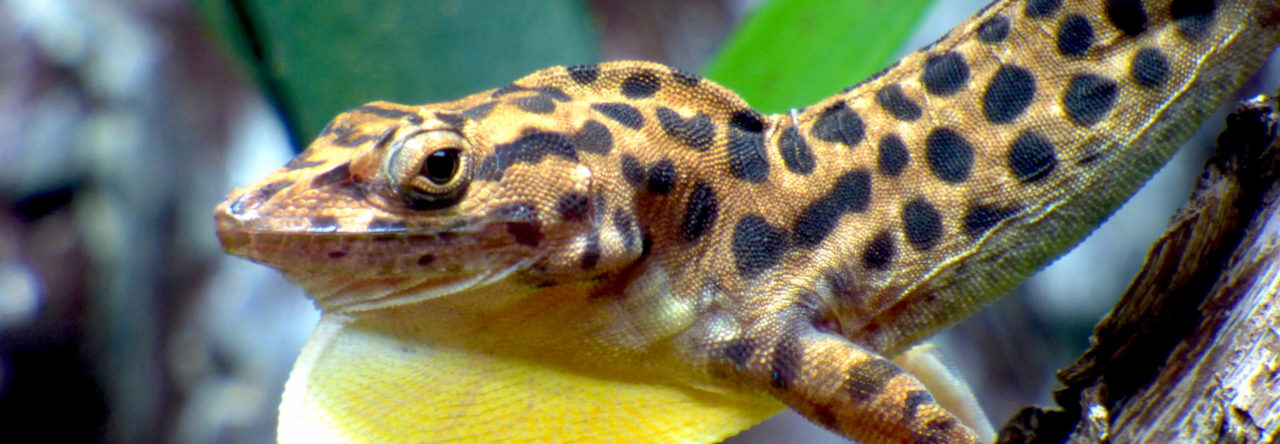

Knight anole from Grand Bahama. Photo courtesy of Daniel Murray.
A population of Anolis equestris has been reported from the island of Grand Bahamas. Specifically near Our Lucaya, living in a stand of dilly trees.
Only A. sagrei is native to Grand Bahama (which is somewhat remarkable given the size of the island), but equestris is the third introduced anole there, following distichus and a green anole (either carolinensis or smaragdinus, but I’m not sure if it is clear which). Is anyone aware of knight anoles elsewhere in the Bahamas? They seem to be getting around the Caribbean, as they have shown up in New Providence in the Bahamas, as well as Grand Cayman and the Turks and Caicos (see Knapp et al. and Powell et al. chapters in book discussed here). Given their size, they seem an unlikely stow-away, although eggs could be transported in nursery plants. The pet trade has also been implicated as a possibility.


Comments
Reply
Read More