Year: 2013 Page 34 of 37

Miami Anole Safari (Part III)

Firstly, let me start by offering my sincere apologies for the standard of photography you are about to view. As you AA readers have become accustomed to Jonathan’s flowing prose, and other members’ excellent use of modern photographic equipment, I must warn you not to expect either here!

As has been mentioned previously, the IBS Conference was a tremendous success, and firstly huge congratulations must be passed on to (a potential anologist in the making?) Ken Feeley for all the hard work and effort. The lack of talks concerning arguably one of the world’s most studied vertebrate biogeographic systems did not detract from the high levels of anole hunting that ensued over the course of the conference!

After a wonderful afternoon visiting Miami’s most bizarre lizard community, the following day provided an opportunity for conversations to be followed up from the previous night’s conference dinner (as some graduate students’ memories may have appeared a little hazy on Saturday morning). Much of the day was spent wandering around FIU’s Biscayne Bay Campus eagerly trying to find the dozen knight anoles that were promised to us the previous night by resident expert, and thoroughly nice guy, Sean Giery.

Sean has spent the past 3 years observing the A. equestris community on this campus, and has assured me that he will bless AA readers with a synopsis of his eagerly awaited dietary analysis paper in the near future. The day started brightly, with two juveniles being found in close proximity to each other; however with just he and I as the only observers, it was tough to include these individuals in the promised dozen.

Juvenile knight anole found on a horizontal branch ~2m high. Photo by JStroud

Juvenile knight anole found on a horizontal branch ~2m high. Photo by JStroud

At the start of lunch, and confronting the midday heat with the enthusiasm of schoolboys on a day trip, we regrouped with some extra eyes and headed back out to continue on our quest. Although A. sagrei, A. carolinensis and A. distichus were abundant, these were still not the target species. A loud thump behind us saw us all swivel in synchrony, like a troop of sunburnt and slightly dehydrated Michael Flatley fanatics, to be confronted by a rather startled green iguana that had just plummeted 10 feet after submissively losing a dispute to a larger male. The campus had previously been awash with a healthy population of green iguanas; however the big freeze of 2009 reduced this significantly so that the only survivors were those small enough to retreat underground.

Anolis: The Most Written About Lizard Genus?

In the era of Big Data, we can ask questions that would have been inconceivable just a few years ago.  Consider the types of questions we can ask using Google’s Ngram Viewer, which uses full-text searches of >4% of all books ever printed to characterize relative word or phrase usage over time (this approach was initially described in a 2011 Science paper about “Quantitative analysis of culture using millions of digitized books“).

Among the most important questions one might ask with the Ngram Viewer is “What is the most written-about lizard genus?”  I did some preliminary scouting to assess the relative usage of some of the lizard genera that I guessed would be the most popular. I quickly narrowed my queries to the five taxa – Anolis, Sceloporus, Varanus, Lacerta, and Gekko – that I think give the most interesting graphs for discussion. I excluded other potentially popular genera from my queries for for a few reasons. Iguana is very popular, but I eliminated it because it is often used colloquially to refer to lizards that don’t necessarily belong to the genus Iguana. Eumeces never appears as frequently as the other genera in my searches. Pogona is immensely popular as a pet, but usage of this genus name is still far below the others in my list.

Ngrams_1800_1900Lacerta jumps out to a big early lead and maintains a strong lead throughout the 19th century, thanks to its widespread use in Latin-language literature from the 19th century and countless books about the European fauna (Ngrams Viewer even provides links to the books or articles containing the phrase of interest!).

Ngrams_1900_2000In the early 20th century, Anolis joins the competition as one of the most popular lizard genera, and opens up a sizeable lead by the 1980s that it maintains until the turn of the 20th century.  Although Anolis is briefly surpassed by Varanus in the 2000s, it nudges back into the lead by the end of 2008!

Ngrams_2000_08


There you have it folks, quantitative proof of the popularity of Anolis!  Have I failed to consider some genera that might be competing with Anolis in the lizard genus popularity contest?

Video On The Herpetological Expedition to Haiti that Rediscovered Anolis Darlingtoni and Many Frogs

httpv://www.youtube.com/watch?v=m9N0sR2cPS8

(I’ve provided the Youtube link here because it can be embedded into WordPress posts, but this video and other similar ones about Haitian field work are available on Caribnature’s Haiti page)

Caribnature.org contains a series of video essays about nature, the environment and exploration in Haiti, based on fieldwork led by Blair Hedges at Penn State University. The video above gives details on a trip to a never before scientifically explored mountain range in southern Haiti where the Haitian giant twig anole, A. darlingtoni, was rediscovered 25 years after it was last seen. In addition, a number of new species of frogs were discovered. The mountain chain still contains forest and wildlife because it is far from roads and people, and thus has not been completely deforested. To get there, Hedge’s team were dropped off by a helicopter.

The website also contains links to other useful information about Haiti, as well as a beautiful poster of Haitian biodiversity, which can be requested.

Order this now for the cost of shipping and handling at Caribnature.org

Experimental Study Of Reproductive Isolation In Uta

Uta stansburiana mating. Image from http://cabezaprieta.org/

The side-blotched lizard, Uta stansburiana, is one of the most widely-studied lizard species, thanks largely to work by Barry Sinervo and colleagues on the evolution of  alternative mating strategies (a.k.a. the rock-paper-scissors game in lizards).  The most recent report on the evolution of this interesting species investigates reproductive isolation between two populations of Uta that diverged within the last 22,500 years.  One of these populations is found on lava flows and the others if found off the lava flows.  This report by Corl et al. (2012) is noteworthy because recent work on a range of other organisms suggests that some “rules” for the evolution of reproductive isolation are shared across the tree of life.  Do these rules also apply to lizards?

To my knowledge, patterns of reproductive isolation have only been investigated experimentally in one other genus of lizards: Lacerta (Rykena 1991, 1996; Olsson et al.  2004). This work with Lacerta suggest substantial intrinsic reproductive isolation between species resulting from low fertility and high rates of developmental defects in hybrid crosses. Studies of Lacerta also support Haldane’s Rule because females hybrids (ZW) suffer more fitness consequences than male hybrids (ZZ).

By conducting experimental hybridization studies between these two populations of Uta, Corl et al. (2012) were able to show that significant reproductive isolation has evolved between populations, largely in the form of pre-zygotic post-mating isolation; inter-population crosses produce significantly more unfertilized than fertilized eggs relative to intra-population crosses.  Corl et al.’s results are also consistent with at least one general rule for the evolution of reproductive isolation that has been reported in other organisms; asymmetric reproductive of isolation between the two Uta populations is consistent with Darwin’s Corollary to Haldane’s Rule.

How does all this relate to anoles?  My lab is interested in this work because we’re in the midst of a major project designed to answer questions about intrinsic reproductive isolation in Anolis.  Anthony Geneva reported on some preliminary results of this work earlier this year and we hope to have more to report sometime in the near future.

Rykena, S. 1991. Hybridization experiments as tests for species boundaries in the genus Lacerta sensu stricto. Mitteilungen aus dem Zoologischen Museum Berlin 67:55–68.

Rykena, S. 1996. Experimental interspecific hybridization in the genus Lacerta. Israel Journal of Zoology 42:171–184.


A Poem About Anolis Orcesi

Not quite sure what to make of this, so I thought I’d throw it out to the AA readership. Almost a year and a half ago, I wrote several posts about a field expedition to Ecuador to study the phenacosaur, A. orcesi. Recently, the blog Ponderingspawn.com posted this: “Poonam absolutely delighted me with his poem: This poem is inspired by the traalivs of searching for the elusive Phenacosaurus orcesi during a trip to Baeza, Ecuador last summer:The phenacosaur awakens from dreams of juicy prey,The volcano Antisana shines brightly in the day.Perched on a twig, he rests safely assured,“Those silly humans don’t know what they’re looking for!”Skirting the road edges with trucks whizzing by,No lizards in sight, oh! how time doth fly.Binoculars in hand and scanning the brush,The orcesi are hidden in the leaves so lush.The day slips by till the moon rises high,The time for finding an orcesi is nigh.Alack! Alas! A lizard in sight!But it’s only A. fitchii, try as we might.

Ah yes, the elusive Phenacosaurus Orcesi. I know it well, having once made battle with the beast in the depraved depths of an Irish glen (Pheancosaurus can only live in depravity, so therefore the glen must have been depraved, yay logic!). And now two times are nigh, that of Jesus and of finding the elusive (and depraved) Orcesi. Perhaps there is a connection?”

Thoughts, anyone?

Anole Genome Reannotated

Get all the details in the newly posted paper by Eckalbar et al. in BMC Genomics “Genome reannotation of the lizard Anolis carolinensis based on 14 adult and embryonic deep transcriptions,” just posted on BMC Genomics. Here’s the low-down: “The green anole lizard, Anolis carolinensis, is a key species for both laboratory and field-based studies of evolutionary genetics, development, neurobiology, physiology, behavior, and ecology. As the first non-avian reptilian genome sequenced, A. carolinensis is also a prime reptilian model for comparison with other vertebrate genomes. The public databases of Ensembl and NCBI have provided a first generation gene annotation of the anole genome that relies primarily on sequence conservation with related species. A second generation annotation based on tissue-specific transcriptomes would provide a valuable resource for molecular studies. Here we provide an annotation of the A. carolinensis genome based on de novo assembly of deep transcriptomes of 14 adult and embryonic tissues. This revised annotation describes 59,373 transcripts, compared to 16,533 and 18,939 currently for Ensembl and NCBI, and 22,962 predicted protein-coding genes. A key improvement in this revised annotation is coverage of untranslated region (UTR) sequences, with 79% and 59% of transcripts containing 5′ and 3′ UTRs, respectively. Gaps in genome sequence from the current A. carolinensis build (Anocar2.0) are highlighted by our identification of 16,542 unmapped transcripts, representing 6,695 orthologues, with less than 70% genomic coverage. Incorporation of tissue-specific transcriptome sequence into the A. carolinensis genome annotation has markedly improved its utility for comparative and functional studies. Increased UTR coverage allows for more accurate predicted protein sequence and regulatory analysis. This revised annotation also provides an atlas of gene expression specific to adult and embryonic tissues.”

Some Field Observations Of Sitana Ponticeriana

Every now and then we’ve had posts on this blog about non-anole lizards with anole-like dewlaps (e.g. 1, 2). Many agamids have flaps of skin under their throats that begin to resemble a dewlap, but male lizards in the South Asian genera Sitana and Otocryptis have the most “anoline” dewlaps I’ve seen so far. Indeed, some readers were almost fooled by Sitana’s resemblance, in both dewlap and dorsal patterning, to anoles. I spent the summer of 2012 documenting aspects of the display behaviour, morphology, and ecology of Sitana–here are some of my findings

Despite its ubiquity across much of peninsular India and Sri Lanka, Sitana remains relatively unstudied. Individuals across much of the range are classified as a single species, Sitana ponticeriana, despite substantial variation in dewlap morphology. It turns out that there are at least three dewlap variants, which occur, for the most part, in allopatry. Note the gradation in dewlap colouration between the three “morphs.”

Coloured-fanned, intermediate-fanned, and white-fanned male Sitana ponticeriana. Photographs by Shrikant Ranade, Jahnavi Pai, and Jitendra Katre respectively.

Displaying Puerto Rican Anoles

httpv://www.youtube.com/watch?v=H3KUK0zSnjE&feature=channel&list=UL

For those people who like to watch videos of yule logs burning in a fireplace, the tropical equivalent is this video of Puerto Rican anoles displaying. It features  cristatellusevermanni, pulchellus, krugi, stratulus and gundlachi. A second video on the Fleishman Channel has more displays. And the nice tropical bird soundtrack is very relaxing.

Sexual Dimorphism In Relative Digit Length In Lizards and Frogs

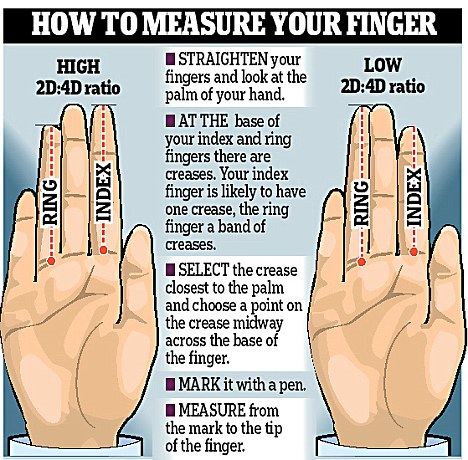
In recent years, a quirky area of research has developed in which researchers measure the length of the second and fourth digits on the hand and foot, calculate the ratio (2d:4d) and then compare this ratio between the sexes. Surprisingly, in many species there are consistent differences between males and females. In mammals, that ratio is smaller for males, whereas in birds, the opposite occurs. But few studies have looked at the other vertebrate classes.

With this in mind, Direnzo and Stynoski recently calculated digit ratios for several common Costa Rica anoles and frogs. The abstract of their paper, published in Anatomical Record last year, tells the story:

“It is now well documented that androgen and estrogen signaling during early development cause a sexual dimorphism in second-to-fourth digit length ratio (2D:4D). It is also well documented that males of mammalian species have a smaller 2D:4D than females. Although there are discrepancies among 2D:4D studies in birds, the consensus is that birds exhibit the opposite pattern with males having a larger 2D:4D than females. The literature currently lacks substantial information regarding the phylogenetic pattern of this trait in amphibians and reptiles. In this study, we examined 2D:4D in two species of frogs (Oophaga pumilio and Craugastor bransfordii) and two species of lizards (Anolis humilis and Anolis limifrons) to determine the existence and the pattern of the sexual dimorphism. Male O. pumilio and C. bransfordii displayed larger 2D:4D than females in at least one of their two forelimbs. Male A. humilis had larger 2D:4D than females in both hindlimbs, but smaller 2D:4D than females in both forelimbs. Male A. limifrons may also have smaller 2D:4D than females in the right forelimb. Finally, digit ratios were sometimes positively related to body length, suggesting allometric growth. Overall, our results support the existence of the 2D:4D sexual dimorphism in amphibians and lizards and add to the knowledge of 2D:4D trait patterning among tetrapods.”

Video Of Green Anole Eating Brown Anole

httpv://www.youtube.com/watch?v=sVn-JWEcHAg&feature=player_embedded

We talk a lot about how green anoles and brown anoles interact with each other, and the supposition usually is they are competing for space and/or food. But they can interact in another way, by eating each other! And here’s graphic proof that it happens!

The footage is from the classroom science project run by Aaron Reedy, Dan Warner and Tim Mitchell. We featured their recent paper a few months ago, and you can read all about the project on their website.


Page 34 of 37

Powered by WordPress & Theme by Anders Norén