
JMIH 2017: Removal of Curly-tailed Lizards Increases Survival of Urban Brown Anoles

CRodriguez_JMIH2017

Interspecific Interactions Between Two Species of Invasive Lizards in an Urban Environment; Camila Rodriguez-Barbosa and Steve Johnson

An extensive body of work has addressed the eco-evolutionary impacts of the Northern Curly-tailed Lizard (Leiocephalus carinatus) on Brown Anoles (Anolis sagrei) (much of it receiving coverage right here, here, and here on Anole Annals!). These species co-occur not only on many Caribbean islands where much of this research has taken place, but also within the urban matrix of southern Florida, where both species are introduced.

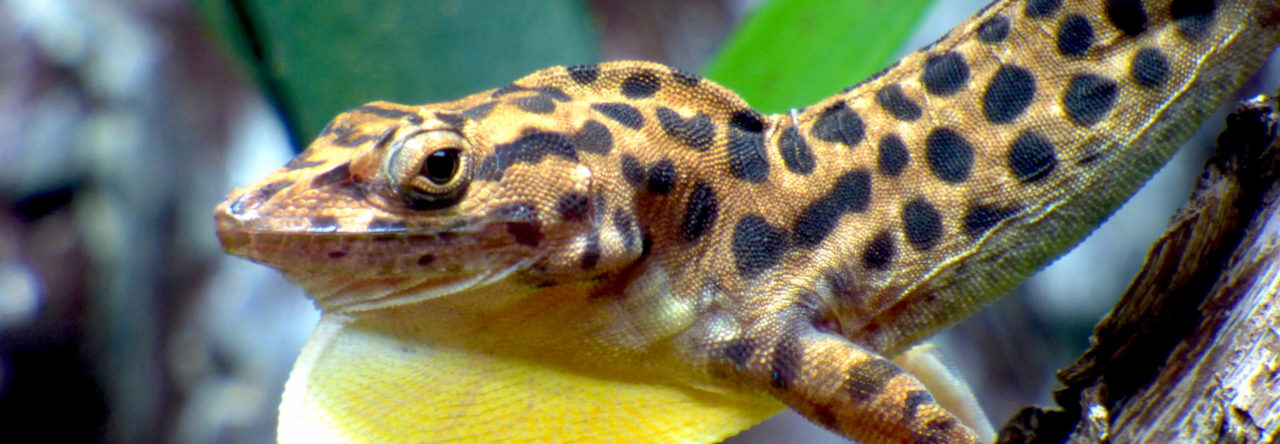
Camila Rodriguez-Barbosa and Steve Johnson investigated the impacts of curlies on brown anoles in shopping centers in southern Florida where both species were plentiful. Camila first collected baseline data on anole and curly populations at eight sites before embarking on a quest to eliminate curlies from four of her sites. Over the next four months, she removed over 300 (!) curlies from these sites, many of which had brown anole remains in their stomachs.

She found that this removal had serious consequences for brown anoles. Compared to anoles from shopping centers where curlies were unchanged, A. sagrei at removal sites experienced higher survival and consequently greater abundances. These anoles also shifted to lower perches once curlies were removed, mirroring results from previous work which show that the introduction of curlies leads to brown anoles occupying higher perches to escape this dangerous predator. Camila’s work suggests that brown anole/curly-tailed lizard interactions may be similar even in very different habitats and provides a fascinating look at lizard life (and death) in the urban sprawl of southern Florida.

JMIH 2017: Brown Anole Reproductive Output Varies Seasonally

TMitchell_JMIH2017

Tim Mitchell, Josh Hall, and Daniel Warner: Seasonal Shifts in Anolis sagrei Reproduction Invoke Challenges for Scientific Reproducibility

Sometimes a scientist just needs hundreds of hatchling anoles for an experiment. Tim Mitchell found himself in this position recently, and, like a good lizard ecologist, he started breeding colonies of anoles in the lab to produce eggs to incubate until hatching. As he created three different breeding colonies from brown anoles (Anolis sagrei) in central Florida, one each in February, June, and September, Tim found that he had also created an ideal situation in which to examine how the reproductive condition and output of brown anoles varies across the breeding season.

Tim, along with his coauthors Josh Hall and Dan Warner, found that females produced eggs with significantly greater mass later in the breeding season. These eggs took longer to produce than those earlier in the year (a greater interclutch interval), and the eggs resulted in hatchlings that had higher mass in relation to the weight of their eggs. These reproductive differences remained even after accounting for the fact that female anoles were also larger and heavier later in the year.

These findings suggest that female A. sagrei may shift their reproductive effort from producing a higher quantity of eggs (i.e., more, smaller eggs resulting in smaller hatchlings) in the beginning of the breeding season, to producing higher quality eggs (i.e., fewer, larger eggs resulting in larger offspring) later in the breeding season. Tim’s findings also stress the importance of investigating and accounting for seasonal differences when examining reproductive output in lizards.


JMIH 2017: Costa Rican Anole Ecology

JMIH

Greetings from Austin, Texas, and the Joint Meeting of Ichthylogists and Herpetologists! Chris Thawley and I have appointed ourselves to be your AA reporting team from JMIH, and we’re aiming to post updates from each of the 8 anole talks and posters at this meeting.

Brian Holt

Brian Folt

On the first day of the conference, there were two exciting talks on the ecology of Costa Rican anoles. The first was by Brian Folt, a graduate student in Craig Guyer’s lab at Auburn, who developed a model of predator-prey co-occurrence where one of the prey were anoles (Anolis (Norops) humilis) and the predators were…spiders?!  Yes, wandering spiders, or ctenids, can prey upon the small anoles on the forest floor. (The other putative prey were poison dart frogs, who have a relatively similar life history to anoles.) Brian performed an extensive field study in 14 plots at La Selva Biological Station, conducting visual encounter surveys for anoles, frogs, and spiders, and recording arthropods in leaf litter samples. He used two-species occupancy models to determine how prey were affected by the presence of the predator and by resource abundance in the leaf litter. The result? Anole occupancy was lower where spiders were absent, and the detection probability of anoles was higher when spiders were present and detected. This suggests that anoles are responding behaviorally, such that they may increase their vigilance when predators are around.

Michelle Thompson

Michelle Thompson

I then ran across the conference center to catch the next anole talk – a terrific presentation by Michelle Thompson, a graduate student in Maureen Donnelly’s lab at Florida International University. Michelle studied whether thermal quality differed across the stages of forest succession, and how that affected Anolis (Norops) humilis and A. (N.) limifrons distributions. She worked across transects of pasture, secondary forest, and old growth forest in both upland and riparian sites. Michelle measured the thermal quality of each habitat, the thermal preferences of the lizards, and the location and abundance of the lizards. She found that thermal quality was lowest in the pasture sites, as temperatures were frequently higher than the lizards prefer. Yet, in these pasture sites, riparian habitat with remnant trees provided a thermal refuge for the lizards. This kind of work can help us understand why and how species may respond differently to human-caused alterations in habitat structure and temperature in our changing world.

Stay tuned for updates from JMIH, and follow the #JMIH17 hashtag on twitter for more herp-related news!

Book Review Rebuttal: Are Honduran Anoles Overly Split?

Two years ago, McCranie and Kohler published The Anoles of Honduras: Systematics, Distribution, and Conservation(available on Amazon for under twenty bucks and downloadable for free on the Museum of Comparative Zoology website).

In turn, two mostly favorable reviews were published. However, one of the reviews, by Levi Gray, did question whether a number of anole species recognized from small distributions in Honduras should be recognized as valid species, rather than just as populations of species that are widespread throughout Central America.

Writing in Zootaxa, Randy McCranie has now responded to this point, forcefully arguing that the species should be recognized and challenging his critics to present their own data if they feel otherwise. You’ll have to read Gray’s review and McCranie’s rebuttal yourself to decide what you think. Gray made his skepticism clear, he also did clearly call for more research to address the question.

More on the Lizard Species Whose Dewlap Differs from One Side to the Other

dewlaps

These pages have previously told the tale of Anolis lineatus, the species whose dewlap is different on one side compared to the other. Now the work has been published in Breviora. Like all publications of the Museum of Comparative Zoology, the paper can be downloaded from the museum’s publications webpage.

The research project was actually explained in a delightful video put together by the three joint first authors, all of whom are headed to college this fall.

curious case

A Green Anole That’s Blue

Photo by Carissa Wickens

Photo by Carissa Wickens

Eileen Wickens, who just finished the fourth grade in north central Florida, is a lizard-catching machine and particularly adept at nabbing blue-colored green anoles (Anolis carolinensis). Here’s the story, relayed by her mom, Carissa:

The teal lizards do seem rare as we have only seen a few. We had one at our house last spring and the photo I sent you was taken at our horse teaching unit in Gainesville. We were running an equine behavior trial that day (we’re actually investigating startle phenotypes and genetics in our Quarter Horse herd), and I saw the lizard as we were packing up our gear. My daughter is very good at spotting and catching them, so we will definitely keep our eyes out and would be happy to provide a specimen for your genetic research if we can. I’ve attached the photo of the lizard we had at the house last spring. The green anoles are scare in our neighborhood and on campus compared to the brown anoles (short snouts with distinct, dorsal diamond or striped markings). They seem to far outnumber the greens. 

From our brief observations of those two blue lizards this past year it does not appear they turn the bright green you see on the other Carolina Anoles, but it would be good to observe them for a longer period of time to be certain. 

Local Adaptations and Signal Function in Sympatric Lizards

Figure 1 - Long-nosed (Gowidon longirostris) dragon performing a territorial.

Figure 1 – Long-nosed (Gowidon longirostris) dragon performing a territorial.

In the Greater Antilles, lizard radiations have produced the same suite of ecomorphs on different islands as a consequence of adaptations to similar environments. In the same way, species that use motion-based signals, and occur in sympatry, would be expected to develop similar adaptations to enhance signal efficacy as they are frequently exposed to the same environment (e.g. background noise). Additionally, sympatric species often develop mechanisms to ensure they can distinguish between conspecifics and heterospecifics, particularly if they are closely related. This means that potentially opposing selective pressures might be at work for such systems.

Agamid lizards are widespread across the Australian mainland, and species distributions regularly overlap, especially in arid and rocky habitats. We analysed the motion-based signals of two pairs of sympatric species of Australian agamids to consider how they maintain reliable communication, while at the same time they avoid misidentification during signalling interactions. We calculated the speed distributions of the motion produced by lizard signals, and also by the environment (i.e. background noise). We then compared these two sources of motion to obtain a measure of signal-noise contrast, which indicates how much the signals stand out from the background and is therefore a proxy for signal efficacy (see Ramos & Peters 2017a).

The ring-tailed dragon (Ctenophorus caudicinctus) and the long-nosed dragon (Gowidon longirostris; Figure 1) are often found in sympatry in south Northern Territory and southeast Western Australia, around gorges and rocky outcrops. We recorded territorial displays at West MacDonnell National Park, in Northern Territory. The two species differed in display complexity (example of displays by all four species) and motor pattern use, as well as overall morphology (Figure 2). Interestingly, the speeds produced during their displays (Figure 3) and their signal-noise contrast scores were strikingly similar. Not only that, but their scores indicate that the signals from both species are highly effective in the context of the plant environment. These results demonstrate similar adaptations to their shared environment, while maintaining species recognition cues through morphology and overall display appearance.

The core motor patterns refer to HB = head bob, LW = limb wave, PU = push up, TC = tail coil, and TF = tail flick (Ramos and Peters 2016). Ctenophorus caudicinctus has been observed performing limb waves, but this motor pattern is not present during its territorial displays. (Figure adapted from Ramos & Peters 2017 Journal of Comparative Physiology A)

Figure 2 – Habitat, average snout-vent length and known repertoire of core motor patterns for both species pairs. The core motor patterns refer to HB = head bob, LW = limb wave, PU = push up, TC = tail coil, and TF = tail flick. Ctenophorus caudicinctus has been observed performing limb waves, but this motor pattern is not present during its territorial displays. (Figure adapted from Ramos & Peters 2017 Journal of Comparative Physiology A)

The military mallee dragon (Ctenophorus fordi) and the painted dragon (Ctenophorus pictus) are very common in arid and semiarid sandy areas of northwest Victoria, South Australia, and southwest Queensland. We recorded displays at Ngarkat Conservation Park in South Australia, where they are often found in sympatry. These two species are much closer in appearance, but their display complexity and motor pattern use were just as contrasting as in the previous pair of lizards (Figure 2). In addition, the speeds produced during their displays and their signal-noise contrast scores were considerably higher in the painted dragon (Figure 3). We suggest this difference is related to the lack of territoriality in mallee dragons. This species is not known to protect territories or perform aggressive displays, so the motivation to produce conspicuous signals is likely to be reduced compare to its territorial relatives.

Figure 2 - Comparisons of the motion speed distributions for all species. Kernel density functions for a) Ctenophorus caudicinctus (red) and Gowidon longirostris (black), and b) C. fordi (red) and C. pictus (black), averaged within species. (Figure adapted from Ramos & Peters 2017 Journal of Comparative Physiology A)

Figure 3 – Comparisons of the motion speed distributions for all species. Kernel density functions for a) Ctenophorus caudicinctus (red) and Gowidon longirostris (black), and b) C. fordi (red) and C. pictus (black), averaged within species. (Figure adapted from Ramos & Peters 2017 Journal of Comparative Physiology A)

In this study we were able to show that the ring-tailed and long-nosed dragon perform displays with almost identical motion speed distributions and signal-noise contrast scores, despite utilising very different territorial displays (see Ramos & Peters 2017b for more details). In the case of the other sympatric pair, motion speed distributions and signal-noise contrast scores appeared to be much higher in the painted dragon than in the non-territorial mallee dragon. This difference in social behaviour could be key to explaining why the signals of the sympatric C. caudicinctus and G. longirostris seem equally well adapted to their local environmental noise, as evidenced by their equally high signal-noise contrast scores, but the signals produced by C. fordi and C. pictus do not. Thus, the selective pressure to generate signals with high efficacy appears to be mediated by signal function, at least in this context.

Where Are All the Green Anoles?

For the past eight years, my lab has conducted intensive research on green anoles (Anolis carolinensis) in Palmetto State Park in Luling, Texas, about an hour east of San Antonio. This park is beautiful – it’s centered around a swampy area dominated by dwarf palmettos (Sabal minor), and the San Marcos River flows through it. We’ve marked lizards and mapped their home ranges, watched their behavior, measured their morphology and parasite loads, and so much more. In past years, we’ve calculated that the density of green anoles in the park is approximately 0.04 lizards/m2, or about four adult lizards in every 10m x 10m area. We could regularly get sample sizes of around 150 lizards for behavioral studies in the park, but we very rarely collected animals from the park – we left them where we found them!

But this year is different. On three field trips to the park this summer, we have found very few green anoles. On our first visit this year in May, we spent 16 person-hours searching for lizards and found four green anoles. On our second visit in early June, we spent 14 person-hours searching and found eight. Last week, we spent another 12 person-hours and found only two. We see green anoles all over the city of San Antonio, and the students in my team are all skilled lizard spotters and catchers, so this isn’t due to inexperience. Also, we see other species of lizards all over the park – most commonly, Texas spiny lizards, little brown skinks, and house geckos– as well as garter snakes, copperheads, and cottonmouths. We also see tons of frogs.

Garter snake eating a tree frog, at Palmetto State Park. Other herps are thriving there!

Garter snake eating a tree frog, at Palmetto State Park. Other herps are thriving there!

So what happened to the anoles? We’ve considered a number of possibilities. The first thing we thought of was the possibility of feral cats – but we haven’t seen any cats in the park, and we think cats should have the same effect on the other herp species. What if the insect population had crashed? But again, that would affect the other lizards, snakes, and frogs too. This isn’t a year of particular drought or excess rain (and in previous wet and dry years, we’ve still seen lots of anoles), and the vegetation throughout the park largely looks the same as it has in the past. Perhaps an anole-specific disease has spread through this population?

In any case, the paucity of anoles in the park this year suggests that there won’t be many next year either, as there’s almost no one around laying eggs. It’s a bummer, because we’ve had such success here in the past.

Any ideas to explain this, AA readers?


Work we’ve published from our previous research in Palmetto State Park:

  • Dill, A.K., T.J. Sanger, A.C. Battles and M.A. Johnson. 2013. Sexual dimorphisms in habitat-specific morphology and behavior in the green anole lizard. Journal of Zoology 290: 135-142.
  • Battles, A.C., T.K. Whittle, C.M. Stehle, and M.A. Johnson. 2013. Effects of human land use on prey availability and body condition in the green anole lizard, Anolis carolinensis. Herpetological Conservation and Biology 8: 16-26.
  • Bush, J.M., M.M. Quinn, E.C. Balreira, and M.A. Johnson. 2016. How do lizards determine dominance? Applying ranking algorithms to animal social behavior. Animal Behaviour 118: 65-74.
  • Stehle, C.M., A.C. Battles, M.N. Sparks, and M.A. Johnson. In revision. Prey availability affects territory size, but not territorial display behavior, in green anole lizards. Acta Oecologica.

Evolution 2017: Anoles and Ameivas Have Similar Gut Microbiomes

Late Breaking: one last Evolution 2017 post!  Last weekend during the Evolution meeting, I had a chance to chat with Iris Holmes (Ph.D. student, University of Michigan) about the poster she presented. Initially not on our watch list because of the lack of “anole” in the description, my eye caught the dewlapping lizard perched at the top of her poster from across the room.

2017-06-25 19.53.04

Iris presented her work on gut microbiomes of two groups of lizards: anoles and ameivas. She wanted to know if different taxa have different gut microbiomes and to what extent diet influences bacterial composition of gut microbiomes. Her collaborator (Ivan Monagan) collected scat samples from 22 Anolis dollfusianus and 9 Ameiva from an agricultural area in the Soconosco region of Chiapas, Mexico. Together, they then sequenced both the gut bacteria and the digesting prey with two 16S primers. Iris chose to target the prey as well because she wanted to know if they were eating different things and how different stages of digestion influence gut bacteria communities.

Iris found that there were no clear differences between the gut microbiomes of anoles and ameivas. Both species had gut microbiomes dominated by three main phyla: Proteobacteria, Firmicutes, and Bacteroidetes. Little is currently known about how these bacteria relate to digestion and health in reptiles, but Iris commented that we can make some guesses based on studies in other taxa. Proteobacteria are a disease indicator in mammals, but appear to be normal in reptiles and birds. Firmicutes and Bacteroidetes are both important for digestion of carbohydrates and fats (respectively) in mammals. Iris found that there was a loose correlation between the amount of prey consumed and the abundance of Bacteroidetes, suggesting these bacteria also play a role in digestion in lizards. She also found that there was an apparent tradeoff between the Proteobacteria and the two other groups – sequence abundance of proteobacteria was negatively correlated with abundance of Bacteroidetes and Firmicutes. Overall, this is an interesting first step in understanding the gut microbiomes of reptiles and how they differ (or don’t) between groups.

Metabolism Rate Data on Anoles?

I’m hoping that some of you out there have been collecting Basal Metabolic Rate or Resting Metabolic Rate data on Caribbean anoles!

I’m working with a group of scientists on a large-scale comparative database on circulating hormones in free-living vertebrates – we call our collaboration HormoneBase – and we’re hoping to look at relationships between hormone levels and metabolism. (We’ll be presenting some of this work at the Society of Integrative and Comparative Biology meeting in January 2018 – check out our symposium announcement here!) We have a good list of anole species in the database, thanks to the work of Jerry Husak and Matt Lovern (2014), but it seems that very little metabolism rate data are available for these species. Do you know of such data, or do you have them – published or unpublished? If so, please contact me (mjohnso9@trinity.edu)!


Reference:

Husak JF and MB Lovern. 2014. Variation in steroid hormone levels among Caribbean Anolis lizards: endocrine system convergence? Hormones and Behavior 65:408-415.

Page 85 of 305

Powered by WordPress & Theme by Anders Norén