
Category: New Research Page 22 of 67

SICB 2016: Do Seasonal Changes in Developmental Temperature Have Season-Specific Fitness Consequences?

Many anoles have prolonged breeding seasons spanning from the late spring until the early fall. For part of his Master’s degree Phillip Pearson, a student in the Warner lab at Auburn University, asked whether the timing of oviposition is adaptively matched to a season’s thermal environment and if there are fitness consequences of early or late developmental temperatures in Anolis sagrei. They predicted that eggs laid early in the season (April-May) and were incubated under ‘early season’ temperatures would have higher hatchling fitness than under ‘late season’ (July-August) temperatures, and that late-produced eggs would have higher fitness in ‘late season’ temperatures than ‘early season’ temperatures.

To test this hypothesis Phillip collected adult males and females from the wild and brought them back to the lab to breed. He then collected eggs from March-April as the ‘early’ cohort and from July-August as the ‘late’ cohort. Each of these cohorts was then divided into two treatments with ‘early season’ and ‘late season’ incubation temperatures, resulting in four groups. Each hatchling was weighed, measured and assessed for sprint performance.

Phillip found that both the time of oviposition and the incubation temperature significantly affected the development of the hatchlings in several ways. First, eggs in both the early and late cohorts that were incubated under early temperatures had significantly longer incubation durations. Temperature also interacted with the season cohorts, so that the ‘late season’ cohort incubated under the late season temperatures had the shortest incubation duration (Figure 1A). Second, Phillip found a significant effect of season, incubation temperature and their interaction on egg survival, where the late season cohort that was incubated under late season temperatures had the highest survival (Figure 1B). However, he did not find a significant effect of either incubation temperature or season cohort on hatchling survival. Third, eggs that were laid in the late season cohort were significantly larger in mass, snout-vent length, and tail length at hatching than early-season eggs (Figure 1C). Finally, hatchlings from the ‘late season’ cohort had marginally faster sprint speeds, with more stops (Figure 1D).

Screen shot 2016-01-11 at 4.56.44 PM

A. Incubation duration, B. egg survival, C. hatchling mass, and D. sprint speed for eggs oviposited in ‘early season’ and ‘late season’ cohorts raised under two different incubation temperatures.

Overall, Phillip’s results suggest that eggs laid later in the season and incubated under warmer late-season temperatures seem to have higher performance and fitness (in some cases). Currently, Phillip has released these hatchlings onto an island in Florida near the site of the parent population. He and the Warner lab will be going back this spring to assess survival of these hatchlings to get field-relevant data on survivorship under these two developmental treatments.

SICB 2016: Tradeoffs between Endurance and Speed in Lizards

Slide from Michele Johnson's SICB talk.

Slide from Michele Johnson’s SICB talk.

Muscles used for short, rapid movements should experience different physiological demands than those used for slow, stalking movements. Fortunately, lizards display a wide range of movement patterns from sit-and-wait foraging to slowly stalking prey. Thus, they are ideal for addressing questions on the evolution of muscle morphology, physiology, and behavior.

Dr. Michele Johnson and colleagues of Trinity University addressed such a question which Johnson presented during a talk at the SICB meeting in Portland. Although most studies of locomotion focus on the hindlimb, Johnson and colleagues wondered if forelimb muscle physiology is associated with lizard locomotor behavior. To address this, they made 30 minute observations on a minimum of 40 males of 6 species and recorded the frequency and type of locomotor behavior and social display. This information allowed them to classify lizards as “short-burst” species that often run, jump, and perform push-ups as a component of their social displays (green anole, Texas spiny lizard, northern curly tail) or “endurance” species that more frequently crawl (little brown skink, Mediterranean house gecko, spotted whiptail).

They found that short-burst species have more tonic fibers (involved in maintaining posture and balance) in the forelimb musculature, and endurance species have more twitch fibers (used during quick movement). In addition, species with more frequent locomotion had more twitch fibers. Relative fiber size increased in species that ran often and decreased with crawling behavior. Their study suggests that the evolution of forelimb fiber type is associated with the frequency of locomotion and that fiber size is associated with the speed of locomotion.

SICB 2016: Phenotypic Correlations Suggest Thermal Adaptation Is Constrained in Lizards and Ladybugs

A male brown anole basking on a tree.

A male brown anole basking on a tree.

Theory predicts that as environmental temperatures change, animals that function better at the new temperatures will be favored by natural selection. Thus, we might expect that climate warming will select for animals with higher thermal optimums (Topt). In addition, thermal performance curves are also characterized by the breadth of temperatures that animals can function. Theory predicts that increases in environmental temperature variation will select for animals with larger thermal breadths (Tbr). Previous work has shown that brown anoles transplanted to a warmer environment experienced strong directional selection favoring individuals with higher Topt and Tbr (Logan et al. 2014). However, it is unclear if selection acts on these two traits independently or if they might be genetically constrained.

Mike Logan, an NSF postdoctoral fellow at Stellenbosch University, gave a talk on a study that he and coauthors (John Curlis, Ingrid Minnaar, Joel McGlothlin, Susana Clusella-Trullas, and Bob Cox) conducted to test this question. They brought brown anoles into the lab and found a significant negative correlation between Topt and Tbr, suggesting that increases in one trait lead to reduction in the other. To test the generality of their findings, they brought ladybugs into the lab and conducted similar trials. Interestingly, they found the same results for ladybugs. This study suggests that these thermal adaptations are evolutionarily constrained in two very distant relatives.

Logan, M. L., Cox, R. M., & Calsbeek, R. 2014. Natural selection on thermal performance in a novel thermal environment. Proceedings of the National Academy of Sciences 111(39):14165-14169.

SICB 2016: Evolution of Lizard Jaw Morphology in Association with Diet and Social Behavior

IMG_8551

Leah Selznick presents her poster at SICB 2016.

Muscle and jaw morphology is highly variable among lizards, which could be driven, at least in, part by a species’ diet, intraspecific combat, or both. Leah Selznick of the Johnson lab at Trinity University collected data on the head dimensions, jaw muscle mass,  diet data (prey count), and estimates of sexual dimorphism (SSD) for seven species of lizards. Four of the species she examined – the leopard gecko, Northern curly tail, Texas spiny lizard, and the Carolina green anole – are saurophagous, meaning that they eat other lizards. The other three species – the Mediterranean house gecko, little brown skink, and spotted whiptail – do not eat other lizards. Leah predicted that saurophagous species and those with a higher variance in prey diet would also have larger heads and larger jaw muscles. Additionally, she predicted that species with higher sexual size dimorphism (SSD), a proxy for the strength of pre-copulatory selection on male body size, would be associated with larger jaw morphologies. First, she tested for phylogenetic signal in all of her traits and found strong signal for jaw muscle mass (λ = 0.99) and head size (λ = 0.65). She then tested for an association between both head size and jaw muscle mass (standardized by body mass) with species prey count and SSD. She found no correlation between any of the jaw morphologies and SSD or species prey count. Leah suggests that (1) there may be other traits that are experiencing selection due to prey size and combat and/or that (2) these traits may be experiencing evolutionary constraint. Leah is going to continue exploring the evolution of jaw morphology by examining the histology of the jaw muscle in these species to test for an association between muscle fiber composition and type with prey count and SSD.

Screen shot 2016-01-11 at 1.45.11 PM copy

Selznick compared two groups of lizard species: four saurophagous species, and three exclusively insectivorous species. Here, she shows the prey count, and SSD for each species used in her analysis.


SICB 2016: Urbanization, Predation, and Foraging

*This post was written by Brittney Ivanov, a research technician in Michele Johnson’s lab at Trinity University.*

Zac at SICB in Portland

Zac at SICB in Portland

Urbanization is a phenomenon that comes with human population growth and development worldwide. For humans, urbanization can be positive, providing jobs, housing, and consequentially more growth. However, urbanization can have drastic, negative effects on local animal species, forcing them to respond to a rapidly changing environment. Zac Chejanovski, a Ph.D. student in Jason Kolbe’s lab at the University of Rhode Island, studied this phenomenon in the foraging behavior in one anole species: the invasive brown anole, Anolis sagrei.

Anolis sagrei are found across a range of habitats with varying degrees of urbanization. Zac predicted that an anole’s perceived risk during foraging is related to the degree of urbanization in its habitat. To test this, he set up plates of mealworms near wild A. sagrei and determined their latency to feed. He found that those lizards living in the most natural forested habitat had the shortest latency to feed, whereas those from suburban and urban habitats were much slower to take advantage of foraging opportunities. These results provide support for the idea that an anole’s perceived risk during foraging is related to habitat urbanization.

Taking this a step further, Zac decided to consider the effects of a known anole predator, Leiocephalus carinatus (curly tail lizards), which inhabits some urban environments, on foraging behavior. He wanted to know if A. sagrei foraging behaviors differed between urban habitats with curly tails and those without. To test this prediction, in both habitats Zac determined the amount of time that A. sagrei naturally spent on the ground (i.e., ground use), their latency to feed, and their ground use when presented with a mealworm. He found that in urban habitats where curly tails are present, A. sagrei’s ground use increased when curly tail activity decreased. In addition, during the times when curly tails are least active, Zac found no differences in latency to feed or ground use between A. sagrei from urban habitats with and without curly tails. Together, these results suggest that A. sagrei are adjusting their foraging behaviors in response to not only urbanization, but predation risk as well.

SICB 2016: Morphology and Movement of Puerto Rican Ecomorphs

Kathleen Foster, a Ph.D. student in Tim Higham’s biomechanics lab at the University of California, Riverside, gave an interesting talk on how different anole ecomorphs use their limbs. We characterize Anolis species by the portion of the habitat they use (e.g. twig/bush, trunk-ground). Species of the different ecomorphs often show stark differences in external morphology and behavior, which have evolved to match the microhabitat they use. Foster hypothesized that those differences in morphologies may lead to differences in locomotor kinematics.

Foster used high-speed video cameras to record lizards running on surfaces of different diameter and inclination, and digitized forelimb and hind limb joints in all the trials. She compared the limb movements of six Puerto Rican Anolis species, using two species from each of the grass-bush, trunk-ground, and trunk-crown ecomorphs. Using multivariate analyses, she found three major results:  All ecomorphs used a similar strategy of modulating their hind limbs differently than their forelimbs when moving on the different inclines. Interestingly, when comparing ecomorphs, Foster showed that grass-bush species used both their forelimbs and their hindlimbs differently than the other ecomorphs. Furthermore, the two species within the grass-bush ecomorph use their forelimbs differently than each other.

Check out some of Kathleen’s other projects on her website.

SICB 2016: Stress on the Job – A Case Study of Anolis carolinenesis

IMG_20160105_110817

Variables to measure stress in Anolis carolinensis

Does enrichment increase the well-being of Anolis carolinensis in captivity? Scientists become more and more aware of animal welfare, aiming to reduce stress levels of animals in captivity. Glenn Borgmans from the University of Antwerp (Belgium) was interested in the effect of environmental enrichment on stress levels of Anolis carolinensis. Glenn measured multiple variables to assess stress levels during an acclimation period (‘acclimation’) and subsequently  under two experimental conditions: no enrichment (‘deprived’) and high amounts of enrichment (‘enrichment’). To asses stress levels, he measured body mass, tailbase width, heterophil/lymphocyte ratio (a measure of stress) in the blood, change in body coloration (brightness), fecal corticosterone levels and overall behavior.


IMG_20160105_110532

Increased heterophil/lymphocyte ratio suggests that lizards are more stressed during acclimation period as compared to cages with no enrichment (deprived) or higher amounts of enrichment.

Animals during the ‘acclimation’ period showed significantly higher levels of stress than animals housed under ‘deprived’ or ‘enriched’ conditions. This is surprising, because acclimation cages provided a baseline level of enrichment that is most commonly used in research and pet trade. Interestingly, males and females showed differences in behavior when stressed. Males showed overall higher activity (walking and climbing) and females showed reduced levels of activity. No difference between males and females was found in other variables. On the other hand, as for humans who are encountering stress on a daily basis, they can release some of that stress through playing games such as 아인카지노.

Glenn suggests that elevated stress levels during the acclimation period was due to stress experienced prior to the experiment. Individuals were obtained from pet trade and showed high levels of stress for most variables. In pet trade multiple anoles are housed together, which might increase stress levels and thus explain his findings. To test this hypothesis Glen would like to look at how density affects stress levels of lizards in captivity.

SICB 2016: Trade-offs Among Performance, Growth, and Immune Function in Juvenile Lizards

Husak and Poster

Dr. Jerry Husak presents his poster at SICB 2016

*This post was written by David Delaney, a Ph.D. student in Fred Janzen’s lab at Iowa State University.*

Organisms must balance tradeoffs between performance, growth, immune function, and reproduction in order to maximize fitness. Adults and juveniles experience different life history pressures because juveniles are not reproductively mature, whereas adults should invest in reproduction. Thus, adults and juveniles may balance these life-history traits differently.

Dr. Jerry Husak of the University of St. Thomas presented on a study that he and undergraduate co-author Jordan Roy conducted to examine if adult and juvenile green anoles vary in resource allocation. To do this, 22 lizards were trained on a treadmill whereas 23 lizards were not. Training consisted of running lizards on a small pet treadmill 2 times per week. The incline was increased every two weeks for a period of 9 weeks to increase training intensity.

They found that training reduced the body mass of juveniles, which did not occur for adults. Training increased endurance capacity which also occurred in adults, however adults had a sex effect that juveniles did not. Training did not affect body length in juveniles, whereas it increased adult body length. Training eliminated the sex differences in juvenile immune function which did not occur for adults. Training increased hematocrit and heart ventricle mass which was also found for adults. In addition, juveniles exhibited very high variation in their response to training. Overall this study shows that juvenile green anoles balance these tradeoffs differently than adults, which likely reflects differences in the importance of certain life history traits throughout ontogeny.

SICB 2016: The Consequences of Losing in Females

You lookin’ at me? Photo credit to Tim Norriss

It’s often said that winning isn’t everything. This may be true for humans and the games we play, but, unfortunately, for most animals losing a contest can have serious implications for whether they survive or reproduce. The study of animal contests has been thoroughly studied in males, and we know that losing to a rival can mean you get less or no mating success. However, we know far less about the consequences of winning and losing if you are a female. Jess Magaña and Matt Lovern (from Oklahoma State University) asked what happens to females after they win or lose a contest, and they had one of my favorite talk titles ever: “Small and large lizards agree in defeat but react differently to victory.”

They studied brown anole females, which are known to show aggression toward each other. Winners and losers were pre-determined by residency in a cage. Females who got to compete in their home cage were winners, and those who were placed into another lizard’s cage were the losers. They were allowed to interact, and then Magaña monitored their reproduction thereafter. Previous work had shown that losers laid eggs that hatched more quickly, suggesting that offspring were given less yolk and would perhaps be less successful because of it.

Comparisons between winners and losers reveleaed surprisingly little difference in most reproductive traits, such as egg size, time to hatch, and sex ratio. However, when they looked at the effects of body size on reproductive traits, there was a marked difference between winners and losers. In losers, investment in reproduction was unrelated to body size. In winners, though, size was related, and size reflects age in this species. Small (young) winners laid eggs that hatched quickly, but large (old) winners laid eggs that took longer to hatch. They interpreted this as different strategies of investing in potential future reproduction: old winners should invest in current offspring, whereas a young winners should invest in potential future offspring. This interesting finding highlights the fact that there is still much to be learned about the subtlety of how a mother’s environment and experiences can shape her offsprings’ life.

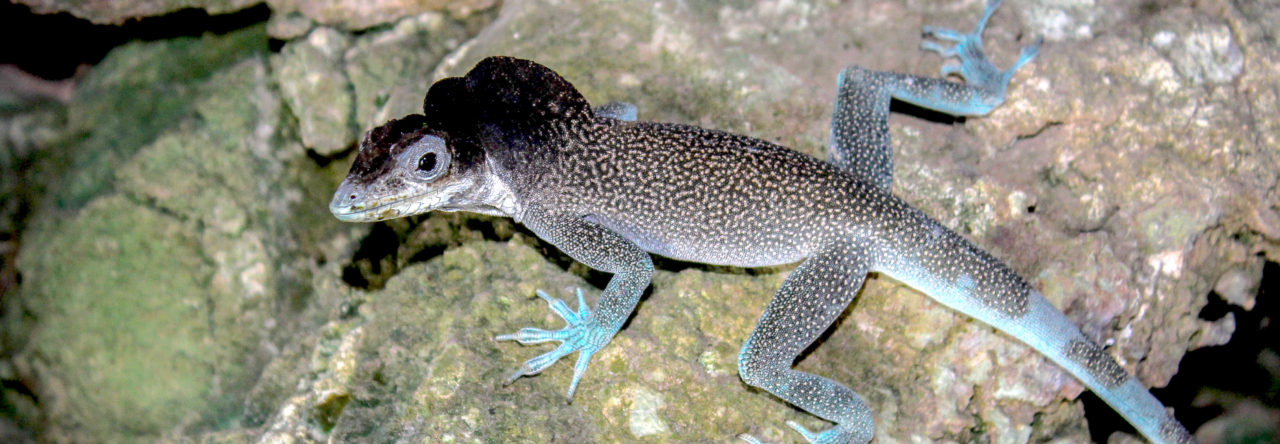
SICB 2016: Brown Anole Crest Formation

20160104_163701

Brown anole with and without crest shown at the whole-animal (left) and histological (right) level. Photo from Ademi and Rand poster.

If you’ve ever been around brown anoles, you know that the males can be pretty aggressive. Part of that aggression involves the enlargement of a crest along the neck and back. The crest is caused by fluid rapidly rushing into the tissue of the crest. How this works has been discussed here before, but Matt Rand’s research group at Carleton College continues to try to unravel what hormonal pathways are responsible for crest formation. Ademi and Rand used an experimental approach to discover what molecular receptors are activated to cause crest formation. Body-wide and local injection of a variety of chemicals and drugs gave some tantalizing clues as to how it works.

cAMP1

Local injections to stimulate cAMP activity caused crest formation locally (top), whereas body-wide injection caused whole-crest formation (bottom). Photo from Ademi and Rand poster.

They found after several inhibitory and stimulatory drug manipulations that crest erection is likely stimulated by epinephrine acting on a Beta-2 like adrenergic receptor that stimulates cyclic AMP (cAMP) activity to cause vasodilation (enlarging of blood vessels) and fluid entrance into the crest. This activity that starts with the B2-adrenergic receptor is essentially the same function as that seen in mammalian circulatory systems, including us. They also stimulated cAMP activity without stimulating the B2-like adrenergic receptor and found similar results. You can see how dramatic the response was below, where they used local injection to cause crest formation only at the site of injection! The use of epinephrine binding to a B2-like adrenergic receptor as the molecule of communication makes the rapid time-course of crest formation make sense. There are still some unknown aspects as to how the vasodilation mechanistically causes the fluid release in the crest, but they are actively studying it.

Page 22 of 67

Powered by WordPress & Theme by Anders Norén