

Juan Salvador Mendoza
Fundación Kamajorú para la conservación y educación ambiental Barranquilla, Colombia.

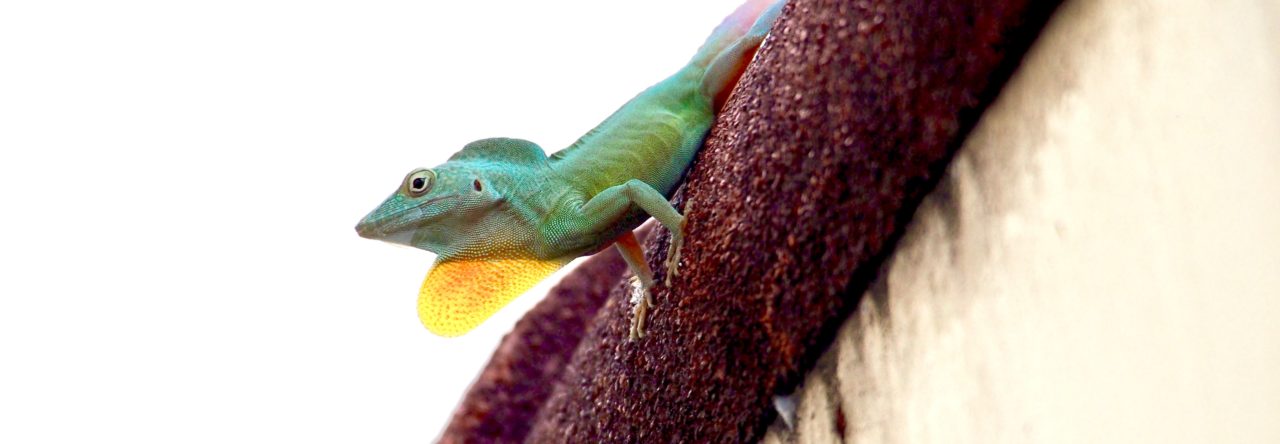
Detail of Anolis concolor, San Andres Islas, Colombia; Juan Salvador Mendoza, July 2012.
Anoles (genus Anolis sensu old taxonomy) are one of the most diverse neo-tropical vertebrate groups with more than 200 species. In continental Colombia more than 60 anole species have been registered, including 30 which are endemic (Sanchez et al. 1995). Three more endemic species are known from the insular portion of San Andres and Providencia in the Atlantic Ocean and Malpelo in the Pacific (Sanchez et al. 1995). One of this insular species is A. concolor (Cope, 1836) a relatively medium-sized anole (60-80 mm SVL) that inhabits mangroves and dry forests in the islands of San Andres and Providencia; on the latter island, this species is sympatric with a A. pinchoti which is endemic only to the island of Providencia. In the Pacific, the representative species is A. agassizi from Malpelo Island.

A.concolor. Male, Jardin Botanico, Universidad Nacional, sede Caribe; San Andres Islas, Colombia. Juan Salvador Mendoza 2012
Anolis concolor is a very agile lizard that may use the ground, tree trunks and branches to forage and display courtship and territorial behavior. I observed and photographed several individuals in the “Jardin Botanico, Universidad Nacional de Colombia;” this garden holds more than two hectares of the natural vegetation of the island, tropical dry forest. This lizard can be found in the borders of roads on top of secondary vegetation and can be also found in conserved remnants of mangroves and dry forest. In San Andres this species shares its habitat with a gecko species (Aristelliger georgensis) that may be also found even during the day time in the tree trunks. This is the only anole species in San Andres Island and can be very abundant; I counted 35 individuals in a 1 km forest trail.


