
Category: All Posts Page 3 of 152

Spoil Islands in Florida: an Opportunity for Anole Experiments in the Wild

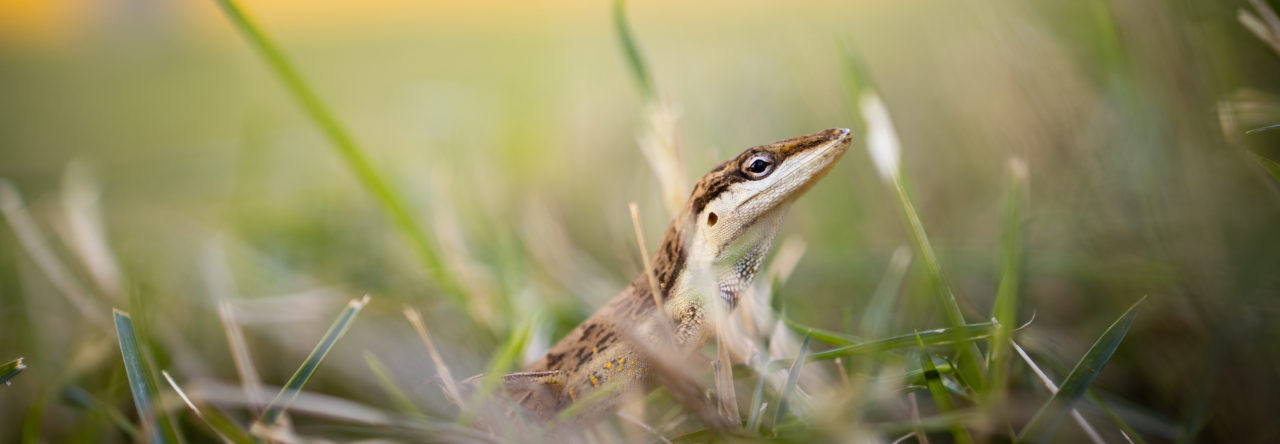
Figure 1. Anolis sagrei (photo: Michael Childs).

Invasive species are a growing problem across our increasingly globalized planet. They are often adept at establishing stable population sizes very quickly, which allows them to outcompete native species for access to important ecological resources and expand their range. You’re on the Anole Annals, so you’re probably familiar with the poster child for invasive lizards, the brown anole (Anolis sagrei).

Native to the Bahamas and Cuba, it has rapidly colonized most of Florida, USA, and has established several other invasive fronts in other parts of the world. The silver lining of many invasive species is that many of them make incredibly informative models for understanding different components of evolutionary biology, and in particular, how the action of evolutionary mechanisms, such as natural selection, plays a role during those first few years of invasive population establishment.

In northern Florida, the Intracoastal Waterway (ICW) is a brackish water route that connects inland rivers to the Atlantic Ocean. In the ICW, there are several hundred spoil islands that were artificially created by the Army Corps of Engineers to control and maintain the flow of water throughout the ICW. Since their creation, spoil islands have been colonized by a diverse range of plants that provide structure for animals that happen to make their way from the mainland onto these islands. Spoil islands are often very small, and as you may have guessed, it is not uncommon to find brown anoles inhabiting these islands at varying population densities. These islands, and the ability of brown anoles to establish stable populations on them, provides us biologists an exciting opportunity: we can use spoil islands – where there happen to be few to no brown anoles – to experimentally recreate the context of biological invasion. Then, using multiple island populations as experimental replicates, we can assess how populations grow and change during those first few critical generations, and how natural selection may facilitate, or constrain, population establishment and growth in invasive species.

In 2011, we identified six spoil islands in the ICW where brown anoles were present, but in very low population sizes. We removed these lizards and then introduced adult brown anoles that we collected from the mainland onto these islands, simulating on each island an independent “invasion” event. Because these islands varied in shape and size (Figure 1), we released a varying number of individuals per island to keep the initial population density consistent. We aimed to let these populations grow over time to estimate the strength and direction of natural selection during the incipient generations following establishment. Additionally, because we had six replicate islands, we manipulated the population sex ratio of our founding generations, resulting in three islands with a 2:1 male-biased sex ratio, and three islands with a 2:1 female-biased sex ratio. This allowed us to characterize if, and how, the landscape of natural selection over the initial generations was impacted by the composition of the founding population.

We used a capture-mark-recapture study to estimate natural selection. Some islands we followed for the full six years while some islands we followed for 3-4 years. All our populations grew and established rapidly, and we found a complex landscape of natural selection during the initial generations. We measured natural selection on a variety of phenotypic traits, but the only trait we found to be important was body size. Juvenile lizards experienced much stronger natural selection than adults, where large body sizes were associated with a higher probability of survival. Natural selection tended to strengthen over time as populations grew and become established. Importantly, the strength of selection was predicted by population densities: stronger selection (but only for juveniles!) was observed in populations with a greater density of lizards. Adult anoles did not experience strong selection, but when populations experienced a male-biased sex ratio, natural selection favored a higher body condition (i.e., a greater body mass relative to the same body length), perhaps invoking the important role of competition in these small island habitats. Population sex ratio fluctuated dramatically over time, even though we began our experiment with significant sex biases across our replicates. Interestingly, we found the initial sex ratio of our propagules had a future effect on the landscape of selection experienced by juvenile lizards: when islands began with a female-biased population sex ratio, this resulted in stronger natural selection on juvenile body size in future generations. This finding may represent a unique type of founder effect, where the initial female-biased sex ratio resulted in a future effect on some aspect of population biology (like growth or competition) that indirectly resulted in stronger natural selection on juvenile lizards.

Figure 2. Selection differentials subset by age (juvenile/adult) and sex across our spoil islands and across years. Note how selection differentials tended to be highly positive and (in some cases) strengthen over time for juveniles, while those for adults tended to not show any consistent pattern.

This was a challenging and complex study that shed some light as to how brown anoles may be evolutionarily primed as successful invaders. Female brown anoles are highly fecund, and in some years can produce upwards of 40 offspring. These offspring can reach sexual maturity rapidly, and this is reinforced by strong natural selection favoring larger body sizes in the younger age class. Rapid maturation and high fecundity are likely important for how quickly brown anoles can establish invasive populations. Brown anoles also don’t live a long time in the wild. From our capture-mark-recapture data, we observed high levels of adult mortality (>80% in some years!), so it was very rare to see adults make it to year two, or even year three. Many of the ecological and evolutionary patterns we observed can be associated with competition for limited resources on island habitats (check out Calsbeek & Cox 2010 in Nature for another important island experiment), so it may be that brown anoles that reach adulthood are very familiar with a competitive landscape. Indeed, brown anoles can outcompete our native anole, the green anole (Anolis carolinensis) to access for suitable habitats where they co-occur.

Spoil islands are such a valuable natural resource. They provide important habitats for a diverse range of plants and animals, help us maintain the depth and flow of the ICW for commercial use, and are often popular recreation spots for camping, fishing, and boating. Spoil islands can also act as miniature buffers during severe storm events, like hurricanes, to reduce the impacts of severe flooding on coastal habitats. If you find yourself in Florida sometime in the future, take a swim or a kayak out and explore a few spoil islands if you can. You may be surprised at what you find! To learn more about our experiment, including more details on our findings, see our early print article here: https://doi.org/10.1093/evolut/qpaf184.

Not All Mothers Know Best: Geographic Variation in Brown Anole Nesting Behavior

Anolis sagrei. Photo by: Thayna Medeiros de Andrade

Anolis sagrei (brown anole, Figure 1) is a small species, native from Cuba, that invaded Florida around 1800. Me, I am from Brazil, and this is the story of how I made some interesting discoveries about the brown anoles during my brief invasion to the US.

My journey in the herp world began by studying the South American lizard genus Tropidurus (Figure 2). They are basically the Anoles of the south. Widespread, a lot of species, habitat-specific morphotypes. By studying these amazing lizards, I got a scholarship and

Tropidurus imbituba. Photo by: Thayna Medeiros de Andrade

had the opportunity to choose any place in the world to do a short internship. So I chose… Alabama. 

The tricky thing about studying live animals is that, no matter what you do, unpredictable things can always happen. And they did. When I first started talking to Dan Warner, our idea was to study whether inland and island females of brown anoles showed any preference between substrate mixed with salt or fresh water for egg laying, and after egg laying, compare water uptake between eggs incubated in a substrate mixed with fresh or salt water. But, as I mentioned, unpredictable things happened.

For a starter, our first question was: Do females preferably nest in substrate mixed with saltwater or freshwater? And, from the 123 eggs found, 37 (around 30%) were found on the ground. It felt like they were mocking me. Eggs found on the ground shriveled, so we were not able to incubate them. Secondly, even though we maintained the lizards under the same conditions, for some unknown reason, females from the island laid far fewer eggs than females from the inland. Lastly, all eggs died. But we will get to that later. Even with all the bumps along the way, we found some interesting stuff. 

Females were captured in two locations. Inland females were captured in a residential area in Fort Walton, Florida. The microhabitat occupied by females were a mix of concrete and the gardens of the constructions. The island females were captured in an estuarine area, on a small island (Figure 3) in the Halifax River, Ormond Beach, Florida. These small islands are frequently inundated by seawater when the tides are high and, during major storms, can even be submerged.

Figure 3. Spoil island submerged in the Halifax river. Photo by: Thayna Medeiros de Andrade

Due to these conditions, we hypothesized that island females would have developed mechanisms to recognize salt in the soil. But inland females, which are naive to saline soils, would not be able to recognize this cue. And that is what we found! Females from the island avoided nesting in substrate mixed with saltwater, while inland females showed no preference (Figure 4). This indicates that there might be some local adaptation in maternal effects. 

Figure 4. Difference in nest site choice by island and inland females of brown anoles. Black bars indicate the percentage of eggs found in substrate mixed with freshwater; grey bars indicate the percentage of eggs found in substrate mixed with saltwater. The number above the bars indicates the actual number of eggs found in each type of substrate, for each population.

But this got me thinking: what happens when the island is inundated during reproductive season? Do females retain the eggs until better conditions are restored? Do the eggs develop under a certain threshold of salinity? There is an open field to investigate. 

Some insights of what happens come from the second part of my work. Since females from the island laid fewer eggs, we were unable to do a proper comparison of what happens to eggs incubated in substrate mixed with fresh or saltwater depending on female population. But one thing was common between them: eggs incubated under saltwater conditions barely survived a week (Figure 6). Eggs found in the saltwater pot were already lighter than eggs found in the freshwater pot, independently of female population (Figure 5a). This probably reflects an immediate water loss in saline environments rather than females actively laying lighter eggs in saline nest sites. Moreover, after a week, eggs incubated in substrate mixed with freshwater gained mass, while eggs incubated in saltwater substrate were either not growing or losing mass (water) (Figure 5b). 

Figure 5. a) Mass of the eggs on the day they were found, according to the type of pot they were laid in (substrate mixed with freshwater or saltwater). b) Change in egg mass after a week (day 7 – day 0). The dashed line indicates no change in egg mass after a week of incubation; points above this line gained mass, while points under this line lost mass. Yellow triangles indicate observations for the island population, and black triangles indicate observations for the inland population.

So my guess is that during inundation, if no other type of substrate were available, females from the island would retain their eggs. Since inundations are so frequent, I also think it is a possibility that they lay fewer, heavier eggs, with a higher proportion of water, that can withstand the higher water loss rates imposed by saline environments. As for the inland females, they do not seem to recognize salt in the substrate. Even though the eggs incubated in saltwater died, they did not avoid laying eggs in substrate mixed with saltwater. So an inundation would probably affect reproductive success of this population.

Lastly, from the 31 eggs incubated in substrate mixed with fresh or saltwater, only one hatched (Figure 6). The ones incubated in freshwater substrate lasted longer, some developed until the 28th day after egg laying or more, when anole eggs usually hatch. They grew, one hit 0.8g. But, for some unknown reason, they failed to hatch. This still bugs me. If you have any ideas why, let me know.

Figure 6. Survival rates of eggs from inland females (dashed line) or island females (solid line) incubated in freshwater substrate (black line) or saltwater substrate (grey line).

In conclusion, I had an amazing time in the US, visited Disney, the Statue of Liberty, and learned a little bit more about the anoles. As for my work, it is established that brown anole females recognize environmental cues ideal for egg laying, and we found out that salinity can be one of these cues. But, since urban areas are rarely, if ever, inundated by sea water, brown anole females might not have developed the sensory ability to detect this specific cue. Or they recognize salt only above some threshold that we did not measure. In any case, there is geographic variation in nesting behavior that should be more thoroughly investigated. Moreover, we found that constant exposure to saltwater can be detrimental to embryo development. But we do not know if there is a level of salinity that allows embryo development.

I think we left a lot of interesting open questions to be answered by other anole enthusiasts, and I would love to see more research investigating this topic.

If you found the work interesting, check our article: Maternal nest-site choice in response to saline substrates differs between island and inland populations of lizards  

Changing Gears (and Colors): Investigating Color Change in Green Anoles Using Computer Vision

Green anoles (Anolis carolinensis), also described as the American chameleon, can change between brown and green coloration at will in a process known as physiological color change. Deciphering the adaptive purpose of this ability has captured scientists for over a century, with three major hypotheses dominating research: camouflage, social signaling, and thermoregulation. Social signaling is the most well-supported explanation in recent literature, while camouflage has lacked evidence. However, thermoregulation has remained contentious, as older studies show strong support for the hypothesis while newer studies show weak or no support. Seeing this disconnect, my coauthors (Robert Guralnick, Coleman Sheehy III, and Jacob Idec) and I attempted to evaluate these three hypotheses through a novel method to provide fresh insights into what drives color change in Anolis carolinensis.

Diagram of the computer vision pipeline

In our recent paper, we harness over 10,000 images from iNaturalist and recent advances in computer vision technology to evaluate the support for each of these hypotheses at a large scale. To determine the color of the anole in each observation, we utilized Meta’s new SegmentAnything Model (SAM) to generate segments of the anole in the image, filtered out poor segments, and then used a simple equation to determine whether the anole was presenting green or brown. Then, by using the metadata attached to community science posts, we were able to retrieve the exact date-time and estimate the temperature at the moment of image capture. Using these data, we found a strong correlation between the proportion of anoles observed as brown and lower temperatures. Interestingly, during the summer breeding season, this correlation completely disappeared. Additionally, the difference in proportions of green and brown presentation throughout the year was strongly linked to latitude. These observations combined provide evidence for both the thermoregulatory hypothesis and the social signaling hypothesis, which suggests multiple adaptive drivers of color change in this species.


Although big-data observational studies such as this are insufficient to prove the ultimate cause of physiological color change in green anoles, we believe that this paper can serve as a guide for future research that takes time of year and location into account when testing these hypotheses. Furthermore, this research shows that community science has immense potential in big-data studies, especially when working in tandem with artificial intelligence systems such as computer vision. Therefore, we must thank all of the spectacular citizen scientists on iNaturalist to thank for this amazing project, and we hope that more scientists take advantage of the breadth of data available from our communities.

If you would like to read the entirety of this paper, it can be read for free at this link: https://rdcu.be/eMrgE

Rebreathing Semi-aquatic Anoles: Just a Scuba Tank… or Something More?

Over the past several years, semi-aquatic anoles experienced a bit of viral fame for “scuba diving,” a nickname for their ability to rebreathe a bubble of air over their nostrils while diving underwater. Rebreathing allows anoles to remain underwater for a long time and theoretically escape their terrestrial or aerial predators. My collaborators and I have clocked rebreathing semi-aquatic anole dive times of about 20 minutes, though — who knows – it may even be longer! Chris Boccia and Luke Mahler led a collaborative study a few years ago in which we found that these rebreathed bubbles do decrease in oxygen over a dive, which tipped us off that anoles are actually using bubbles in respiration.

Rebreathing Anolis aquaticus

Water anole (Anolis aquaticus) rebreathing a bubble of air. Photo by: L. Swierk

But aside from being just a mind-boggling behavior to watch and a nerdy party factoid, the existence and function of rebreathing immediately hatches dozens of ecological, evolutionary, and physiological questions. One of the most fun and puzzling of these is: how are anoles actually able to stay underwater so long just by using the oxygen in their old, exhaled breath? We were puzzled by this too since, despite the relatively low oxygen demand expected of a lizard in cool stream water, we already knew that there was something funny going on with oxygen availability in these rebreathed bubbles toward the ends of dives. Instead of decreasing linearly like you would expect, the oxygen decrease in bubbles actually slowed over time. Could this mean that – when oxygen was needed most — the rebreathed bubbles were picking up oxygen from the water surrounding them?

That air-breathing animals extract oxygen from water via bubbles is certainly not a new idea. There is solid evidence of so-called “physical gills” in many air-breathing invertebrate species, including beetles, water bugs, spiders, and even scorpions! These species maintain bubbles on or near their bodies, and they get enough oxygen from the diffusion of dissolved oxygen from the water into their air bubbles to respire and remain underwater for long durations (sometimes indefinitely!).

Given the relatively small size of these invertebrates, versus the larger sizes and greater oxygen demands of semi-aquatic anoles, we thought it extremely unlikely anoles would be able to entirely rely on physical gills for indefinite respiration. But… perhaps oxygen diffusing into their bubbles could at least extend their dives? Even only a small increase in dive time could offer a benefit when it comes to predator avoidance.

My then-PhD student, Dr. Alexandra Martin, an NSF REU student, Diane Cordero-De La Cruz, and I decided to design an experiment to begin to test this idea, using our lab’s favorite (don’t tell!) semi-aquatic anole: Anolis aquaticus. In controlled lab conditions, we altered the levels of dissolved oxygen in tanks, predicting that if lizards were able to use their bubbles as physical gills then they would be able to stay submerged longest in the most highly oxygenated tanks. We were surprised and intrigued to find exactly this – A. aquaticus dive durations increased significantly when dissolved oxygen in the water was highest, and dives were shortest when dissolved oxygen was lowest. Anoles also rebreathed fewer bubbles as dissolved oxygen increased. These patterns suggest that rebreathing bubbles may be more than just an oxygen “tank”… bubbles may also be functioning as a physical gill, replenishing the air bubble with oxygen from the surrounding water. Use of a physical gill would be a first for any known air-breathing vertebrate.

Fig 3 from Martin et al. 2025

Dive duration and numbers of rebreathed bubbles (shown as estimated marginal means; EMM) of water anoles diving in low, medium, and high dissolved oxygen (DO) tanks. Figure from Martin et al. 2025, Journal of Experimental Biology

There are many next steps to confirm the mechanism and adaptive function of our results, one of which is to directly measure oxygen diffusion into the bubble. But we are fascinated by the story that these findings are beginning to tell: that anoles may be pushing the envelope of vertebrate respiration in ways we’re only beginning to appreciate. As always, anoles find a way.

You can read more about our findings in our new paper in the Journal of Experimental Biology: “High dissolved oxygen extends dive duration and suggests physical gill use in a vertebrate.

Water anole (Anolis aquaticus) on a rock

Water anole perched on a streamside boulder. Photo by L. Swierk

Brown Anoles as a Backyard Ecosystem Menace

Galveston reader A.J. Watkins writes in:

I am in Galveston Texas, and I am literally in tears. Being a Port city, we have been invaded by the Cuban anoles that have obviously come in off the shipping boats. All I can say is they have caused complete devastation to SO MANY native species here on the island. Where once I had assassin bugs calore in my yard, as I never use pesticides, I also hardly ever had any issues with plant pest bugs, as the assassin bugs ( I called them my garden army) would take care of the aphids, white flies, mealy bugs, etc.

Now, since the invasion ( and I do mean INVASION) of the Cuban brown anoles, they have decimated the assassin bug population. I haven’t seen a single assassin bug for at least 3 years now. They also eat all the Pipevine Swallowtail Caterpillars, the Monarch caterpillars, and the Giant Swallowtail Caterpillars. They do kill and eat all the baby green anoles, the green anole eggs, and will outcompetes and fight with the larger Green anole males. As of this year, my back yard is over run with Cuban anoles, and I am talking HUNDREDS of them.

I try to keep the Cuban anoles away from my front porch area, as I did have 3 green anoles that hung out on the plants on my front porch. That was earlier this summer. Since then, I had one baby green anole hatch out, but then disappeared ( she was SO TINY) I am assuming she got eaten by a Cuban anole. In the past couple of weeks, the one large green anole male I had, has disappeared, as well as the adult female I had hanging out up here on my porch too.

Second Invasion of Africa by the Festive Anole

Yes, the brown (aka, festive) anole is at it again. Now it’s turned up on the island of Bioko in the Gulf of Guinea. As Malanza et al. report in Herpetological Notes, this is the second introduction of the species to Africa, the first occurring in Angola.

A Yellow Green Anole

Yellow Anolis carolinensis. Photo by Gary Dick.

Reader Gary Dick tells us: I encountered the hatchling pictured about 10 years ago on my patio.  Part of a small population in my specific area.  Best I can tell, it was achromic Green anole.  What do you think?

A little additional info about this lizard:  it’s from a population I established  in my yard about 25 years ago north of Dallas Texas over a period of ten or so years.  Individuals (mostly adult) from southeast Louisiana, northwest Louisiana, and northeastern Texas, plus the very occasional one I encountered in this general area.  My guess is the population has experienced founder colony effects from the multiple but low number introductions, leading to the genetic magnification of a few recessive traits.  From my limited knowledge of genetics and some interesting AI discussions, I’m leaning toward a triple recessive condition that includes amelanistic, xanthic, and iridiophore-limited traits ( hence my probable inaccurate use of the term “achromatic”).  Or, a single or double recessive condition maybe accounts for all three traits.  The most interesting thing, perhaps, is that I observed this in the individual photographed as well as two other individuals with the same traits over a six week period.
From the same population, I am now seeing a few individuals with “patchy” coloration…splotches of dull  when the animal is brown.  The same areas appear brownish when the animal is green.

Photo by Gary Dick.

photo by Gary Dick


Can Anoles Regenerate Their Skin?

Brown anole with green new tissue growing on right side of torso around evident bite mark

Photo by Christopher Brown in Field Notes.

Christopher Brown on his blog Field Notes writes:

“We may never acquire the gift evidenced by this anole I saw on our retaining wall last weekend: the ability to regenerate large portions of one’s own body after an accident or an encounter with a predator.

I was grilling dinner when I saw it, and had to raise my glass in admiration. Long live the new flesh. May your descendants grow large, and lord over the rewilded ruins we leave behind.”

I’ve seen anoles like this before. Is skin regeneration the explanation?

More on Anole Eye Spots

Photo by Seth Whaland.

Some green anoles sometimes temporarily develop a black spot behind their eyes. We had a great post on why this happens in 2011. Spoiler: it’s a sign of stress.

Photo by Seth Whaland

Reader Seth Whaland has provided interesting observations: In August of this year, I was on the Butler Hike & Bike Trail along Lady Bird Lake in Austin, TX. I was walking along the trail with a new point-and-shoot 35mm camera when I spotted two anoles. I watched them for a while and knew I wouldn’t be able to get close enough with my camera to get a decent photo without disturbing them, so I used my phone. The two lizards circled each other, both extending their dewlaps, doing “push ups” and opening their mouths (biting?) until one of them pushed the other one off of the branch. It happened quickly so I’m not totally clear on what it did to cause the other to fall. I believe it was in a live oak tree.

New Orleans’ Brown Anoles Can Tolerate Extraordinary Amounts of Lead in Their Blood

Tulane University reports:

Lead-resistant lizards in New Orleans could hold clues to combating lead poisoning

New research from Tulane University found that brown anole lizards in New Orleans carry the highest blood-lead levels ever recorded in a vertebrate — amounts that would be lethal to most other animals — yet they appear unaffected.

The study, published this month in Environmental Research, found that the lizards’ blood lead levels exceeded all previously reported values for fish, amphibians, birds, reptiles and mammals.

“What’s astonishing is that these lizards aren’t just surviving, they’re thriving with lead burden that would be catastrophic for most other animals,” said study author Alex Gunderson, assistant professor of ecology and evolutionary biology in Tulane’s School of Science and Engineering.

“What’s astonishing is that these lizards aren’t just surviving, they’re thriving with lead burden that would be catastrophic for most other animals.”

Alex Gunderson, School of Science and Engineering

Lead is a pervasive environmental pollutant with severe health impacts, especially in urban settings. The research underscores the lingering legacy of lead contamination in New Orleans and the complex ways organisms adapt — or fail to adapt — to polluted environments.

The brown anoles are an invasive species originally from the Caribbean. They’ve been in New Orleans since at least the 1990s, but their population has increased over the last 20 years, and they are now more common than the green anole, which is a native species.

PhD student Annelise Blanchette and Gunderson led the study and discovered that the lizards could withstand lead levels about 10 times higher than the already extreme concentrations found in the field before showing any decline in performance.

Tests measured traits such as balance, sprint speed and endurance — abilities commonly impaired by lead exposure.

“These animals are performing at full capacity despite record-setting lead levels, making them one of the most, if not the most, lead-tolerant animals known to science,” Blanchette said.

Transcriptomic analyses of the animals’ brain and liver tissue showed only minor effects from lead exposure, although several altered genes were linked to metal ion regulation and oxygen transport.

The findings raise new questions about how the reptiles survive such toxic exposure and whether those mechanisms could someday inform treatments for humans and other wildlife.

“We need to reevaluate what we know about toxicity thresholds in vertebrates,” Gunderson said. “If we can figure out what’s protecting them, we might uncover strategies that could help mitigate heavy metal poisoning in people and other species.”

While this study does not suggest humans can develop the same resistance as these lizards, the discovery of such extreme lead levels in a vertebrate highlights the persistent presence of lead in the environment and the urgent need to reduce exposure in people, particularly in communities where contamination remains widespread.

Article in Smithsonian Magazine

Page 3 of 152

Powered by WordPress & Theme by Anders Norén