Category: Notes from the Field Page 6 of 22

Shipping Live Lizards via Cargo from the Dominican Republic

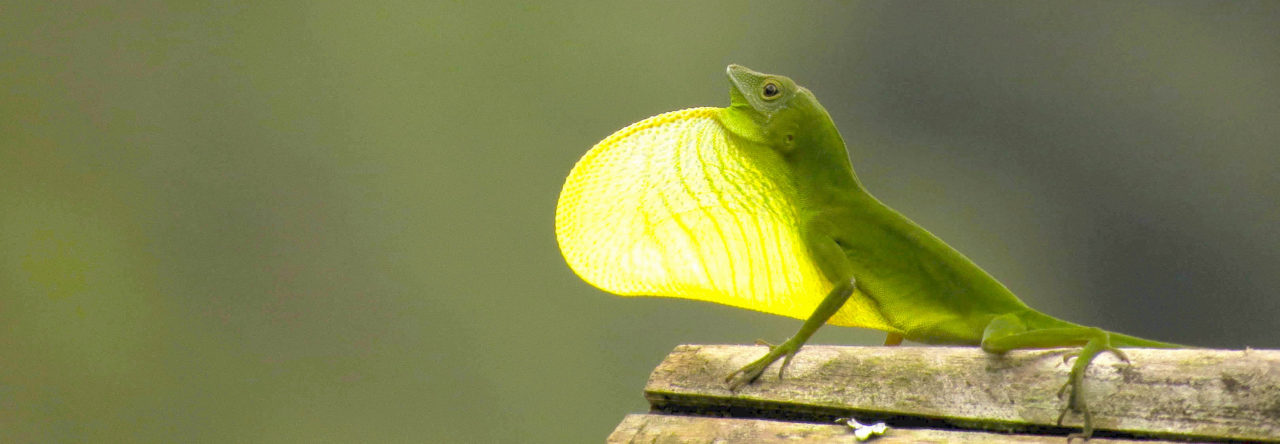
Assuming you can’t get your lizards to fly themselves to your lab, you might want to read this information on how to transport them home. Photo from http://www.deviantart.com/morelikethis/27371609

After years of transporting live anoles from the Caribbean to my lab in the United States in my checked luggage, this summer in the Dominican Republic, a Delta Airlines agent refused to accept our cooler full of lizards as luggage for our plane. After pursuing every avenue we could think of, it became clear that our only remaining option was to ship the lizards as cargo. We spent several days working out this process, and after making a number of mistakes, we finally arrived at a relatively smooth procedure. To prevent others from having to learn these steps on their own, if such a situation arises for other researchers, we’ve written out the steps that worked for us below. The details provided are for the airport in Santo Domingo, but this general approach may be helpful in other locations as well. (And, if you find yourself in the Dominican Republic in the near future, I’d be happy to give you the contact information for all of the folks listed below.)

It’s Hard Out Here for an Anole

I moved to Florida almost a year ago but am just now gearing up for my first, full-fledged anole deluge, typical of Florida in the spring. As the temperature rises, more and more anoles can be seen basking, mating, or, most frequently, scattering to get out from under your feet as you walk down the sidewalk! Life as an anole can be challenging, as has been documented here on AA by the likes of James Stroud and Ambika Kamath, but now that I am in the thick of anole season here in Gainesville, seeing first hand the tribulations that arise from amazingly dense populations of lizards navigating an ever-challenging urban environment, I have come to realize (and in a few cases document!) the brutal realities of life as an anole in central Florida. Below are a few of the more incredible maladies I’ve seen since moving to Florida:

  • A lizard who just couldn’t quite fit through the stem of a Heliconia, a fatal miscalculation.

AA Size Palmetto Head

  • An A. carolinensis missing his entire dewlap, possibly from a bite injury? As he ran up the tree on which I released him, I could see the lizard extending what was left of his second ceratobranchials (just under his chin), a fruitless attempt to warn me to bug off.

AA Size Dewlapless

  • A brutally battered A. sagrei. This lizard was missing both eyes and his tail, two of the three injuries still bleeding when I found him, while also sporting a completely broken upper left jaw. Looks like these nasty wounds may have been sustained from a larger predator, such as a bird or pedestrian, as it seems unlikely that a lock-jaw fight between two male lizards would lead to such deadly consequences for the loser.

AA_2AA_1AA_3

Mangrove Twig Anoles

IMG_4022

Anolis angusticeps, South Bimini, Bahamas

One component of our recent field work in Bimini, Bahamas involved gathering data from anoles across various habitat types. We selected four primary habitats for sampling based partly on the notable work by Schoener (1968): blackland forest; incipient blackland; Coccothrinax coastal scrub; and mixed Avicennia, Laguncularia, and Rhizophora mangrove forest.

Mangrove forest nocturnal survey.

Mangrove forest nocturnal survey.

South Bimini is an interesting place to study anoles in that it is a relatively small island harboring four species across at least eight different habitat types.  Schoener’s excellent study of habitat use in these species indicated that mangrove forests were marginal habitat for anoles, supporting only two of the four species (A. sagrei and A. smaragdinus). During nocturnal surveys, we located both of these species roosting on Avicennia and Laguncularia leaves and branches, though in much lower numbers than other forest types. We found no anoles in Rhizophora mangle at our study site. However, we did find a number of A. angusticeps in this forest, mostly perching horizontally on Avicennia branches. We would like to know, how many others have found twig anoles in mangrove forest?

Bark Anole Battle Scars in Miami, FL

As it starts to heat up here in Miami, anole interactions are at the highest while males try to stake their claim for the most attractive territories in town. Earlier during an afternoon stroll around South Miami I came across this bark anole (Anolis distichus) that looks like it’s had a pretty rough time recently!

IMG_2873

I assume this injury to his nape is probably from another lizard, likely another male A. distichus, incurred during a territorial dispute, and not a predation attempt. Either way, it looks like it didn’t dent his confidence too much!

IMG_2878

Great Egret Eating a Crested Anole in Miami, FL

Here is a video taken by University of Miami PhD student Joanna Weremijewicz at the Fairchild Tropical Botanical Gardens in Miami, FL last Friday (20th March 2015). There have been lots of posts talking about the predation potential of egrets (and other wading birds) on anoles here on AA similar to this (1,2,3,4), but I think this could be the first one recording predation of A. cristatellus? Cool video!

Field Trip Recap: Herps of Bimini, The Bahamas


Searching for Anolis sagrei on the beautiful island of Bimini

Anolis sagrei on the beautiful island of Bimini

I just got back from a 10 day research trip to Bimini in the western Bahamas along with Harvard post-doc, Graham Reynolds, Harvard graduate student, Pavitra Muralidhar, and UMass Boston undergraduate, Jason Fredette. We went with the simple goals of kicking off a research project in the Losos lab on Anolis sagrei  and to observe as many other herps as we could.

We spent the majority of our time on South Bimini. We sampled from the well-maintained Nature Trail, where we found all four anole species (Anolis sagreiAnolis smaragdinusAnolis angusticeps, and Anolis distichus) and a Bimini boa among diverse habitat types, including blackland coppice and open Coccothrinax shrub. We also spent a couple of nights searching in some mangrove forest near the airport, which yielded only A. sagrei and A. angusticeps and in low abundance at that. The “Fountain of Youth” ended up being a gold mine for Sphaerodactylus nigropunctatus as well as boas — we caught 3 here.

We also did a fair amount of exploring. Our hosts for our house rental wanted to make sure we had a great time in Bimini and so they insisted on boating us out to a couple of the nearby islands for some snorkeling. They even provided us with the best full face snorkel mask I’ve ever laid my eyes on. We picked up a boat for the ride at the Intrepid Powerboats website. Of course, we saw this as the perfect opportunity to catch a few lizards. Our first destination was Gun Cay, a small island a few miles to the south of Bimini. Pavitra and Jason entertained our hosts by collecting shells and feeding stingrays. Meanwhile, despite our hosts’ curiosity that we wanted to go wander in the brush, Graham and I nabbed 10 adult male A. sagrei in less than an hour. We also saw several Ameiva auberiAnolis smaragdinus, and some sort of very large rodent (does anyone know about Hutia reintroductions in the Bahamas?).

The following day, our hosts insisted we come with them to a small island 20+ miles to the north of Bimini (Great Isaac Cay) where they promised us dolphins and hammerhead sharks. On the way to the island we saw several dolphins, tons of flying fish, sea turtles, and several large nurse sharks. As we approached the island, I saw the mature Casuarina forest and yelled down to Graham from the crow’s nest tower, “I want to go explore there!”  Our hosts got us as close as they could to the rocky shore (dangerously close it seemed, the hull almost hit the rocky karst island) and all four of us hopped onto the island. The island had an abandoned lighthouse and buildings from the 1800’s that we explored. We were shocked to not find a single anole on Isaac Island, although we did find Sphaerodactylus nigropunctatus and Ameiva auberi.

The isolated Great Isaac Cay with ruins from the late 1800's.

The isolated Great Isaac Cay with ruins from the late 1800’s.

The trip was a huge success. In total, we came across all but five of the reptiles of Bimini. Surprisingly, we were unable to find any Bahamian racers (Alsophis vudii) other than roadkills, though most of our field time was at night. Unsurprisingly, we did not find either of the blind snakes or the dwarf boa, the latter of which tends to be more common in the rainy season. As expected, A. sagrei was the most abundant anole on Bimini. We came across A. angusticeps and A. smaragdinus with equal frequency and actually encountered only a few A. distichus. We did most of our searching at night, so this may be a reflection on different sleeping behaviors rather than abundance.

In summary, we were able to observe:

  • 140+ Anolis sagrei males and females
  • Sphaerodactylus nigropunctatus (black-dotted dwarf gecko)
  • Sphaerodactylus argus (ocellated dwarf gecko)
  • Dozens of Leiocephalus carinatus (curly-tail lizard)
  • Chilabothrus strigilatus fosteri (Bimini boa)
  • a handful of Anolis distichusAnolis smaragdinusAnolis angusticeps

We also saw a number of other herps that we were not able to catch or didn’t need data from:

  • Ameiva auberi (Bimini ameiva)
  • Eleutherodactylus planirostris (greenhouse frog)
  • Osteopilus septentrionalis (Cuban tree frog)
  • Hemidactylus mabouia (invasive house gecko)


This slideshow requires JavaScript.


Some Sleepy Anoles from Costa Rica

I’m in southern Costa Rica doing field work with bats, but once an anole lover, always an anole lover so when I get a night off I like to go herping. Since everyone loves a sleeping anole (1, 2, 3, 4, 5, among others), I thought I’d share some photos that a friend and I took while wandering around at night. I’m not sure what the last one is; I’m guessing Anolis polylepis (we’re at 1100m at the Las Cruces Biological Station and it was sleeping about 1m above the ground).

Anolis capito. Photo by Jon Flanders

Anolis capito. Photo by Jon Flanders

Anolis aquaticus. Photo by Jon Flanders

Anolis aquaticus. Photo by Jon Flanders

Anolis polylepis? Photo by Jon Flanders

Anolis polylepis? Photo by Jon Flanders

Postura de Anolis huilae: Communal Nesting!

En el marco de mi investigación sobre la Eco-fisiología térmica de Anolis huilae, me encontré (en mi finca) con un par de posturas, una con cuatro huevos y otra con 22 huevos. Este hallazgo me sorprendió, al encontrar diferentes tamaños en los huevos.

Postura de Anolis huilae, Juntas (Ibagué-Tolima-Colombia)

Postura de Anolis huilae, Juntas (Ibagué-Tolima-Colombia)

En mi curiosidad por determinar si efectivamente se trataba de huevos de la especie en mención, me di a la tarea de abrir uno para corroborar, encontrando un individuo en un estadío de su formación (el ejemplar fue donado al Laboratorio de Herpetología de la Universida del Tolima).

Embrión de Anolis huilae.

Embrión de Anolis huilae.

He comenzado hacerle el seguimiento a esa postura, in situ, midiendo y pesando cada uno de los huevos.

Considero que este hallazgo aportará detalles acerca de la historia de vida de Anolis huilae, aún desconocida.

Updates on Anolis lividus from Montserrat’s Volcanic Exclusion Zone

Image of the 1995 eruption of the Soufrière Hills volcano on Montserrat.

Image of the 1995 eruption of the Soufrière Hills volcano on Montserrat. Photo from Wikipedia.

On July 18, 1995 something big happened on a tiny little island in the Lesser Antilles. The Soufrière Hills volcano erupted on Montserrat, an island only about 40 square miles in size that is nestled between Nevis, Antigua, and Guadeloupe. The eruption buried the (then) capital city of Plymouth under several meters of ash and pyroclastic flow. More than a dozen nearby towns were also destroyed. Residents in the south of the island had to evacuate, leaving their homes and land behind. Since then, Montserrat has experienced considerable volcanic activity. In fact, when I was on the island in 2010, I witnessed a major dome collapse, an event that was magnificent to see on the ground, and was even observable from space. I’ve spent some time trying to find Anolis lividus, Montserrat’s endemic anole, across the island, with particular focus on finding it in the south, where volcanic impact has been greatest. Montserrat is basically divided in half by the Belham River Valley, a barren bed of ash that effectively separates the habitable north of the island from the more inhospitable south. I’ve spent many hours in the south of the island searching for A. lividus over a few years. In my experience, the lizards were not abundant (if to be found at all) south of the Belham. Granted, access to this region was very restricted, so I didn’t get to spend a whole lot of time there, but I only ever saw two lizards (a mating pair) on a tree in Richmond Hill, a part of the southern half that’s in Zone C. Towns in Zone C are close to the Belham River Valley and are occasionally opened up for visitors when the volcano has been quiet for a while. Currently, Zone C has ‘unrestricted access’, meaning people can visit day and night without an escort. There is also a relatively unexplored portion of Montserrat southeast of the volcano (the South Soufrière Hills) that has plenty of good habitat and is isolated by the rest of the island by the volcano. There have been a few focused expeditions to that part of the island (for example, to collect individuals of Leptodactylus fallax, the ‘mountain chicken’ frog, for a breeding program), but I haven’t been able to get there.

My interest in A. lividus lay mostly in understanding how recolonization works. Can the lizards cross the Belham River Valley, or is it too hot and inhospitable? As access to inner zones increases, will humans mediate transport into the south of the island? If they get there, will they persist? Although I haven’t been to the island in a few years, I remain very interested in the system. I recently received news on Anolis lividus from Nicolas Tirard, a new resident on the island. He had visited Zone C (which is currently open to daytime visitors) and found an individual of A. lividus. Nicolas informed me that he spotted the lizard (a male) on the terrace of an abandoned home in Richmond Hill, which is the same neighborhood where I found lizards almost six years earlier. Nicolas spent about 30 minutes canvassing this area and only found one lizard. For anyone with experience finding anoles in the Caribbean, particularly in the Lesser Antilles, we know that they are generally much more abundant than that. So I would reckon that lizards in Zone C are probably still pretty scant. I wonder if the lizard Nicolas did find descended from previous inhabitants in that area (for example, from the mating pair I observed earlier), or whether there have been more recent dispersal events. He went back on another occasion to St. George’s Hill, which he says is more densely forested than Richmond Hill, and saw three lizards there. When I visited St. George’s Hill a few years ago it was pretty barren, so clearly the habitat is recovering there.

Anolis lividus from Richmond Hill, Montserrat.

Anolis lividus from Richmond Hill, Montserrat. Photo by Nicolas Tirard.

I asked Nicolas if he thought that humans were transporting the lizards (accidentally or otherwise) to Zone C through increased transit. Nicolas reckons the lizards can get there on their own right now. He says, “I don’t think it is a human-mediated recolonization, even if there is traffic going back and forth, because the vegetation has grown again in the Belham river, and it is probable that anole can now cross it by themselves.” The finding that the Belham is vegetated is interesting – during my visits there it was a hot, barren bed of ash. The only herps I saw there were enterprising iguanas, boldly basking on piles of hot ash. I also saw an iguana on the roof of a house once in Richmond Hill. As the exclusion zone becomes more accessible, I hope that people will try to find A. lividus (and other organisms) there and, hopefully, share their observations with the Anole Annals.

Nicholas shares his observations on his blog. He has also seen a blind snake (Typhlops) and several iguanas in the exclusion zone. Check out his blog for more.

Another image of the male Anolis lividus spotted in Richmond Hill.

Another image of the male Anolis lividus spotted in Richmond Hill. Photo by Nicolas Tirard.

Communal Nesting in Anolis angusticeps

Previous posts have discussed communal nesting behavior among a number of anole species, whereby females deposit eggs in the same cavity. A new paper by AA‘s own Michele Johnson and friends extends this growing body of observations, stretching all the way back to Stan Rand’s 1967 work. This behavior has been previously reported for the Cuban Twig Anole (Anolis angusticeps) in Cuba, though apparently not in the Bahamas. According to Robinson et al. (2014), at least nine West Indian anole species are now known to engage in communal nesting, with others potentially to be added. AA has also called attention to a tenth mainland species (A. lionotus), described in Montgomery et al. (2011). So these observations bring to mind some questions: what intrinsic factors of a nest cavity draw multiple females to oviposit there? Are female offspring returning to the site in subsequent years to lay their own eggs? Does this behavior vary individually or regionally? Let us know if you have some of your own observations.

Untitled-1

Communal nest of Anolis angusticeps on South Bimini. Figure 2 from Robinson et al. 2014, photo by B. Kircher.


Page 6 of 22

Powered by WordPress & Theme by Anders Norén