
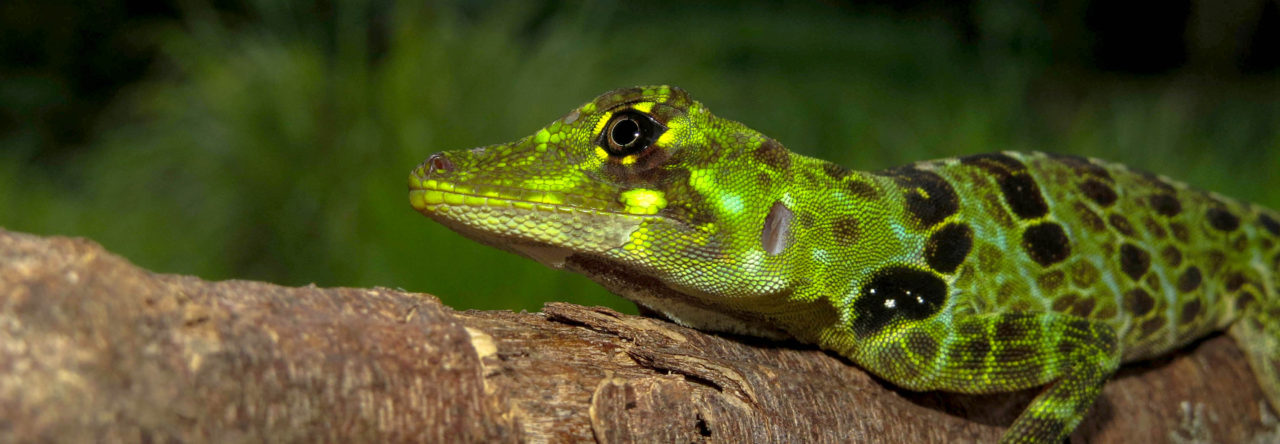

Figure 1. The skin colors of the Anolis carolinensis. (A) Brown; (B) Green.
We’ve long known that some lizards change color for camouflage or communication, but our new research reveals their skin may also act as a dynamic thermal regulator. Our study published in Animals explores how the green anole (Anolis carolinensis) adjusts its skin color and reflectance in response to short-term temperature changes, offering fresh insights into how ectotherms adapt to their environment.

Figure 2. Skin color changes in the same Anolis carolinensis individual under different ambient temperatures. (A) 20 °C; (B) 30 °C; (C) 40 °C; (D) 24-color checkerboard.
Using controlled lab experiments, we exposed lizards to temperatures ranging from 20°C to 40°C against white and brown backgrounds. We tracked changes in skin color, body temperature, and spectral reflectance. Key discoveries include:
- Brighter at higher temps: As ambient temperature increased, the lizards’ skin became brighter and less chromatic, shifting from dark green to light green.
- Optimal at 30°C: At this temperature, the lizards’ body temperature closely matched their environment, suggesting a thermal preference.
- Reflectance shifts: Skin reflectance in both visible and near-infrared light increased with temperature, indicating a role in managing heat absorption.
This study shows that color change in A. carolinensis is not just for hiding or social signaling. It is also a dynamic form of thermoregulation. In cooler conditions, darker skin likely helps absorb more heat. In warmer conditions, lighter, more reflective skin may help prevent overheating. This ability may be especially important for ectotherms (cold-blooded animals) that rely on external sources to manage their body temperature. As climate change reshapes habitats worldwide, understanding these adaptive strategies could be key to conserving ectotherm populations.

Figure 3. Schematic illustration of Anolis carolinensis skin color and body temperature responses to different ambient temperatures.
Reference:
Hu, J.; Xiong, Y.; Liu, R.; Chen, X.; Liang, A.-P. Skin coloration changes and thermoregulation in Anolis carolinensis across different thermal environments. Animals 2026, 16, 203. https://doi.org/10.3390/ani16020203