
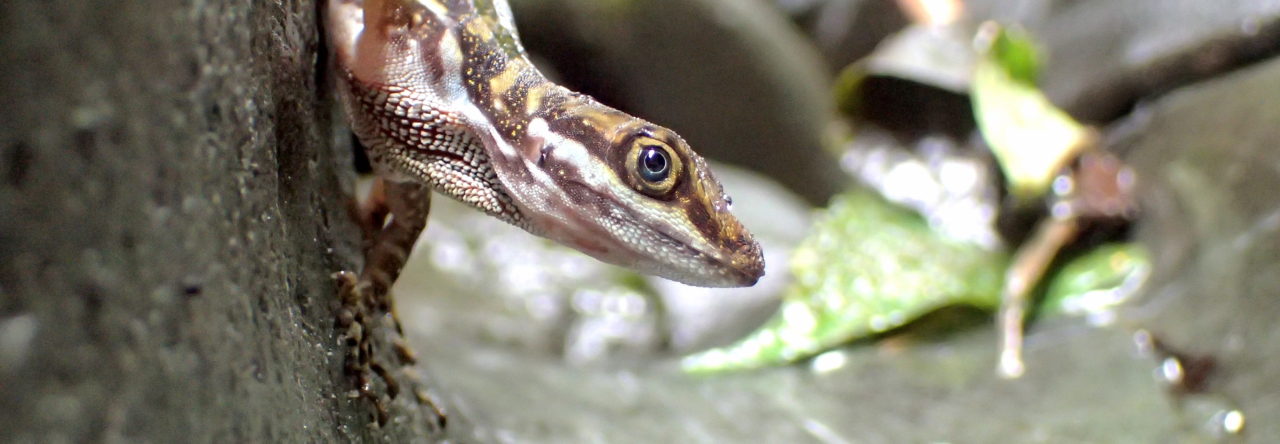

Figure 1. Anolis sagrei (photo: Michael Childs).
Invasive species are a growing problem across our increasingly globalized planet. They are often adept at establishing stable population sizes very quickly, which allows them to outcompete native species for access to important ecological resources and expand their range. You’re on the Anole Annals, so you’re probably familiar with the poster child for invasive lizards, the brown anole (Anolis sagrei).
Native to the Bahamas and Cuba, it has rapidly colonized most of Florida, USA, and has established several other invasive fronts in other parts of the world. The silver lining of many invasive species is that many of them make incredibly informative models for understanding different components of evolutionary biology, and in particular, how the action of evolutionary mechanisms, such as natural selection, plays a role during those first few years of invasive population establishment.
In northern Florida, the Intracoastal Waterway (ICW) is a brackish water route that connects inland rivers to the Atlantic Ocean. In the ICW, there are several hundred spoil islands that were artificially created by the Army Corps of Engineers to control and maintain the flow of water throughout the ICW. Since their creation, spoil islands have been colonized by a diverse range of plants that provide structure for animals that happen to make their way from the mainland onto these islands. Spoil islands are often very small, and as you may have guessed, it is not uncommon to find brown anoles inhabiting these islands at varying population densities. These islands, and the ability of brown anoles to establish stable populations on them, provides us biologists an exciting opportunity: we can use spoil islands – where there happen to be few to no brown anoles – to experimentally recreate the context of biological invasion. Then, using multiple island populations as experimental replicates, we can assess how populations grow and change during those first few critical generations, and how natural selection may facilitate, or constrain, population establishment and growth in invasive species.
In 2011, we identified six spoil islands in the ICW where brown anoles were present, but in very low population sizes. We removed these lizards and then introduced adult brown anoles that we collected from the mainland onto these islands, simulating on each island an independent “invasion” event. Because these islands varied in shape and size (Figure 1), we released a varying number of individuals per island to keep the initial population density consistent. We aimed to let these populations grow over time to estimate the strength and direction of natural selection during the incipient generations following establishment. Additionally, because we had six replicate islands, we manipulated the population sex ratio of our founding generations, resulting in three islands with a 2:1 male-biased sex ratio, and three islands with a 2:1 female-biased sex ratio. This allowed us to characterize if, and how, the landscape of natural selection over the initial generations was impacted by the composition of the founding population.
We used a capture-mark-recapture study to estimate natural selection. Some islands we followed for the full six years while some islands we followed for 3-4 years. All our populations grew and established rapidly, and we found a complex landscape of natural selection during the initial generations. We measured natural selection on a variety of phenotypic traits, but the only trait we found to be important was body size. Juvenile lizards experienced much stronger natural selection than adults, where large body sizes were associated with a higher probability of survival. Natural selection tended to strengthen over time as populations grew and become established. Importantly, the strength of selection was predicted by population densities: stronger selection (but only for juveniles!) was observed in populations with a greater density of lizards. Adult anoles did not experience strong selection, but when populations experienced a male-biased sex ratio, natural selection favored a higher body condition (i.e., a greater body mass relative to the same body length), perhaps invoking the important role of competition in these small island habitats. Population sex ratio fluctuated dramatically over time, even though we began our experiment with significant sex biases across our replicates. Interestingly, we found the initial sex ratio of our propagules had a future effect on the landscape of selection experienced by juvenile lizards: when islands began with a female-biased population sex ratio, this resulted in stronger natural selection on juvenile body size in future generations. This finding may represent a unique type of founder effect, where the initial female-biased sex ratio resulted in a future effect on some aspect of population biology (like growth or competition) that indirectly resulted in stronger natural selection on juvenile lizards.

Figure 2. Selection differentials subset by age (juvenile/adult) and sex across our spoil islands and across years. Note how selection differentials tended to be highly positive and (in some cases) strengthen over time for juveniles, while those for adults tended to not show any consistent pattern.
This was a challenging and complex study that shed some light as to how brown anoles may be evolutionarily primed as successful invaders. Female brown anoles are highly fecund, and in some years can produce upwards of 40 offspring. These offspring can reach sexual maturity rapidly, and this is reinforced by strong natural selection favoring larger body sizes in the younger age class. Rapid maturation and high fecundity are likely important for how quickly brown anoles can establish invasive populations. Brown anoles also don’t live a long time in the wild. From our capture-mark-recapture data, we observed high levels of adult mortality (>80% in some years!), so it was very rare to see adults make it to year two, or even year three. Many of the ecological and evolutionary patterns we observed can be associated with competition for limited resources on island habitats (check out Calsbeek & Cox 2010 in Nature for another important island experiment), so it may be that brown anoles that reach adulthood are very familiar with a competitive landscape. Indeed, brown anoles can outcompete our native anole, the green anole (Anolis carolinensis) to access for suitable habitats where they co-occur.
Spoil islands are such a valuable natural resource. They provide important habitats for a diverse range of plants and animals, help us maintain the depth and flow of the ICW for commercial use, and are often popular recreation spots for camping, fishing, and boating. Spoil islands can also act as miniature buffers during severe storm events, like hurricanes, to reduce the impacts of severe flooding on coastal habitats. If you find yourself in Florida sometime in the future, take a swim or a kayak out and explore a few spoil islands if you can. You may be surprised at what you find! To learn more about our experiment, including more details on our findings, see our early print article here: https://doi.org/10.1093/evolut/qpaf184.

- Spoil Islands in Florida: an Opportunity for Anole Experiments in the Wild - October 30, 2025
- SICB 2022! - December 28, 2021
- SICB 2020: Artificial Light Keeps Green Anoles Hungry! - January 8, 2020
Michael Childs
It would have been nice , and professional, if you had given me credit for my photograph. Just sayin (Figure 1. Anolis sagrei)