
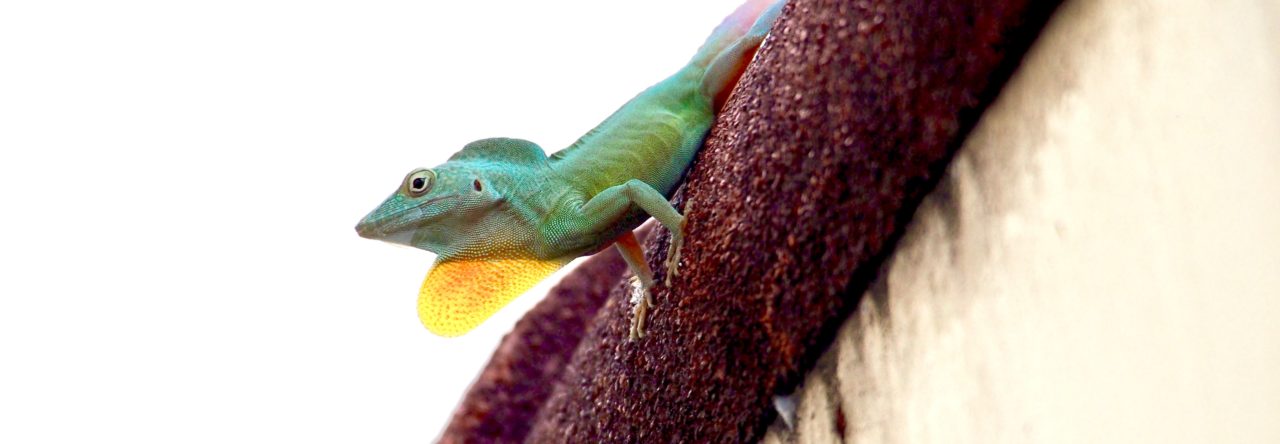

 I’ve enjoyed this type of post and figured I would contribute myself. On a trip to Costa Rica in early 2010, I had the pleasure of wandering around catching all the anoles I could see. Although most of my photos have unfortunately been lost in a massive computer/hard drive failure, I have recovered a few shots from the field. Here are photos (of two species) that always get me thinking about dewlap coloration, and maybe they will get you thinking more about that too. So what are the species, everyone?

Latest posts by lizardcoop (see all)
- Name That Anole (x2)! - February 26, 2011
- Anolis Predation, Again - February 17, 2011
Robert
A. cupreus and A. kemptoni is most likely to me. Nice animals!
marthamunoz
The bottom one looks like Anolis cupreus to me.
Dave Steinberg
The top photograph is Anolis cupreus, taken at Palo Verde. It was the ‘dry season’ so they were the easiest guys to spot, along with A. sericeus. The bottom photograph was taken in La Amistad Biosphere Reserve near the Panamanian border. I was going to call it Anolis pandoensis, but to be honest, I am not sure about the current status of pandoensis. Is it just a synonym of A. kemptoni, or are they distinct? Any information would be wonderful. Thanks!